Planning analyst presents climate-migration data; board members question local relevance
March 04, 2026 | Bangor City, Penobscot County, Maine
This article was created by AI summarizing key points discussed. AI makes mistakes, so for full details and context, please refer to the video of the full meeting. Please report any errors so we can fix them. Report an error »
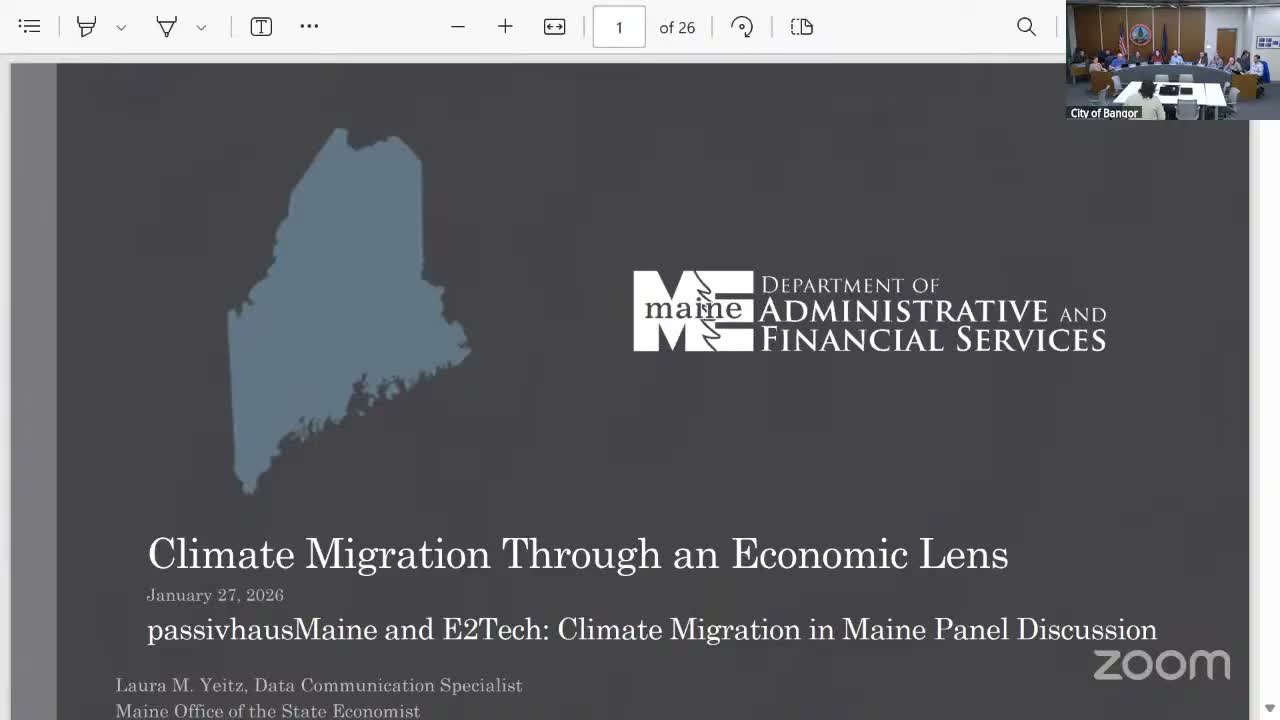
Planning analyst Matthew Altiero briefed the City of Bangor Planning Board on March 3, 2026, about a climate-migration panel he attended, presenting FEMA’s National Risk Index maps, recent in- and out-migration trends, and projections through 2070 that suggest some inland areas, including Maine, may attract more migrants as certain coastal and high-risk regions face worsening climate impacts.
Altiero described distinctions between sudden-onset migration (hurricanes, wildfires) and slow-onset migration (sea-level rise, drought), noted a spike in internal displacement in 2024 tied to severe weather seasons, and said some survey respondents reported climate as a factor in moving. He also highlighted that many of those moving in are younger, a trend that could affect workforce and housing demand.
Board members asked questions about the presentation’s scope and relevance to Bangor. One member raised fisheries and Gulf of Maine impacts, saying the presentation did not address seafood-industry shifts. Member Cardi challenged whether climate was actually driving migration, citing the slide showing that 60 percent of respondents reported minimal or no climate influence on their decision to move and arguing that lending markets and insurance decisions also shape migration patterns.
Planning Officer Anya Collette said she would bring “the ample research behind climate change” to the next meeting and noted that some insurers are retreating from high-risk states, which can affect housing markets. Altiero clarified that some maps presented were general migration maps rather than measures exclusively of climate-driven moves and that measuring slow-onset migration is challenging because multiple factors often influence relocation decisions.
The discussion turned to potential planning implications: Altiero noted preapproved plan templates for accessory dwelling units and small multiunit buildings that could lower building costs, and members discussed whether marketing and recruitment strategies might be used to attract newcomers.
No formal action was taken on climate policy at the meeting; staff offered to bring additional research and context for future discussion.
Altiero described distinctions between sudden-onset migration (hurricanes, wildfires) and slow-onset migration (sea-level rise, drought), noted a spike in internal displacement in 2024 tied to severe weather seasons, and said some survey respondents reported climate as a factor in moving. He also highlighted that many of those moving in are younger, a trend that could affect workforce and housing demand.
Board members asked questions about the presentation’s scope and relevance to Bangor. One member raised fisheries and Gulf of Maine impacts, saying the presentation did not address seafood-industry shifts. Member Cardi challenged whether climate was actually driving migration, citing the slide showing that 60 percent of respondents reported minimal or no climate influence on their decision to move and arguing that lending markets and insurance decisions also shape migration patterns.
Planning Officer Anya Collette said she would bring “the ample research behind climate change” to the next meeting and noted that some insurers are retreating from high-risk states, which can affect housing markets. Altiero clarified that some maps presented were general migration maps rather than measures exclusively of climate-driven moves and that measuring slow-onset migration is challenging because multiple factors often influence relocation decisions.
The discussion turned to potential planning implications: Altiero noted preapproved plan templates for accessory dwelling units and small multiunit buildings that could lower building costs, and members discussed whether marketing and recruitment strategies might be used to attract newcomers.
No formal action was taken on climate policy at the meeting; staff offered to bring additional research and context for future discussion.
View the Full Meeting & All Its Details
This article offers just a summary. Unlock complete video, transcripts, and insights as a Founder Member.
✓
Watch full, unedited meeting videos
✓
Search every word spoken in unlimited transcripts
✓
AI summaries & real-time alerts (all government levels)
✓
Permanent access to expanding government content
30-day money-back guarantee
