Charter panel asks attorney to draft stricter candidate-eligibility language, including two‑year domicile and misconduct standard
February 27, 2026 | Sebastian , Indian River County, Florida
This article was created by AI summarizing key points discussed. AI makes mistakes, so for full details and context, please refer to the video of the full meeting. Please report any errors so we can fix them. Report an error »
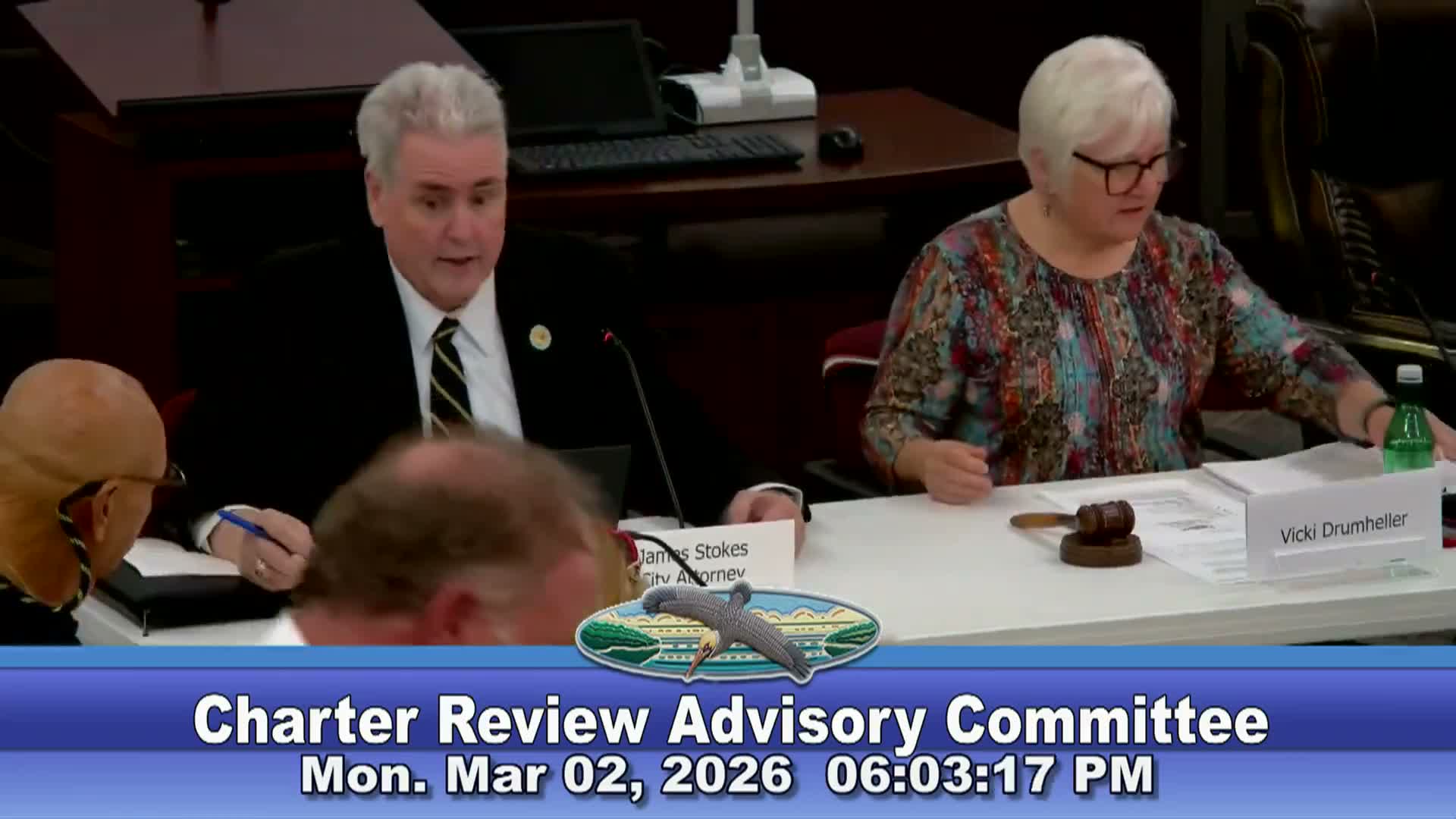
The Charter Review Committee asked city legal staff to prepare specific charter language tightening candidate eligibility, endorsing a move from a one‑year residency rule to a two‑year domiciliary requirement and seeking broader misconduct disqualifiers.
City Attorney Mr. Stokes told the panel he had rewritten draft language to replace the word “resided” with “domiciled,” defining domicile as physical presence and proposing 270 days as a clear measurable test. "Domiciled actually means physical presence," Mr. Stokes said, adding the 270‑day figure avoids excluding someone for brief absences such as travel.
Committee members debated whether the charter should rely on the state's 'qualified elector' standard or impose additional local limits. Mr. Stokes cautioned that state law governs elections and that municipal changes must avoid conflicts with statutes. He recommended broad phrases rather than long enumerated lists to reduce the risk of excluding matters unintentionally: "Conviction of any felony or a misdemeanor involving moral turpitude or breach of public trust," he said, would be a defensible formulation.
Members raised practical and legal concerns about background checks and enforcement. One committee member noted that elected office is not treated as employment under state law, which complicates routine criminal‑history checks; Mr. Stokes agreed and said restoration of rights and expungements are handled by the state and should generally control eligibility determinations.
After discussion, Committee member (speaker 11) moved and another member seconded that the attorney return next week with draft language reflecting the discussion. The motion passed on a voice vote with one recorded opposition. The chair said the committee would review the attorney's proposed wording at the next meeting.
The committee did not vote on final charter text; the attorney was directed to draft language for further consideration and possible referral to council.
City Attorney Mr. Stokes told the panel he had rewritten draft language to replace the word “resided” with “domiciled,” defining domicile as physical presence and proposing 270 days as a clear measurable test. "Domiciled actually means physical presence," Mr. Stokes said, adding the 270‑day figure avoids excluding someone for brief absences such as travel.
Committee members debated whether the charter should rely on the state's 'qualified elector' standard or impose additional local limits. Mr. Stokes cautioned that state law governs elections and that municipal changes must avoid conflicts with statutes. He recommended broad phrases rather than long enumerated lists to reduce the risk of excluding matters unintentionally: "Conviction of any felony or a misdemeanor involving moral turpitude or breach of public trust," he said, would be a defensible formulation.
Members raised practical and legal concerns about background checks and enforcement. One committee member noted that elected office is not treated as employment under state law, which complicates routine criminal‑history checks; Mr. Stokes agreed and said restoration of rights and expungements are handled by the state and should generally control eligibility determinations.
After discussion, Committee member (speaker 11) moved and another member seconded that the attorney return next week with draft language reflecting the discussion. The motion passed on a voice vote with one recorded opposition. The chair said the committee would review the attorney's proposed wording at the next meeting.
The committee did not vote on final charter text; the attorney was directed to draft language for further consideration and possible referral to council.
Don't Miss a Word: See the Full Meeting!
Go beyond summaries. Unlock every video, transcript, and key insight with a Founder Membership.
✓
Get instant access to full meeting videos
✓
Search and clip any phrase from complete transcripts
✓
Receive AI-powered summaries & custom alerts
✓
Enjoy lifetime, unrestricted access to government data
30-day money-back guarantee
