Committee presses DHS on Medicaid transportation fraud, urges GPS, cameras and tougher vetting
March 02, 2026 | 2026 Legislature MN, Minnesota
This article was created by AI summarizing key points discussed. AI makes mistakes, so for full details and context, please refer to the video of the full meeting. Please report any errors so we can fix them. Report an error »
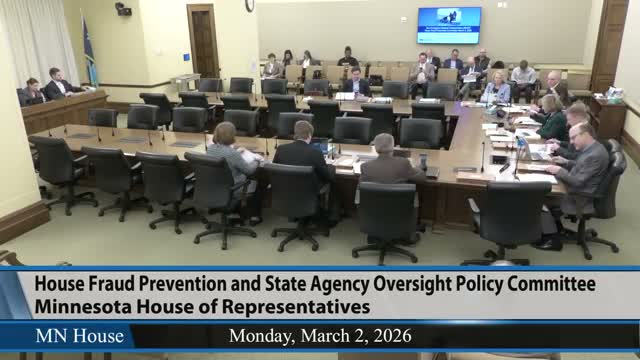
The Fraud Prevention and State Oversight Committee focused on fraud vulnerabilities in Minnesota’s non‑emergency medical transportation program during a March 2 hearing, pressing the Department of Human Services on tighter vetting, electronic visit verification and on‑vehicle GPS and cameras.
Chair Robbins convened the session and noted several DHS officials and private witnesses would testify on efforts to root out fraud in a benefit DHS says served about 250,000 people in 2025 at a cost of roughly $127 million. A DHS official responsible for Medicaid benefits told the panel the agency is revalidating roughly 5,800 enrolled providers — including nearly 2,000 NEMT providers — and plans unannounced site visits and enhanced background checks through June.
"We will do all we can to continue reforming our systems to minimize risk and harden them against bad actors," the DHS Medicaid official said, describing prepayment review, removing inactive providers and an enrollment pause for new providers as parts of the response.
Inspector General James Clark told lawmakers the agency and managed care organizations are applying analytics and prepayment reviews to flag questionable claims. "We need to better vet businesses before they enroll," Clark said, urging a front‑end risk assessment and noting DHS oversees about $20 billion in spending.
Representatives and witnesses pressed for immediate technology requirements. Michael Widener, executive director of the Minnesota Paratransit Providers Association, pointed to an internal DHS slide showing a reported drop in rides—from roughly 567,000 to about 215,000—and called for GPS and cameras so trips could be electronically verified. "GPS is cheap. It stops the fraud," Widener said.
Prime West Health executives described a fraud scheme their compliance team uncovered, in which drivers allegedly offered kickbacks to recruit Medicaid members for longer trips to specific opioid‑treatment clinics, coached members on assessment answers, and encouraged plan switching to participate. "We suspended payments to the involved providers and referred our findings to the Medicaid Fraud Control Unit, the U.S. Attorney's Office, and DHS program integrity," Sandy Adams, Prime West’s compliance officer, told the committee.
Phil Stahlberger, senior vice president of public affairs at MTM, the national broker that operates in parts of Minnesota, acknowledged a 15‑year‑old contract dispute in Missouri but said MTM has provided credentialing, on‑site verification and trip‑verification practices in the state for years and that MTM applied for the current RFP.
Lawmakers repeatedly asked whether statutory changes are required to mandate cameras or EVV. Deputy Commissioner John Connelly said electronic visit verification is part of the governor’s anti‑fraud package and that many changes would require statute. He also confirmed the state is moving the benefit to a single administrator, with a partial fee‑for‑service transition on July 1, 2026, and full transfer on Jan. 1, 2027.
Members urged quicker action on electronic logs and billing practices so that analytics can identify suspicious patterns more rapidly. "We want electronic records. We want electronic GPS tracking. We want cameras," Chair Robbins said, adding that repeated fraud networks across childcare, autism centers and transportation providers have persisted for years.
The committee approved the minutes of Feb. 23 and asked DHS to return follow‑up information, including historical claims‑tail data and details on MCO referrals and fraud investigations. Several members signaled intent to advance legislation requiring stronger financial‑capacity checks for new providers.
Chair Robbins convened the session and noted several DHS officials and private witnesses would testify on efforts to root out fraud in a benefit DHS says served about 250,000 people in 2025 at a cost of roughly $127 million. A DHS official responsible for Medicaid benefits told the panel the agency is revalidating roughly 5,800 enrolled providers — including nearly 2,000 NEMT providers — and plans unannounced site visits and enhanced background checks through June.
"We will do all we can to continue reforming our systems to minimize risk and harden them against bad actors," the DHS Medicaid official said, describing prepayment review, removing inactive providers and an enrollment pause for new providers as parts of the response.
Inspector General James Clark told lawmakers the agency and managed care organizations are applying analytics and prepayment reviews to flag questionable claims. "We need to better vet businesses before they enroll," Clark said, urging a front‑end risk assessment and noting DHS oversees about $20 billion in spending.
Representatives and witnesses pressed for immediate technology requirements. Michael Widener, executive director of the Minnesota Paratransit Providers Association, pointed to an internal DHS slide showing a reported drop in rides—from roughly 567,000 to about 215,000—and called for GPS and cameras so trips could be electronically verified. "GPS is cheap. It stops the fraud," Widener said.
Prime West Health executives described a fraud scheme their compliance team uncovered, in which drivers allegedly offered kickbacks to recruit Medicaid members for longer trips to specific opioid‑treatment clinics, coached members on assessment answers, and encouraged plan switching to participate. "We suspended payments to the involved providers and referred our findings to the Medicaid Fraud Control Unit, the U.S. Attorney's Office, and DHS program integrity," Sandy Adams, Prime West’s compliance officer, told the committee.
Phil Stahlberger, senior vice president of public affairs at MTM, the national broker that operates in parts of Minnesota, acknowledged a 15‑year‑old contract dispute in Missouri but said MTM has provided credentialing, on‑site verification and trip‑verification practices in the state for years and that MTM applied for the current RFP.
Lawmakers repeatedly asked whether statutory changes are required to mandate cameras or EVV. Deputy Commissioner John Connelly said electronic visit verification is part of the governor’s anti‑fraud package and that many changes would require statute. He also confirmed the state is moving the benefit to a single administrator, with a partial fee‑for‑service transition on July 1, 2026, and full transfer on Jan. 1, 2027.
Members urged quicker action on electronic logs and billing practices so that analytics can identify suspicious patterns more rapidly. "We want electronic records. We want electronic GPS tracking. We want cameras," Chair Robbins said, adding that repeated fraud networks across childcare, autism centers and transportation providers have persisted for years.
The committee approved the minutes of Feb. 23 and asked DHS to return follow‑up information, including historical claims‑tail data and details on MCO referrals and fraud investigations. Several members signaled intent to advance legislation requiring stronger financial‑capacity checks for new providers.
Don't Miss a Word: See the Full Meeting!
Go beyond summaries. Unlock every video, transcript, and key insight with a Founder Membership.
✓
Get instant access to full meeting videos
✓
Search and clip any phrase from complete transcripts
✓
Receive AI-powered summaries & custom alerts
✓
Enjoy lifetime, unrestricted access to government data
30-day money-back guarantee
