Former students recall strict lessons and community resilience at Hiram Rosenwald School museum
March 02, 2026 | Hiram City , Paulding County, Georgia
This article was created by AI summarizing key points discussed. AI makes mistakes, so for full details and context, please refer to the video of the full meeting. Please report any errors so we can fix them. Report an error »
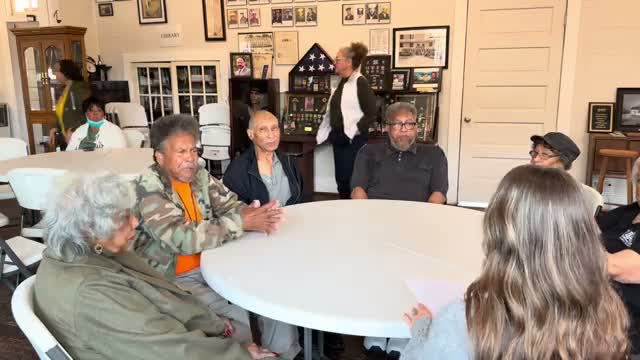
Moderator asked attendees to describe the Hiram Rosenwald School’s history and its significance to the community. The moderator noted the school opened in 1930 as Highlands Colored School and invited former students and museum volunteers to share personal recollections.
A long-time resident who attended the school described the teacher’s day-to-day impact, saying the educator “taught you just like step by step,” and that classroom routines and household responsibilities — fetching water, chores and strict study schedules — shaped students’ lives. The resident said those lessons created long-lasting expectations about learning and behavior.
Presenter and museum volunteer [Presenter] said the school’s approach continues to influence local teaching: she described adapting some of the teacher’s methods while working with special-needs students. “We did so much with so little,” Presenter said, noting that students used secondhand books and hand-me-down desks yet went on to become doctors, teachers and entrepreneurs.
Several panelists described strong emotional reactions when walking through the restored building. One former student said seeing the museum “just makes you feel like you’re free again,” and another described finding an old newspaper photograph of the school and donating a copy to the museum to help preserve local memory.
The panel discussed how the museum operates and is funded. Presenter said the museum relies on donations and that the city has provided financial support for maintenance and programming. She also described tailoring tours to different audiences — school groups, adults and youth organizations — and said exhibits intentionally use everyday objects (coal dippers, hand-me-down textbooks) to teach visitors about daily life in the era.
Throughout the session, participants emphasized respect and discipline as central lessons from the Rosenwald-era classrooms. Presenter recounted corrective, firm interactions with students as part of instilling those values, and several attendees said those early expectations guided their later lives.
Panelists also told vivid personal anecdotes — from building makeshift toys and breaking an arm to stories about community members helping after a motorcycle crash — using those memories to illustrate the school’s role in forming local identity. One resident described researching and rescuing old clippings and a photograph of the school and bringing them to the museum so the community could see the building’s history.
The discussion closed with reflections on resilience: despite limited resources, the school’s students and teachers cultivated achievement and community cohesion. Presenters and former students urged younger visitors to listen during tours and to carry forward the stories and lessons preserved at the Hiram Rosenwald School museum.
The museum remains open for tours and relies on donations and municipal support; panelists encouraged continued community engagement to preserve artifacts and oral histories.
A long-time resident who attended the school described the teacher’s day-to-day impact, saying the educator “taught you just like step by step,” and that classroom routines and household responsibilities — fetching water, chores and strict study schedules — shaped students’ lives. The resident said those lessons created long-lasting expectations about learning and behavior.
Presenter and museum volunteer [Presenter] said the school’s approach continues to influence local teaching: she described adapting some of the teacher’s methods while working with special-needs students. “We did so much with so little,” Presenter said, noting that students used secondhand books and hand-me-down desks yet went on to become doctors, teachers and entrepreneurs.
Several panelists described strong emotional reactions when walking through the restored building. One former student said seeing the museum “just makes you feel like you’re free again,” and another described finding an old newspaper photograph of the school and donating a copy to the museum to help preserve local memory.
The panel discussed how the museum operates and is funded. Presenter said the museum relies on donations and that the city has provided financial support for maintenance and programming. She also described tailoring tours to different audiences — school groups, adults and youth organizations — and said exhibits intentionally use everyday objects (coal dippers, hand-me-down textbooks) to teach visitors about daily life in the era.
Throughout the session, participants emphasized respect and discipline as central lessons from the Rosenwald-era classrooms. Presenter recounted corrective, firm interactions with students as part of instilling those values, and several attendees said those early expectations guided their later lives.
Panelists also told vivid personal anecdotes — from building makeshift toys and breaking an arm to stories about community members helping after a motorcycle crash — using those memories to illustrate the school’s role in forming local identity. One resident described researching and rescuing old clippings and a photograph of the school and bringing them to the museum so the community could see the building’s history.
The discussion closed with reflections on resilience: despite limited resources, the school’s students and teachers cultivated achievement and community cohesion. Presenters and former students urged younger visitors to listen during tours and to carry forward the stories and lessons preserved at the Hiram Rosenwald School museum.
The museum remains open for tours and relies on donations and municipal support; panelists encouraged continued community engagement to preserve artifacts and oral histories.
Don't Miss a Word: See the Full Meeting!
Go beyond summaries. Unlock every video, transcript, and key insight with a Founder Membership.
✓
Get instant access to full meeting videos
✓
Search and clip any phrase from complete transcripts
✓
Receive AI-powered summaries & custom alerts
✓
Enjoy lifetime, unrestricted access to government data
30-day money-back guarantee
