House debate rekindles push to require presidential fitness test in K–12; members raise equity and safety concerns
February 27, 2026 | 2026 Legislature TN, Tennessee
This article was created by AI summarizing key points discussed. AI makes mistakes, so for full details and context, please refer to the video of the full meeting. Please report any errors so we can fix them. Report an error »
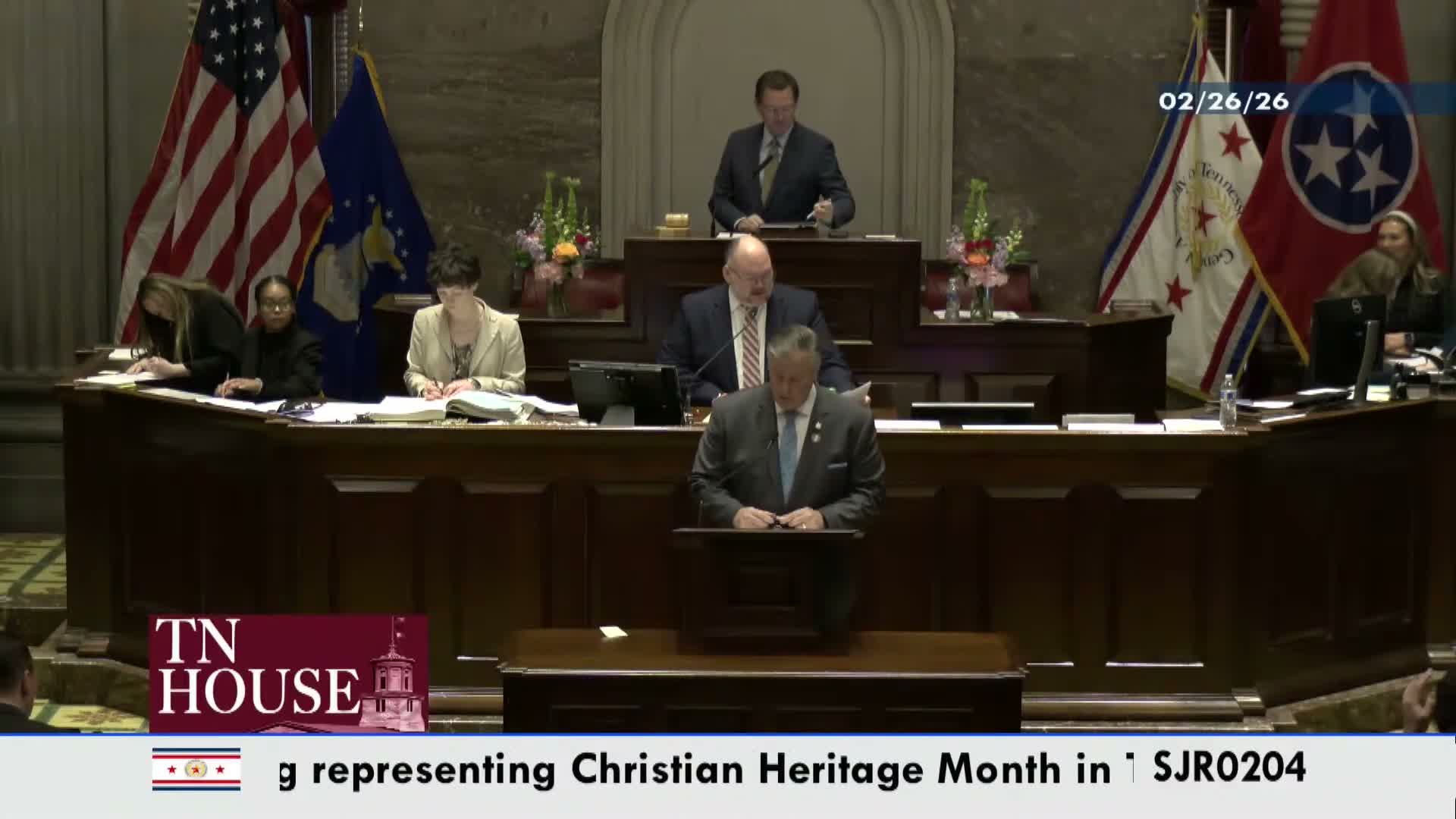
Chairmen and members debated House Bill 1466 on the House floor, which would reconstitute the presidential physical fitness test for K–12 students.
Chairman Spicke (as recorded on the floor) moved passage on third and final consideration, describing the bill’s intent to restore the fitness test. Representative Johnson questioned implementation logistics — noting that many charter or smaller schools lack physical-education teachers and asking who would administer the tests — and warned of injury risks for students tied to some components, such as sit-ups, citing the military’s adjustments to fitness testing as a caution. "So who is gonna be tasked with giving this test to students?" Johnson asked during floor debate.
Supporters on the floor said the bill includes flexibility for local education agencies to select appropriate staff. Chairman Cipiche pointed to two testing options in the bill — a full and a partial test — and told colleagues local LEAs would have discretion to choose personnel.
Representative Pearson raised equity concerns about facility access and safety, saying some schools lack gyms or tracks and might be forced to use parking lots or unsafe outdoor spaces. She framed the debate as one of resources: ‘‘If we wanna set standards like this, ensuring that all of the schools that we’re asking to implement this have an equitable amount of resources is important,’’ she said.
On the recorded roll call the clerk read 'Ayes 80, 11 nays.' The presiding officer is recorded in the transcript as stating he had not received a constitutional majority and, shortly afterward, declaring the bill passed; the transcript contains inconsistent procedural language on the outcome. No amendment to change private school applicability was adopted on the floor; proponents said extending the requirement to private voucher schools would be a separate policy action.
Next steps: the transcript records additional procedural objections and motions following the vote; the bill’s implementation details—particularly which local staff would be assigned and how resource disparities would be addressed—were raised repeatedly during debate but not resolved on the floor.
Chairman Spicke (as recorded on the floor) moved passage on third and final consideration, describing the bill’s intent to restore the fitness test. Representative Johnson questioned implementation logistics — noting that many charter or smaller schools lack physical-education teachers and asking who would administer the tests — and warned of injury risks for students tied to some components, such as sit-ups, citing the military’s adjustments to fitness testing as a caution. "So who is gonna be tasked with giving this test to students?" Johnson asked during floor debate.
Supporters on the floor said the bill includes flexibility for local education agencies to select appropriate staff. Chairman Cipiche pointed to two testing options in the bill — a full and a partial test — and told colleagues local LEAs would have discretion to choose personnel.
Representative Pearson raised equity concerns about facility access and safety, saying some schools lack gyms or tracks and might be forced to use parking lots or unsafe outdoor spaces. She framed the debate as one of resources: ‘‘If we wanna set standards like this, ensuring that all of the schools that we’re asking to implement this have an equitable amount of resources is important,’’ she said.
On the recorded roll call the clerk read 'Ayes 80, 11 nays.' The presiding officer is recorded in the transcript as stating he had not received a constitutional majority and, shortly afterward, declaring the bill passed; the transcript contains inconsistent procedural language on the outcome. No amendment to change private school applicability was adopted on the floor; proponents said extending the requirement to private voucher schools would be a separate policy action.
Next steps: the transcript records additional procedural objections and motions following the vote; the bill’s implementation details—particularly which local staff would be assigned and how resource disparities would be addressed—were raised repeatedly during debate but not resolved on the floor.
View the Full Meeting & All Its Details
This article offers just a summary. Unlock complete video, transcripts, and insights as a Founder Member.
✓
Watch full, unedited meeting videos
✓
Search every word spoken in unlimited transcripts
✓
AI summaries & real-time alerts (all government levels)
✓
Permanent access to expanding government content
30-day money-back guarantee
