House advances bill to ease higher-education access for people with certain criminal records
February 27, 2026 | 2026 Legislature TN, Tennessee
This article was created by AI summarizing key points discussed. AI makes mistakes, so for full details and context, please refer to the video of the full meeting. Please report any errors so we can fix them. Report an error »
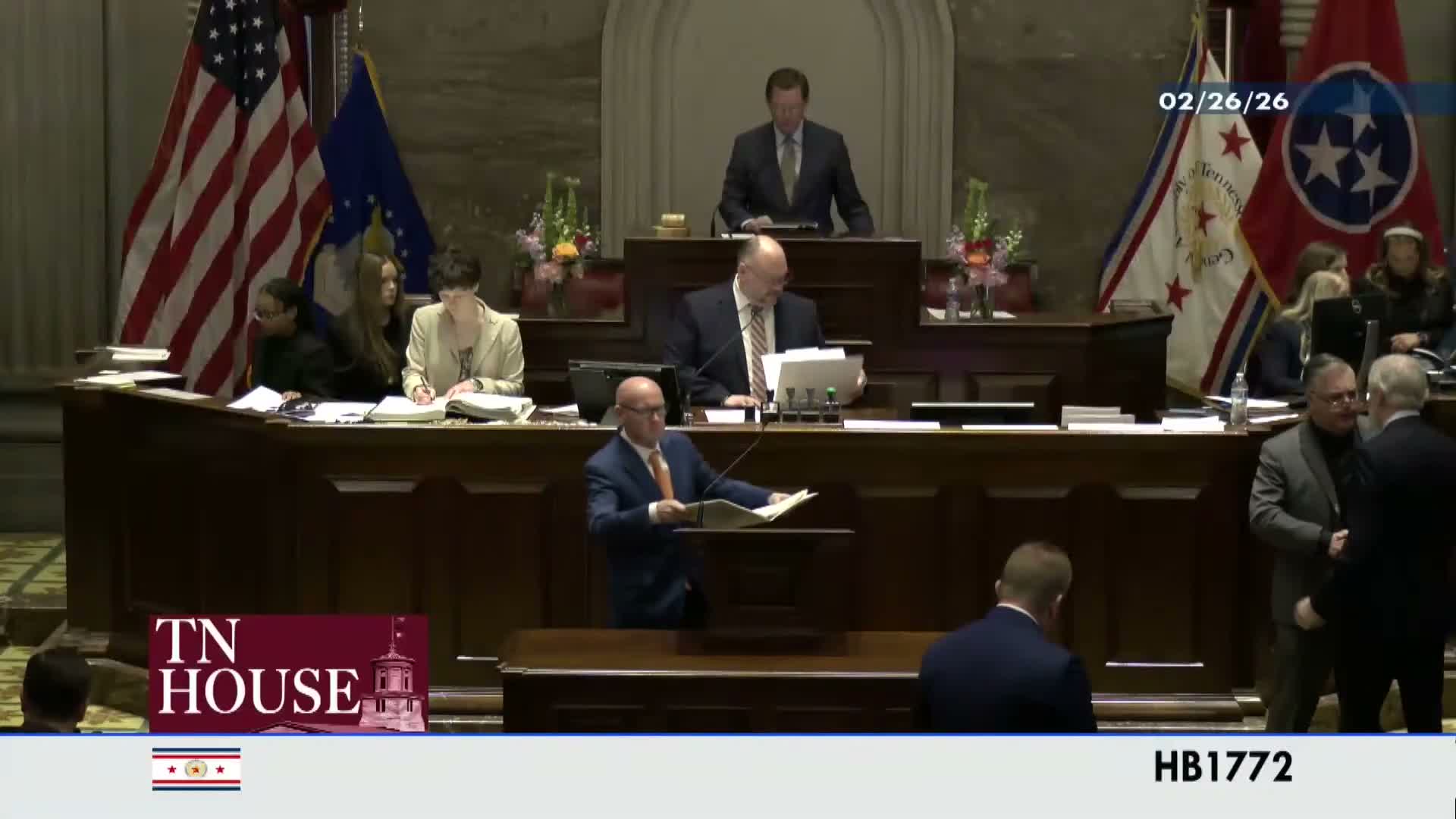
Representative Rapier brought House Bill 1772 forward on the House floor, describing the bill as a measure to prioritize rehabilitation and public safety by making higher education more accessible for Tennesseans with certain criminal histories.
Rapier said the measure clarifies civil-liability standards so colleges could "confidentially offer second chances," arguing that education reduces recidivism and supports employment and family reunification. "This bill lowers hurdles for people with higher criminal records to access higher education," the sponsor said, emphasizing that the bill excludes individuals charged with violent offenses.
Representative Clemons raised concern about the bill’s civil-immunity language, saying the text limits institutional liability to cases of "actual knowledge" and removes the broader standard of whether a school "knew or should have reasonably known," which, he warned, could limit accountability and harm campus safety. "Providing civil immunity in certain circumstances is my concern here," Clemons said.
Floor debate closed without amendments, and the clerk recorded the roll-call tally as 'Ayes 58, 24 nays, 3 present.' The presiding officer declared the motion passed per the transcript record. The bill’s sponsors and critics both emphasized safety and rehabilitation but differed on the statutory standard for campus accountability.
Rapier said the measure clarifies civil-liability standards so colleges could "confidentially offer second chances," arguing that education reduces recidivism and supports employment and family reunification. "This bill lowers hurdles for people with higher criminal records to access higher education," the sponsor said, emphasizing that the bill excludes individuals charged with violent offenses.
Representative Clemons raised concern about the bill’s civil-immunity language, saying the text limits institutional liability to cases of "actual knowledge" and removes the broader standard of whether a school "knew or should have reasonably known," which, he warned, could limit accountability and harm campus safety. "Providing civil immunity in certain circumstances is my concern here," Clemons said.
Floor debate closed without amendments, and the clerk recorded the roll-call tally as 'Ayes 58, 24 nays, 3 present.' The presiding officer declared the motion passed per the transcript record. The bill’s sponsors and critics both emphasized safety and rehabilitation but differed on the statutory standard for campus accountability.
Don't Miss a Word: See the Full Meeting!
Go beyond summaries. Unlock every video, transcript, and key insight with a Founder Membership.
✓
Get instant access to full meeting videos
✓
Search and clip any phrase from complete transcripts
✓
Receive AI-powered summaries & custom alerts
✓
Enjoy lifetime, unrestricted access to government data
30-day money-back guarantee
