Virginia study subcommittee advances dozens of bills, refers several to appropriations and carries others to next session
March 02, 2026 | 2026 Legislature VA, Virginia
This article was created by AI summarizing key points discussed. AI makes mistakes, so for full details and context, please refer to the video of the full meeting. Please report any errors so we can fix them. Report an error »
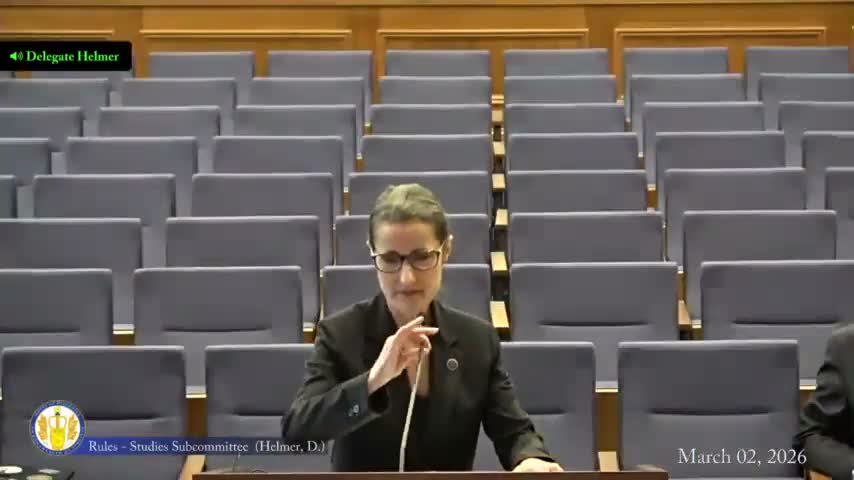
The study subcommittee of the Virginia General Assembly met to consider a broad docket of bills and joint resolutions, reporting many items to the floor or to the committee on appropriations, and carrying others over to the next session.
The panel adopted substitutes and reported bills on voice or roll‑call votes. Early in the session senators moved and adopted a substitute to conform a bill to the House version and reported it on a vote of 5–0. Multiple bills were reported with unanimous or near‑unanimous outcomes; several others were carried over to the next session for additional work.
Why it matters: The subcommittee’s actions will determine which measures move to committee consideration with funding questions pending and which require additional drafting or stakeholder work before final floor votes. Several items direct executive agencies to deliver assessments that could shape budget requests due in late 2026.
What passed or advanced: The subcommittee reported civics and education measures, safety and infrastructure studies, and several policy initiatives. Notable administrative directions included a request that the Department of Conservation and Recreation estimate funding to meet a long‑term land conservation goal and report by 11/01/2026; a referral to the Department of Education to study teacher licensure pathways; and a Joint Commission on Technology and Science assignment to evaluate independent verification frameworks for artificial intelligence systems.
Votes at a glance:
- SB 214 (civics commission website authority): reported 5–0. The patron said the bill would allow the commission to host a resource database and calendar. (Discussed SEG 356–SEG 406.)
- SB 757 (education advisory board study; conformed to HB 814): substitute adopted and referred to Appropriations, vote 5–0. (SEG 412–SEG 465.)
- SB 832 (vulnerable road user safety zones, VDOT study): reported, vote recorded as 4–2–1. (SEG 468–SEG 511.)
- HR 139 (resolution asking Navy to homebase F‑35C at Oceana): reported 5–0. (SEG 522–SEG 562.)
- SB 260 (seniors social isolation strategies, Council on Aging advisory): reported 5–0. (SEG 647–SEG 709.)
- SB 300 (designate peanut as state snack): carried over to 2027 on voice vote. (SEG 723–SEG 776.)
- SB 519 / SB 5 19 (conservation goals; DCR assessment requested): carried over; DCR directed to report funding estimate by 11/01/2026. (SEG 064–SEG 102.)
- SB 636 (confederate monuments and memorials; Library of Virginia consult): substitute amended to add Library of Virginia and referred to Appropriations, reported 4–0. (SEG 1000–SEG 1060.)
- SB 196 (Brown v. Board scholarship expansion): reported 5–0. The bill would allow out‑of‑state accredited 2‑ or 4‑year institutions with an initial $5,000 cap for out‑of‑state costs. (SEG 1167–SEG 1204.)
Agency directions and deadlines: Several bills direct executive agencies to study feasibility and report back with recommendations and fiscal estimates by specific dates (examples: DCR by 11/01/2026 on land conservation goals; DOE on demand response programs by 11/01/2026; Joint Commission on Technology and Science on AI verification frameworks; SCC on data center generator usage). Those studies are intended to inform subsequent legislative or budget action.
What didn’t change: Many bills were carried over to the next session for further work, including some that senators said required more stakeholder engagement or appropriation review. In other cases the subcommittee adopted House substitutes to align Senate language with House versions.
What’s next: Bills reported to committee or to the floor will proceed through the chamber’s process; several items referred to Appropriations require further fiscal review before final action. For bills carried over, patrons indicated plans to continue stakeholder meetings or return with revised text in the next session.
The panel adopted substitutes and reported bills on voice or roll‑call votes. Early in the session senators moved and adopted a substitute to conform a bill to the House version and reported it on a vote of 5–0. Multiple bills were reported with unanimous or near‑unanimous outcomes; several others were carried over to the next session for additional work.
Why it matters: The subcommittee’s actions will determine which measures move to committee consideration with funding questions pending and which require additional drafting or stakeholder work before final floor votes. Several items direct executive agencies to deliver assessments that could shape budget requests due in late 2026.
What passed or advanced: The subcommittee reported civics and education measures, safety and infrastructure studies, and several policy initiatives. Notable administrative directions included a request that the Department of Conservation and Recreation estimate funding to meet a long‑term land conservation goal and report by 11/01/2026; a referral to the Department of Education to study teacher licensure pathways; and a Joint Commission on Technology and Science assignment to evaluate independent verification frameworks for artificial intelligence systems.
Votes at a glance:
- SB 214 (civics commission website authority): reported 5–0. The patron said the bill would allow the commission to host a resource database and calendar. (Discussed SEG 356–SEG 406.)
- SB 757 (education advisory board study; conformed to HB 814): substitute adopted and referred to Appropriations, vote 5–0. (SEG 412–SEG 465.)
- SB 832 (vulnerable road user safety zones, VDOT study): reported, vote recorded as 4–2–1. (SEG 468–SEG 511.)
- HR 139 (resolution asking Navy to homebase F‑35C at Oceana): reported 5–0. (SEG 522–SEG 562.)
- SB 260 (seniors social isolation strategies, Council on Aging advisory): reported 5–0. (SEG 647–SEG 709.)
- SB 300 (designate peanut as state snack): carried over to 2027 on voice vote. (SEG 723–SEG 776.)
- SB 519 / SB 5 19 (conservation goals; DCR assessment requested): carried over; DCR directed to report funding estimate by 11/01/2026. (SEG 064–SEG 102.)
- SB 636 (confederate monuments and memorials; Library of Virginia consult): substitute amended to add Library of Virginia and referred to Appropriations, reported 4–0. (SEG 1000–SEG 1060.)
- SB 196 (Brown v. Board scholarship expansion): reported 5–0. The bill would allow out‑of‑state accredited 2‑ or 4‑year institutions with an initial $5,000 cap for out‑of‑state costs. (SEG 1167–SEG 1204.)
Agency directions and deadlines: Several bills direct executive agencies to study feasibility and report back with recommendations and fiscal estimates by specific dates (examples: DCR by 11/01/2026 on land conservation goals; DOE on demand response programs by 11/01/2026; Joint Commission on Technology and Science on AI verification frameworks; SCC on data center generator usage). Those studies are intended to inform subsequent legislative or budget action.
What didn’t change: Many bills were carried over to the next session for further work, including some that senators said required more stakeholder engagement or appropriation review. In other cases the subcommittee adopted House substitutes to align Senate language with House versions.
What’s next: Bills reported to committee or to the floor will proceed through the chamber’s process; several items referred to Appropriations require further fiscal review before final action. For bills carried over, patrons indicated plans to continue stakeholder meetings or return with revised text in the next session.
View the Full Meeting & All Its Details
This article offers just a summary. Unlock complete video, transcripts, and insights as a Founder Member.
✓
Watch full, unedited meeting videos
✓
Search every word spoken in unlimited transcripts
✓
AI summaries & real-time alerts (all government levels)
✓
Permanent access to expanding government content
30-day money-back guarantee
