DeKalb County panel debates charter overhaul, open-records officer and review schedule
March 04, 2026 | DeKalb County, Georgia
This article was created by AI summarizing key points discussed. AI makes mistakes, so for full details and context, please refer to the video of the full meeting. Please report any errors so we can fix them. Report an error »
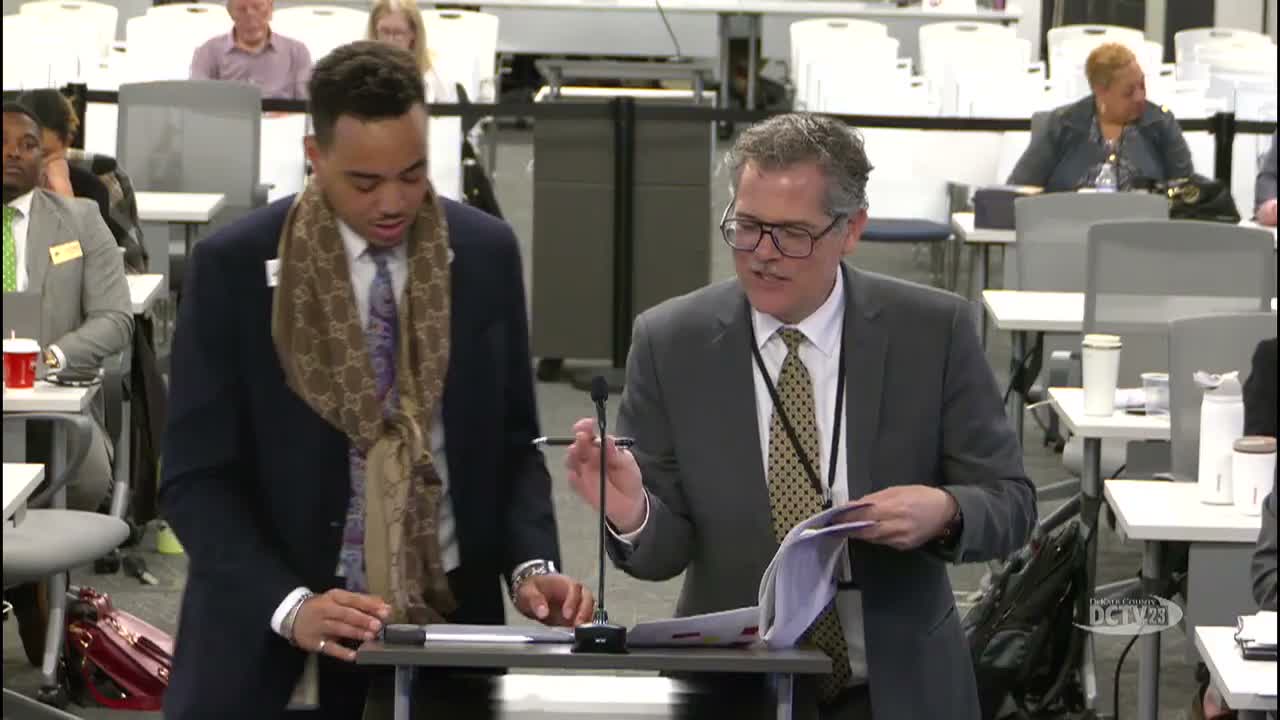
The DeKalb County Operations Committee spent the bulk of its meeting reviewing draft changes to the county’s organizational act and the Charter Review Commission’s recommendation to replace the current document.
Commissioner Marita Davis Johnson, who chaired the session, said she preferred leaving authority with the chief executive on some items rather than imposing a charter mandate. "My preference would just leave it as it is, with the CEO," Johnson said during discussion of a proposed open‑records officer. Legal counsel told the committee the Charter Review Commission recommended creating a centralized open‑records officer but cautioned that placing the duty in the charter could change the balance of powers.
Counsel summarized the proposal as a new section that would require the chief executive to designate the officer; "This would make it mandatory," counsel said, noting the CEO already has authority to create such a position and that electronic records and a forthcoming govQA system may reduce burdens on law staff.
Commissioners split on whether the open‑records role should be mandatory or discretionary. Several members favored keeping the language permissive ('may') so future administrations retain flexibility; others said codifying the position would provide continuity and faster responses for public records requesters.
The committee also debated a new provision to establish a future charter review commission on a fixed schedule. Some members favored an automatic schedule tied to redistricting or the census cycle; one commissioner proposed a decennial cadence following redistricting rather than the eight‑year cycle in the draft. The body reached consensus to prefer a discretionary ('may') formulation with a reminder tied to the redistricting/census cycle and discussed a suggested start year of 2041 to avoid immediate rework.
A more technical but consequential dispute arose over a proposed "repealer" clause. Counsel said the Charter Review Commission recommended replacing the 1981 organizational act in its entirety; several commissioners warned that a blanket repeal could unintentionally remove provisions not reproduced in the new draft and suggested limiting repeal language to provisions that conflict with the new act.
The committee did not adopt final language at the meeting. Chair Johnson said the committee would continue the remaining sections at a special call and that staff would return with clarifications and legal input where needed before a full commission vote.
The committee held seven other items in committee to be addressed at a later meeting and adjourned after a motion to end the session.
Commissioner Marita Davis Johnson, who chaired the session, said she preferred leaving authority with the chief executive on some items rather than imposing a charter mandate. "My preference would just leave it as it is, with the CEO," Johnson said during discussion of a proposed open‑records officer. Legal counsel told the committee the Charter Review Commission recommended creating a centralized open‑records officer but cautioned that placing the duty in the charter could change the balance of powers.
Counsel summarized the proposal as a new section that would require the chief executive to designate the officer; "This would make it mandatory," counsel said, noting the CEO already has authority to create such a position and that electronic records and a forthcoming govQA system may reduce burdens on law staff.
Commissioners split on whether the open‑records role should be mandatory or discretionary. Several members favored keeping the language permissive ('may') so future administrations retain flexibility; others said codifying the position would provide continuity and faster responses for public records requesters.
The committee also debated a new provision to establish a future charter review commission on a fixed schedule. Some members favored an automatic schedule tied to redistricting or the census cycle; one commissioner proposed a decennial cadence following redistricting rather than the eight‑year cycle in the draft. The body reached consensus to prefer a discretionary ('may') formulation with a reminder tied to the redistricting/census cycle and discussed a suggested start year of 2041 to avoid immediate rework.
A more technical but consequential dispute arose over a proposed "repealer" clause. Counsel said the Charter Review Commission recommended replacing the 1981 organizational act in its entirety; several commissioners warned that a blanket repeal could unintentionally remove provisions not reproduced in the new draft and suggested limiting repeal language to provisions that conflict with the new act.
The committee did not adopt final language at the meeting. Chair Johnson said the committee would continue the remaining sections at a special call and that staff would return with clarifications and legal input where needed before a full commission vote.
The committee held seven other items in committee to be addressed at a later meeting and adjourned after a motion to end the session.
View the Full Meeting & All Its Details
This article offers just a summary. Unlock complete video, transcripts, and insights as a Founder Member.
✓
Watch full, unedited meeting videos
✓
Search every word spoken in unlimited transcripts
✓
AI summaries & real-time alerts (all government levels)
✓
Permanent access to expanding government content
30-day money-back guarantee
