Subcommittee advances S.163 to define digital assets, ban CBDC tests and set mining guardrails
March 03, 2026 | 2026 Legislative Meetings, South Carolina
This article was created by AI summarizing key points discussed. AI makes mistakes, so for full details and context, please refer to the video of the full meeting. Please report any errors so we can fix them. Report an error »
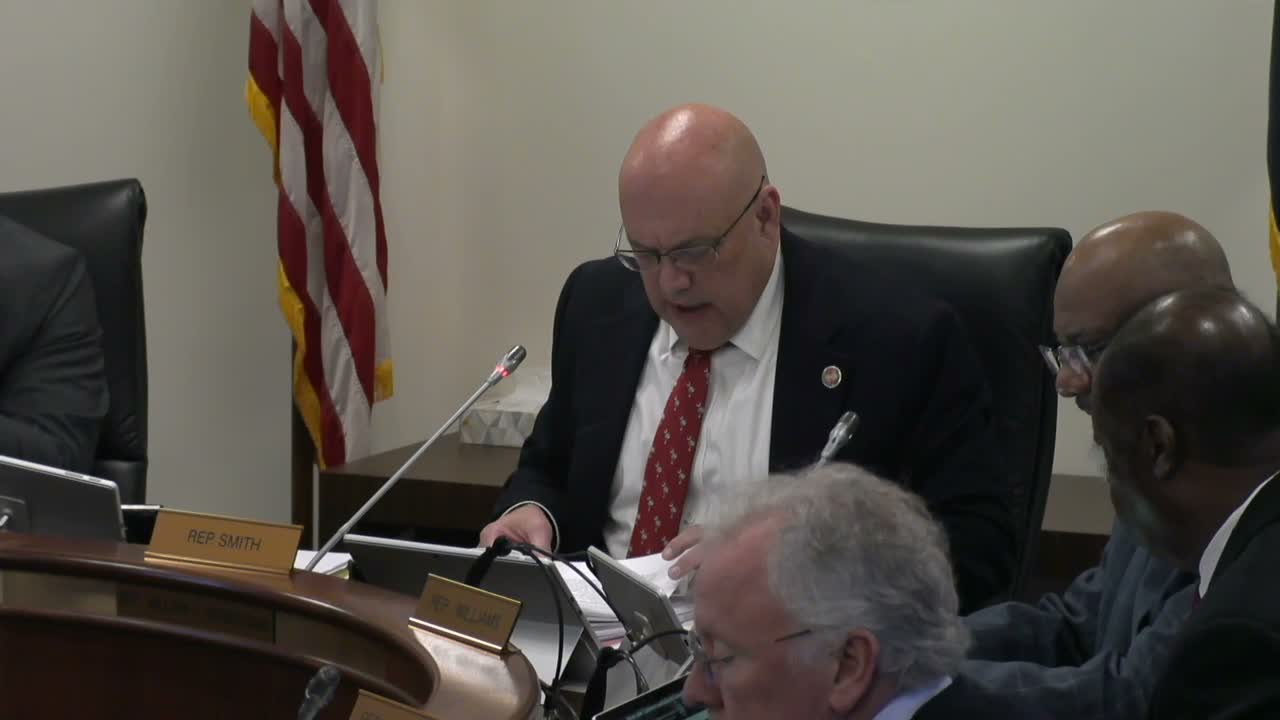
The Business and Commerce Subcommittee unanimously approved Senate Bill S.163 on March 3 and forwarded it to the full committee after expert testimony from industry and technical witnesses.
S.163 would add a new chapter to state code to establish definitions and a legal framework for digital currencies and digital-asset activities in South Carolina, include a prohibition on state or local governments requiring or accepting a central bank digital currency (CBDC) or participating in CBDC tests, and impose zoning, reporting and consumer-protection provisions for mining operations. Chairman Smith described the measure as a statutory foundation for the emerging market and the committee chair recorded the subcommittee vote as unanimous to move the bill forward.
Sen. Matt Lieber, who carried the bill in the Senate, told the committee the measure "allows individuals to use [digital currency] freely," does not mandate adoption by government and includes "appropriate guardrails and consumer protections." Lieber noted the Senate approved the bill 38–1 before the House hearing and urged the subcommittee to advance the measure.
Industry witnesses and technical experts framed the bill as clarifying legal uncertainty rather than deregulating. Eric Baker, director of advocacy for the Satoshi Action Fund, said "nearly 15% of South Carolinians already own some form of digital asset" and called S.163 "foundational legal framework" that protects holders while preventing discriminatory taxation. Scott Stornetta, CEO of Shermark Digital Identity Services, told the committee the bill provides the definitional precision markets and innovators need and that core activities such as mining and running nodes should not be treated automatically as securities or as money-transmission activity.
Witnesses repeatedly addressed concerns about bitcoin mining and the electrical grid. Committee members asked whether the bill requires mining operators to shut down during peak demand. Witnesses and proponents said the bill does not impose mandatory shutdowns but requires PSC oversight of curtailment agreements and that mining operators can ramp down quickly, which proponents said can help balance supply and demand. Representative Hager offered a familiar engineering analogy, saying "1 megawatt is about the size of a Walmart" to illustrate potential load comparisons.
Dennis Fasiliotis, president and CEO of the South Carolina Emerging Technology Association, said the bill prevents discriminatory local zoning against miners in industrial zones and requires any miner drawing more than 1 megawatt to provide its power purchase agreement to the Public Service Commission on request to show it can curtail usage during periods of grid stress.
Proponents also urged consumer protections: the bill gives the attorney general authority to pursue fraud related to mining or staking services, witnesses said.
The subcommittee motion to approve and forward S.163 was made and seconded on the record; the chair recorded the voice vote as unanimous and said the measure will be heard in full committee later in the week.
The committee did not take up amendments or a roll-call tally in the subcommittee; the chair said the full committee is scheduled to consider the bill this week.
S.163 would add a new chapter to state code to establish definitions and a legal framework for digital currencies and digital-asset activities in South Carolina, include a prohibition on state or local governments requiring or accepting a central bank digital currency (CBDC) or participating in CBDC tests, and impose zoning, reporting and consumer-protection provisions for mining operations. Chairman Smith described the measure as a statutory foundation for the emerging market and the committee chair recorded the subcommittee vote as unanimous to move the bill forward.
Sen. Matt Lieber, who carried the bill in the Senate, told the committee the measure "allows individuals to use [digital currency] freely," does not mandate adoption by government and includes "appropriate guardrails and consumer protections." Lieber noted the Senate approved the bill 38–1 before the House hearing and urged the subcommittee to advance the measure.
Industry witnesses and technical experts framed the bill as clarifying legal uncertainty rather than deregulating. Eric Baker, director of advocacy for the Satoshi Action Fund, said "nearly 15% of South Carolinians already own some form of digital asset" and called S.163 "foundational legal framework" that protects holders while preventing discriminatory taxation. Scott Stornetta, CEO of Shermark Digital Identity Services, told the committee the bill provides the definitional precision markets and innovators need and that core activities such as mining and running nodes should not be treated automatically as securities or as money-transmission activity.
Witnesses repeatedly addressed concerns about bitcoin mining and the electrical grid. Committee members asked whether the bill requires mining operators to shut down during peak demand. Witnesses and proponents said the bill does not impose mandatory shutdowns but requires PSC oversight of curtailment agreements and that mining operators can ramp down quickly, which proponents said can help balance supply and demand. Representative Hager offered a familiar engineering analogy, saying "1 megawatt is about the size of a Walmart" to illustrate potential load comparisons.
Dennis Fasiliotis, president and CEO of the South Carolina Emerging Technology Association, said the bill prevents discriminatory local zoning against miners in industrial zones and requires any miner drawing more than 1 megawatt to provide its power purchase agreement to the Public Service Commission on request to show it can curtail usage during periods of grid stress.
Proponents also urged consumer protections: the bill gives the attorney general authority to pursue fraud related to mining or staking services, witnesses said.
The subcommittee motion to approve and forward S.163 was made and seconded on the record; the chair recorded the voice vote as unanimous and said the measure will be heard in full committee later in the week.
The committee did not take up amendments or a roll-call tally in the subcommittee; the chair said the full committee is scheduled to consider the bill this week.
View the Full Meeting & All Its Details
This article offers just a summary. Unlock complete video, transcripts, and insights as a Founder Member.
✓
Watch full, unedited meeting videos
✓
Search every word spoken in unlimited transcripts
✓
AI summaries & real-time alerts (all government levels)
✓
Permanent access to expanding government content
30-day money-back guarantee
