Subcommittee advances bill to swap deer tag ratio to encourage more doe harvest
March 03, 2026 | 2026 Legislative Meetings, South Carolina
This article was created by AI summarizing key points discussed. AI makes mistakes, so for full details and context, please refer to the video of the full meeting. Please report any errors so we can fix them. Report an error »
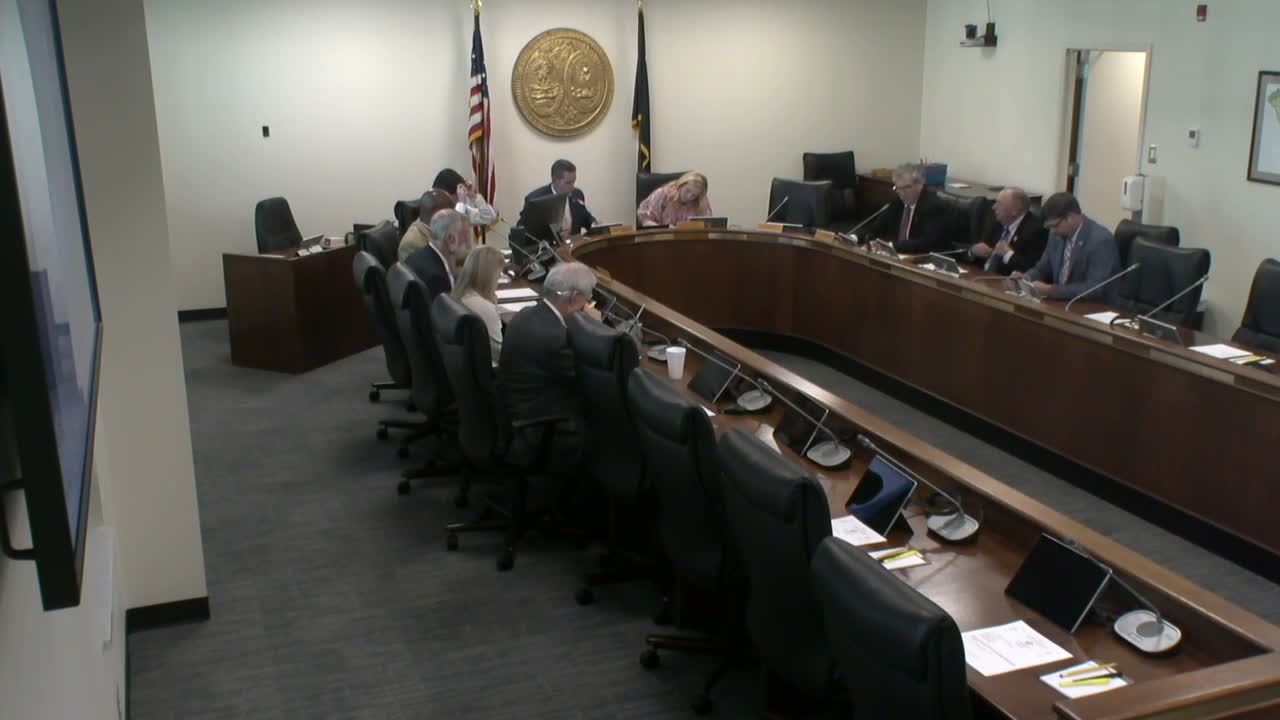
A House Wildlife Subcommittee voted to advance House Bill 5,217 after hearing testimony from the South Carolina Department of Natural Resources and discussion among lawmakers.
Jay Cantrell, assistant chief of wildlife for the South Carolina Department of Natural Resources, told the panel the bill would not change the total number of free tags in the base set — that remains five — but would flip the mix from three buck tags and two doe tags to three doe tags and two buck tags. "We support this bill. We think it's a great idea," Cantrell said, adding that the department would pair any change with outreach to explain the importance of antlerless harvest.
The nut of the proposal, Cantrell said, is behavioral: having more doe tags in the base set sends a different message to hunters and could increase antlerless harvests that benefit habitat and population balance. Cantrell cited agency data showing that currently roughly 45 percent of annual harvests are does and that only about 10 percent of hunters harvest more than one doe in a season. "By simply having that on the tags…we think that would help," he said.
Committee members asked whether deer populations have declined in parts of the state and about season timing. Cantrell said statewide populations are generally stable, with some localized increases, and explained season windows differ by game zone — for biological reasons, harvesting does is generally not allowed before Sept. 15 in most zones, while some coastal zones start earlier. He also said the department relies on electronic harvest reporting and post-season surveys to monitor impacts and could evaluate changes if the bill became law.
Members raised alternatives such as quota programs or "Earn-a-Buck" ideas that require demonstrated antlerless harvest before a buck tag is issued; Cantrell said such approaches pose enforcement and reporting challenges but remain options to explore. Several lawmakers noted constituent concerns about crop damage and vehicle collisions with deer, and a sponsoring lawmaker said the measure responds to long-standing feedback from hunters and farmers and is reversible if data later suggest adjustments are needed.
The subcommittee moved to pass HB 5,217 and held a roll-call vote. The clerk recorded votes for Representative Ford (yes), Representative Gibson (yes), Representative Reese (yes), Representative Forrest (yes) and one member absent; the motion carried 4-0 with one absent. The bill now goes to the full committee.
The panel did not set implementation details in the subcommittee hearing; Cantrell said printer constraints could be managed and that the department continues to examine electronic tagging.
Jay Cantrell, assistant chief of wildlife for the South Carolina Department of Natural Resources, told the panel the bill would not change the total number of free tags in the base set — that remains five — but would flip the mix from three buck tags and two doe tags to three doe tags and two buck tags. "We support this bill. We think it's a great idea," Cantrell said, adding that the department would pair any change with outreach to explain the importance of antlerless harvest.
The nut of the proposal, Cantrell said, is behavioral: having more doe tags in the base set sends a different message to hunters and could increase antlerless harvests that benefit habitat and population balance. Cantrell cited agency data showing that currently roughly 45 percent of annual harvests are does and that only about 10 percent of hunters harvest more than one doe in a season. "By simply having that on the tags…we think that would help," he said.
Committee members asked whether deer populations have declined in parts of the state and about season timing. Cantrell said statewide populations are generally stable, with some localized increases, and explained season windows differ by game zone — for biological reasons, harvesting does is generally not allowed before Sept. 15 in most zones, while some coastal zones start earlier. He also said the department relies on electronic harvest reporting and post-season surveys to monitor impacts and could evaluate changes if the bill became law.
Members raised alternatives such as quota programs or "Earn-a-Buck" ideas that require demonstrated antlerless harvest before a buck tag is issued; Cantrell said such approaches pose enforcement and reporting challenges but remain options to explore. Several lawmakers noted constituent concerns about crop damage and vehicle collisions with deer, and a sponsoring lawmaker said the measure responds to long-standing feedback from hunters and farmers and is reversible if data later suggest adjustments are needed.
The subcommittee moved to pass HB 5,217 and held a roll-call vote. The clerk recorded votes for Representative Ford (yes), Representative Gibson (yes), Representative Reese (yes), Representative Forrest (yes) and one member absent; the motion carried 4-0 with one absent. The bill now goes to the full committee.
The panel did not set implementation details in the subcommittee hearing; Cantrell said printer constraints could be managed and that the department continues to examine electronic tagging.
View the Full Meeting & All Its Details
This article offers just a summary. Unlock complete video, transcripts, and insights as a Founder Member.
✓
Watch full, unedited meeting videos
✓
Search every word spoken in unlimited transcripts
✓
AI summaries & real-time alerts (all government levels)
✓
Permanent access to expanding government content
30-day money-back guarantee
