Airports urge incentive-based changes as Senate panel considers airline property tax cut that may shrink aviation fund
March 03, 2026 | 2026 Legislative Meetings, South Carolina
This article was created by AI summarizing key points discussed. AI makes mistakes, so for full details and context, please refer to the video of the full meeting. Please report any errors so we can fix them. Report an error »
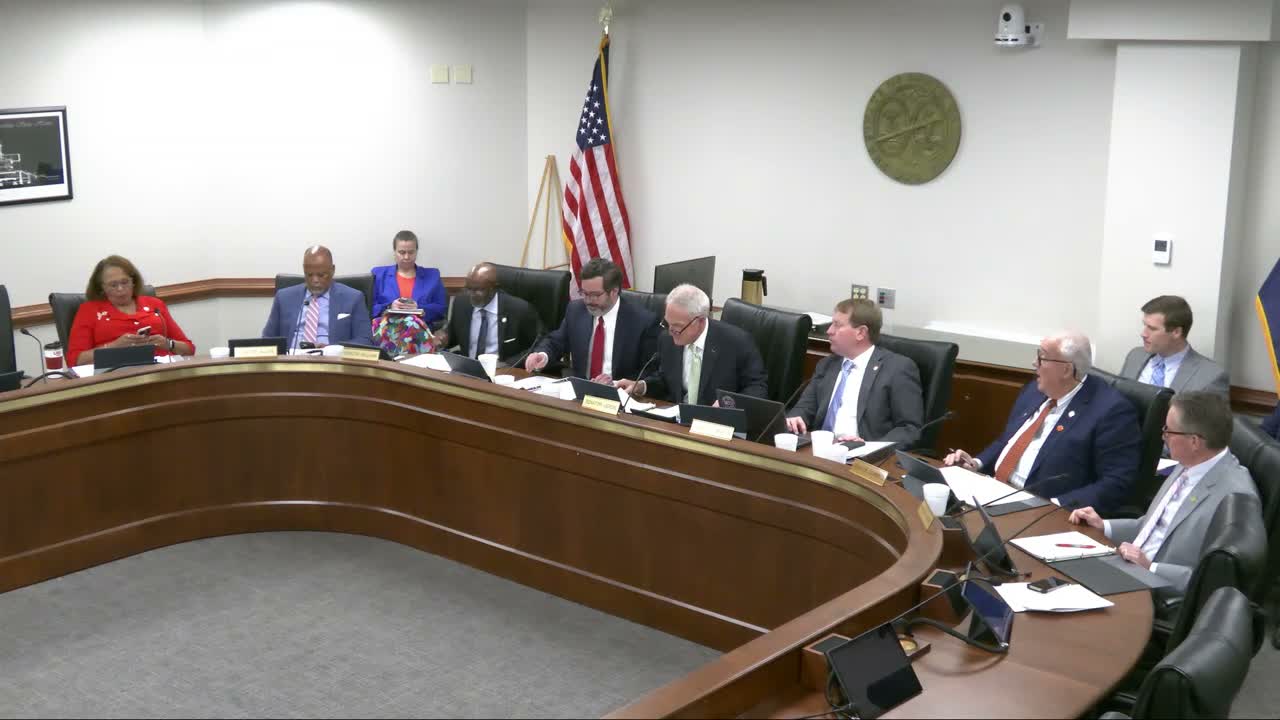
The Senate committee heard testimony and extensive questions on S.436, a proposal that would lower the effective airline property tax assessment and change how time on the ground in the state is counted.
Mister Hawkins (speaker 12), who introduced the measure, told the committee S.436 exempts 36.8421% of fair market value for airline companies—effectively reducing the assessment ratio from about 9.5% to roughly 6%—and defines landings/overnights for the time‑on‑ground calculation (each landing equals 30 minutes; each overnight or maintenance day equals two hours). Committee members agreed to take testimony from airport officials and industry groups.
An airport representative who was introduced on the record urged the committee to consider the bill’s competitive effects. "We're the highest property tax rate in the country on commercial airlines," the witness said, arguing that South Carolina lags neighboring states and urging coordination with economic development partners.
James Stevens (speaker 11), speaking for airport stakeholders, said a prior fiscal impact analysis of similar language showed the change would remove approximately $5,000,000 annually from the State Aviation Fund and cautioned that reduced aviation fund revenue could undermine grants and capital projects that benefit many local airports. He recommended that if the Legislature reduces the tax, the relief be paired with qualifying criteria—such as establishing crew bases or maintenance facilities—that guarantee investment and jobs.
Kevin Howell (speaker 14), president and CEO of Greenville–Spartanburg International Airport, told senators that commercial service airports currently receive modest direct distributions from the aviation fund (GSP typically receives about $250,000 a year from that fund) and urged incentive triggers rather than an across‑the‑board cut so the state captures new investment and jobs.
Several senators asked whether the bill’s two sections (the assessment change and the time‑on‑ground definition) are linked and whether North Carolina’s experience should guide South Carolina. Witnesses and committee members discussed options including tying the tax change to visible commitments from airlines, directing Commerce to participate in recruitment, or appropriating money to backfill aviation fund impacts. No fiscal impact report was presented to the committee during the hearing; witnesses cited a previous fiscal analysis of a similar House bill.
The committee did not vote on S.436 and agreed to carry the matter forward for further work with stakeholders and Commerce.
Mister Hawkins (speaker 12), who introduced the measure, told the committee S.436 exempts 36.8421% of fair market value for airline companies—effectively reducing the assessment ratio from about 9.5% to roughly 6%—and defines landings/overnights for the time‑on‑ground calculation (each landing equals 30 minutes; each overnight or maintenance day equals two hours). Committee members agreed to take testimony from airport officials and industry groups.
An airport representative who was introduced on the record urged the committee to consider the bill’s competitive effects. "We're the highest property tax rate in the country on commercial airlines," the witness said, arguing that South Carolina lags neighboring states and urging coordination with economic development partners.
James Stevens (speaker 11), speaking for airport stakeholders, said a prior fiscal impact analysis of similar language showed the change would remove approximately $5,000,000 annually from the State Aviation Fund and cautioned that reduced aviation fund revenue could undermine grants and capital projects that benefit many local airports. He recommended that if the Legislature reduces the tax, the relief be paired with qualifying criteria—such as establishing crew bases or maintenance facilities—that guarantee investment and jobs.
Kevin Howell (speaker 14), president and CEO of Greenville–Spartanburg International Airport, told senators that commercial service airports currently receive modest direct distributions from the aviation fund (GSP typically receives about $250,000 a year from that fund) and urged incentive triggers rather than an across‑the‑board cut so the state captures new investment and jobs.
Several senators asked whether the bill’s two sections (the assessment change and the time‑on‑ground definition) are linked and whether North Carolina’s experience should guide South Carolina. Witnesses and committee members discussed options including tying the tax change to visible commitments from airlines, directing Commerce to participate in recruitment, or appropriating money to backfill aviation fund impacts. No fiscal impact report was presented to the committee during the hearing; witnesses cited a previous fiscal analysis of a similar House bill.
The committee did not vote on S.436 and agreed to carry the matter forward for further work with stakeholders and Commerce.
View the Full Meeting & All Its Details
This article offers just a summary. Unlock complete video, transcripts, and insights as a Founder Member.
✓
Watch full, unedited meeting videos
✓
Search every word spoken in unlimited transcripts
✓
AI summaries & real-time alerts (all government levels)
✓
Permanent access to expanding government content
30-day money-back guarantee
