Legislators hear experts on blockchain, stablecoins and AI; presenters point to state policy options under the 'Genius Act'
March 03, 2026 | 2026 Legislative Meetings, South Carolina
This article was created by AI summarizing key points discussed. AI makes mistakes, so for full details and context, please refer to the video of the full meeting. Please report any errors so we can fix them. Report an error »
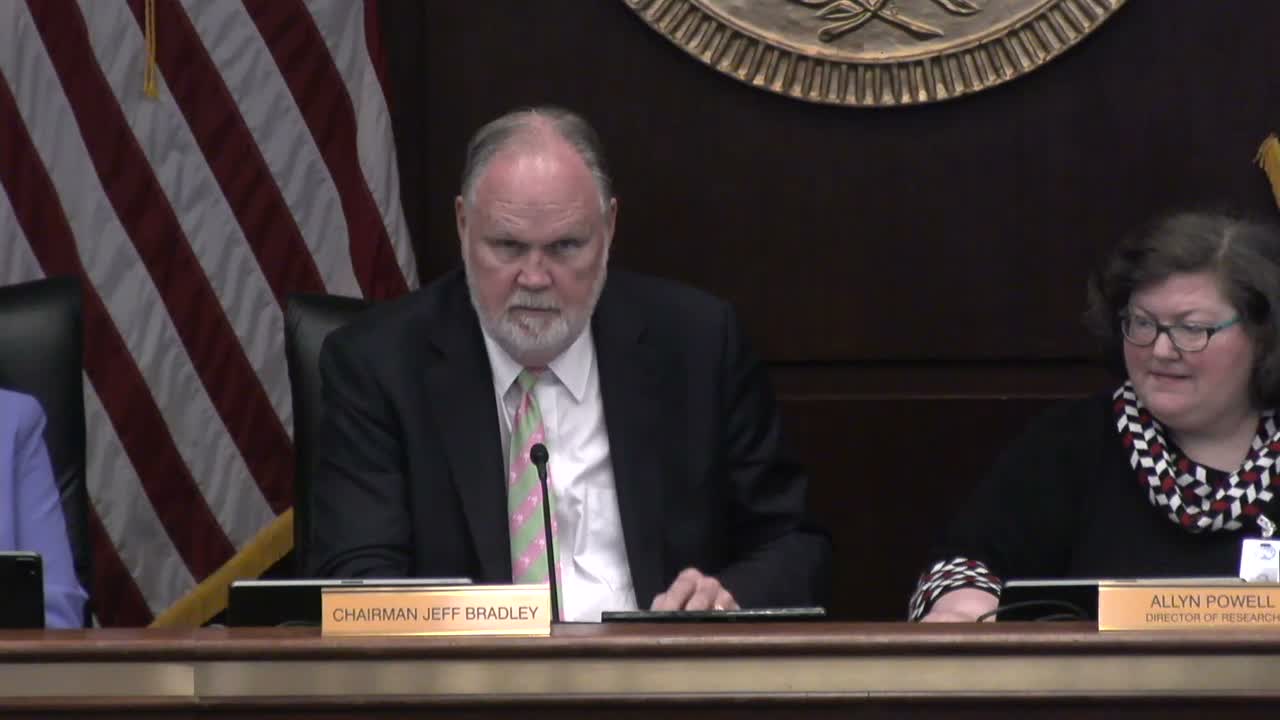
Lawmakers received an educational briefing on blockchain technology, cryptocurrencies, stablecoins and the intersection of artificial intelligence and content authenticity during a committee session that paired technical background with policy options.
Scott Stornetta, introduced to the panel as a co‑inventor of blockchain, told members that blockchain’s core value is a decentralization of trust: linking widely distributed public records makes forgery harder and enables new models of economic coordination. He also warned that related technical shifts — including energy and data‑center needs tied to mining and model training — require policymakers to understand infrastructure implications.
"Seeing is no longer believing," Stornetta said in a portion of his presentation on deepfakes and identity verification, arguing for credentialed or cryptographic provenance that would let viewers confirm an author or speaker.
Dr. Dwyer (emeritus professor, Clemson University and senior fellow at the Bitcoin Policy Institute) explained the economic differences between volatile cryptocurrencies such as Bitcoin and dollar‑pegged stablecoins. He described stablecoins as useful for instant cross‑border payments and said stablecoins in the United States are being regulated under a federal framework presenters referred to throughout as the "Genius Act." Dwyer said stablecoins commonly are backed by liquid assets such as treasury bills or bank deposits and, in his description of the federal framework, ‘‘the Genius Act requires a 100% [reserve] mapping’’ for some payment stablecoins.
"Stablecoins clear instantaneously," Dwyer said, describing their use for remittances and fast settlement compared with traditional banking rails.
Representatives asked how governments should approach fast‑moving technology. Stornetta recommended centering regulation on human accountability and the consequences of bad actors rather than attempting to legislate specific technical architectures that will change rapidly. Dwyer and other panelists urged lawmakers to focus on consumer protections, liquidity requirements and rules to limit excessive leverage in tokenized derivative markets.
Tony Irwin, speaking about state practice from Georgia, described a Georgia bill (House Bill 1272) to license payment‑stablecoin issuers under a state banking department approach that, he said, is designed to be "substantially similar" to the Genius Act and to allow state regulation of issuers up to $10 billion of activity under the federal carve‑out. Irwin argued that state action can make states competitive as fintech hubs while preserving consumer protections.
Frank Speiser, a CEO working on prediction markets, urged the committee to consider tokenization and other fintech opportunities as an economic development strategy, citing very large global markets for financial assets and arguing South Carolina could gain jobs and fees by attracting fintech firms and compliance centers.
Panelists offered to share materials with committee staff. Members asked for links and practical guidance; presenters agreed to provide follow‑up information. The committee ended the session without taking further formal policy votes on the topics presented.
Scott Stornetta, introduced to the panel as a co‑inventor of blockchain, told members that blockchain’s core value is a decentralization of trust: linking widely distributed public records makes forgery harder and enables new models of economic coordination. He also warned that related technical shifts — including energy and data‑center needs tied to mining and model training — require policymakers to understand infrastructure implications.
"Seeing is no longer believing," Stornetta said in a portion of his presentation on deepfakes and identity verification, arguing for credentialed or cryptographic provenance that would let viewers confirm an author or speaker.
Dr. Dwyer (emeritus professor, Clemson University and senior fellow at the Bitcoin Policy Institute) explained the economic differences between volatile cryptocurrencies such as Bitcoin and dollar‑pegged stablecoins. He described stablecoins as useful for instant cross‑border payments and said stablecoins in the United States are being regulated under a federal framework presenters referred to throughout as the "Genius Act." Dwyer said stablecoins commonly are backed by liquid assets such as treasury bills or bank deposits and, in his description of the federal framework, ‘‘the Genius Act requires a 100% [reserve] mapping’’ for some payment stablecoins.
"Stablecoins clear instantaneously," Dwyer said, describing their use for remittances and fast settlement compared with traditional banking rails.
Representatives asked how governments should approach fast‑moving technology. Stornetta recommended centering regulation on human accountability and the consequences of bad actors rather than attempting to legislate specific technical architectures that will change rapidly. Dwyer and other panelists urged lawmakers to focus on consumer protections, liquidity requirements and rules to limit excessive leverage in tokenized derivative markets.
Tony Irwin, speaking about state practice from Georgia, described a Georgia bill (House Bill 1272) to license payment‑stablecoin issuers under a state banking department approach that, he said, is designed to be "substantially similar" to the Genius Act and to allow state regulation of issuers up to $10 billion of activity under the federal carve‑out. Irwin argued that state action can make states competitive as fintech hubs while preserving consumer protections.
Frank Speiser, a CEO working on prediction markets, urged the committee to consider tokenization and other fintech opportunities as an economic development strategy, citing very large global markets for financial assets and arguing South Carolina could gain jobs and fees by attracting fintech firms and compliance centers.
Panelists offered to share materials with committee staff. Members asked for links and practical guidance; presenters agreed to provide follow‑up information. The committee ended the session without taking further formal policy votes on the topics presented.
View the Full Meeting & All Its Details
This article offers just a summary. Unlock complete video, transcripts, and insights as a Founder Member.
✓
Watch full, unedited meeting videos
✓
Search every word spoken in unlimited transcripts
✓
AI summaries & real-time alerts (all government levels)
✓
Permanent access to expanding government content
30-day money-back guarantee
