Committee member backs bill to extend in‑state tuition to U.S. territories, urges federal funding
March 03, 2026 | House Committee on Education and Workforce Democrats, Education and Workforce: House Committee, Standing Committees - House & Senate, Congressional Hearings Compilation, Legislative, Federal
This article was created by AI summarizing key points discussed. AI makes mistakes, so for full details and context, please refer to the video of the full meeting. Please report any errors so we can fix them. Report an error »
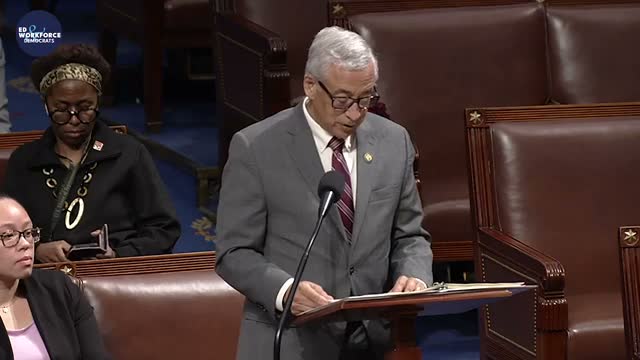
The member, speaking at the start of the transcript, listed the jurisdictions named in the measure as Guam, the Commonwealth of the Northern Mariana Islands, American Samoa and the U.S. Virgin Islands. "I rise today in support of H.R. 64 72," the committee member said. They said most of the territories do not have a robust public university system that offers a variety of majors, and that students from those places face steeper barriers to affordable higher education.
The lawmaker invoked the District of Columbia Tuition Assistance Grant (D.C. TAG) as a precedent, saying that program provides federal funds to cover the difference between higher out‑of‑state tuition and lower in‑state tuition for D.C. residents. "This approach has a similar goal to the District Of Columbia Tuition Assistance Grant," the committee member said, arguing the territories face a comparable challenge because they lack enough public university capacity.
At committee markup, Democrats proposed an amendment to require federal funding to cover the cost of extending in‑state rates; the member said the committee "did not agree to this amendment to provide federal funding." The speaker reiterated support for expanding access but warned that "the federal government's responsibility [is] to bear the cost of this mandate rather than shift it to the states, which are already facing financial strain."
The member also criticized recent federal policy changes, saying "congressional Republicans made it harder for these same students to afford colleges," citing changes to the Pell Grant program, adjustments to loan limits and the elimination of certain loan repayment plans.
The transcript does not record a subsequent vote on the bill or further procedural steps; the committee member's remarks in the provided excerpt focus on principle and the dispute over who should cover the cost of implementing tuition parity for territorial residents.
View the Full Meeting & All Its Details
This article offers just a summary. Unlock complete video, transcripts, and insights as a Founder Member.
30-day money-back guarantee
