Committee holds radon-mitigation certification bill after critics warn it could benefit industry
March 02, 2026 | 2026 Utah Legislature, Utah Legislature, Utah Legislative Branch, Utah
This article was created by AI summarizing key points discussed. AI makes mistakes, so for full details and context, please refer to the video of the full meeting. Please report any errors so we can fix them. Report an error »
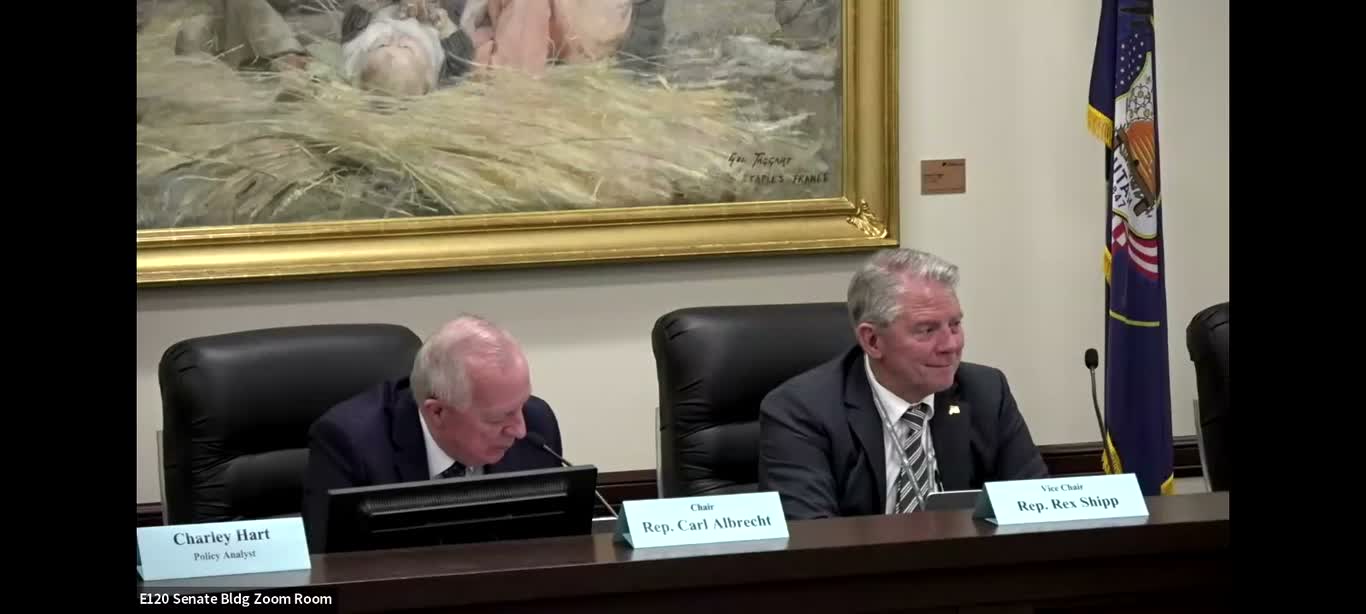
The Utah House Natural Resources, Agriculture and Environment Standing Committee on Monday heard HB 563, a bill that would direct the Department of Occupational and Professional Licensing (DOPL) to require certification for contractors who install or service radon mitigation systems. Representative Shallenberger, the bill sponsor, yielded the floor to Jake Andrick, who described radon risks in Utah and the bill’s intent.
"Radon is a gas that is an off-gas of uranium," Andrick told the committee, and he said Utah’s average test results were about 4.4 picocuries per liter compared with a U.S. average of about 1.3 pCi/L. He described mitigation as creating a negative-pressure vent beneath a home slab and said proper mitigation typically costs in the range of $1,200 to $1,500 for a typical footprint. Andrick said the bill would not create a new license but would direct DOPL to require EPA-recognized training or similar competency standards so homeowners can be confident installers are qualified.
Stakeholders and public commenters pressed for changes. Tabitha Beni, a researcher on indoor-air policy who testified as a private citizen, told the committee she opposed the bill in its present form, arguing it "would only serve to protect the radon companies" and lacks a statutory requirement tying certification to nationally recognized standards such as those from the Indoor Environments Association or EPA guidance. "This bill allows radon companies with unqualified staff to install mitigation systems in our homes with very little oversight," Beni said. She recommended involving the Division of Air Quality and the Department of Environmental Quality (DEQ) in rule development rather than relying solely on DOPL.
Industry groups offered mixed views. Taz Piesling of the Utah Home Builders Association opposed the bill as unnecessary "turf creation," noting building-code guidance and passive systems are already common in new construction. The American Lung Association’s Nick Torres said he supported certification but urged the statute to include adherence to nationally recognized standards and stronger oversight for testing and measurement.
After testimony, Representative Colford moved to hold HB 563 for additional stakeholder work. The committee approved the motion on a voice vote; the clerk recorded the tally as 8–1–2. Sponsors said they welcomed more stakeholder input on which national standards to adopt and how DOPL and DEQ should coordinate.
The committee’s action leaves HB 563 alive for further amendment and rulemaking discussion; sponsors indicated they will work with public-health partners, DEQ and certification bodies before returning the bill to committee.
"Radon is a gas that is an off-gas of uranium," Andrick told the committee, and he said Utah’s average test results were about 4.4 picocuries per liter compared with a U.S. average of about 1.3 pCi/L. He described mitigation as creating a negative-pressure vent beneath a home slab and said proper mitigation typically costs in the range of $1,200 to $1,500 for a typical footprint. Andrick said the bill would not create a new license but would direct DOPL to require EPA-recognized training or similar competency standards so homeowners can be confident installers are qualified.
Stakeholders and public commenters pressed for changes. Tabitha Beni, a researcher on indoor-air policy who testified as a private citizen, told the committee she opposed the bill in its present form, arguing it "would only serve to protect the radon companies" and lacks a statutory requirement tying certification to nationally recognized standards such as those from the Indoor Environments Association or EPA guidance. "This bill allows radon companies with unqualified staff to install mitigation systems in our homes with very little oversight," Beni said. She recommended involving the Division of Air Quality and the Department of Environmental Quality (DEQ) in rule development rather than relying solely on DOPL.
Industry groups offered mixed views. Taz Piesling of the Utah Home Builders Association opposed the bill as unnecessary "turf creation," noting building-code guidance and passive systems are already common in new construction. The American Lung Association’s Nick Torres said he supported certification but urged the statute to include adherence to nationally recognized standards and stronger oversight for testing and measurement.
After testimony, Representative Colford moved to hold HB 563 for additional stakeholder work. The committee approved the motion on a voice vote; the clerk recorded the tally as 8–1–2. Sponsors said they welcomed more stakeholder input on which national standards to adopt and how DOPL and DEQ should coordinate.
The committee’s action leaves HB 563 alive for further amendment and rulemaking discussion; sponsors indicated they will work with public-health partners, DEQ and certification bodies before returning the bill to committee.
View the Full Meeting & All Its Details
This article offers just a summary. Unlock complete video, transcripts, and insights as a Founder Member.
✓
Watch full, unedited meeting videos
✓
Search every word spoken in unlimited transcripts
✓
AI summaries & real-time alerts (all government levels)
✓
Permanent access to expanding government content
30-day money-back guarantee
