House approves UCC transparency changes after debate over uniformity
March 02, 2026 | 2026 Utah Legislature, Utah Legislature, Utah Legislative Branch, Utah
This article was created by AI summarizing key points discussed. AI makes mistakes, so for full details and context, please refer to the video of the full meeting. Please report any errors so we can fix them. Report an error »
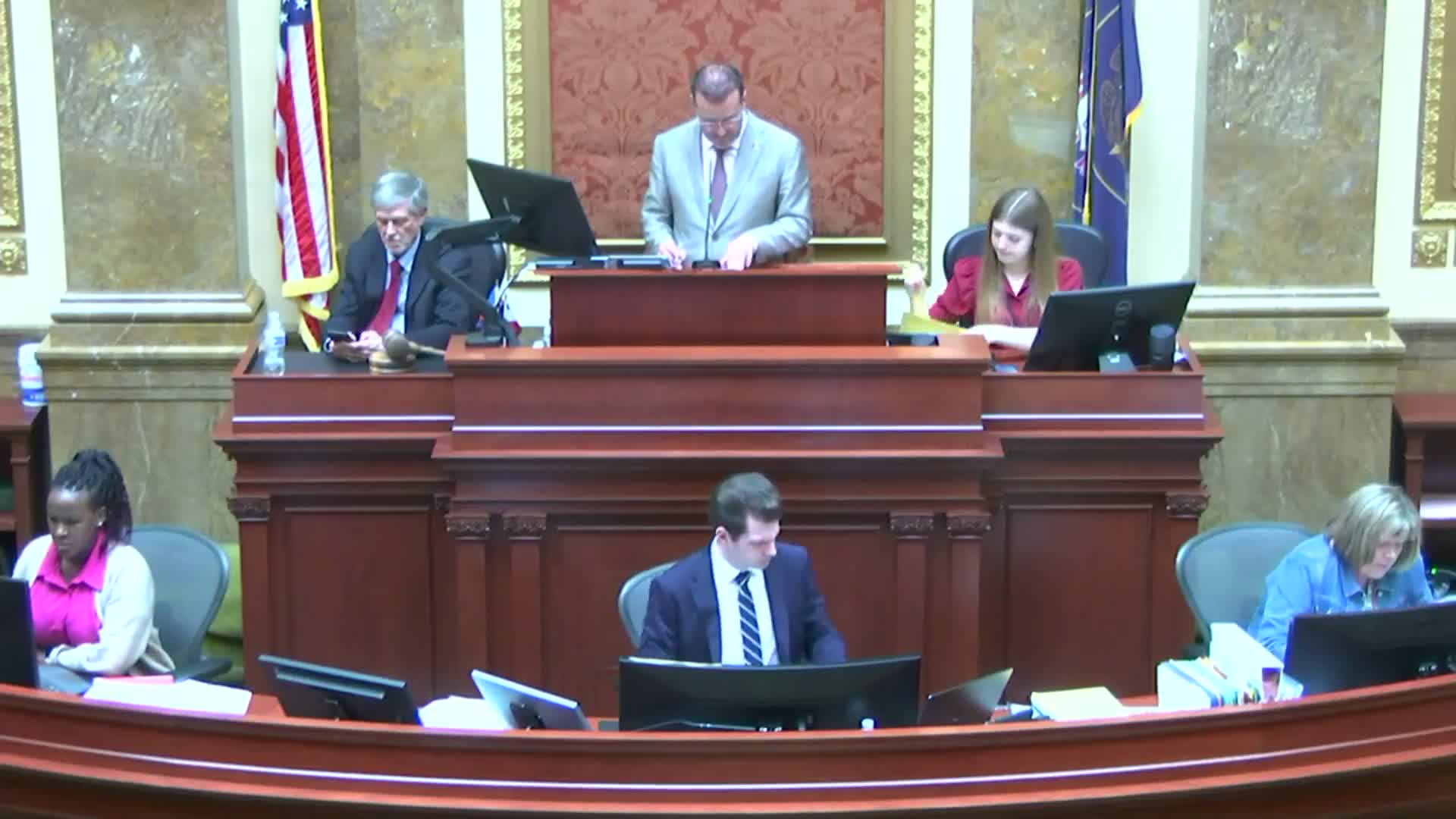
The House passed first substitute HB 543 on March 2 to amend the state’s treatment of certain securities entitlements and require clearer disclosure when those entitlements could be used as collateral. The substitute passed on the House floor, 50–21.
Representative Jason B. Kyle, sponsor of the substitute, described the measure as a transparency bill: “My bill simply says that if this occurs, then it needs to be transparent and and conspicuous, that this is happening,” he said. The measure would require notice when a financial intermediary or securities intermediary holds an entitlement that could be placed as collateral so customers understand priority and risk.
Opponents raised concerns that the substitute departs from widely adopted Uniform Commercial Code (UCC) practices. Representative Tuscher, who cited experience with the Uniform Law Commission, urged more interim work and cautioned that passage could make Utah a nonconforming state to the UCC: “If this bill were to pass in Utah, it would make Utah a nonconforming state to the uniform commercial code,” he said on the floor.
Supporters countered that a narrow transparency requirement helps protect consumers and that the substitute is a limited change from the original bill’s broader scope. Representative Colford and others noted the amendment seeks to give customers more information about the priority of their holdings and how intermediaries may treat entitlements in lending or insolvency scenarios.
After debate, the House adopted the substitute and recorded final passage 50–21. The measure will be transmitted to the Senate for further consideration.
Representative Jason B. Kyle, sponsor of the substitute, described the measure as a transparency bill: “My bill simply says that if this occurs, then it needs to be transparent and and conspicuous, that this is happening,” he said. The measure would require notice when a financial intermediary or securities intermediary holds an entitlement that could be placed as collateral so customers understand priority and risk.
Opponents raised concerns that the substitute departs from widely adopted Uniform Commercial Code (UCC) practices. Representative Tuscher, who cited experience with the Uniform Law Commission, urged more interim work and cautioned that passage could make Utah a nonconforming state to the UCC: “If this bill were to pass in Utah, it would make Utah a nonconforming state to the uniform commercial code,” he said on the floor.
Supporters countered that a narrow transparency requirement helps protect consumers and that the substitute is a limited change from the original bill’s broader scope. Representative Colford and others noted the amendment seeks to give customers more information about the priority of their holdings and how intermediaries may treat entitlements in lending or insolvency scenarios.
After debate, the House adopted the substitute and recorded final passage 50–21. The measure will be transmitted to the Senate for further consideration.
Don't Miss a Word: See the Full Meeting!
Go beyond summaries. Unlock every video, transcript, and key insight with a Founder Membership.
✓
Get instant access to full meeting videos
✓
Search and clip any phrase from complete transcripts
✓
Receive AI-powered summaries & custom alerts
✓
Enjoy lifetime, unrestricted access to government data
30-day money-back guarantee
