Roxbury teachers recommend HMH 'Interreading' after pilot; district plans phased rollout
February 27, 2026 | Roxbury Township School District, School Districts, New Jersey
This article was created by AI summarizing key points discussed. AI makes mistakes, so for full details and context, please refer to the video of the full meeting. Please report any errors so we can fix them. Report an error »
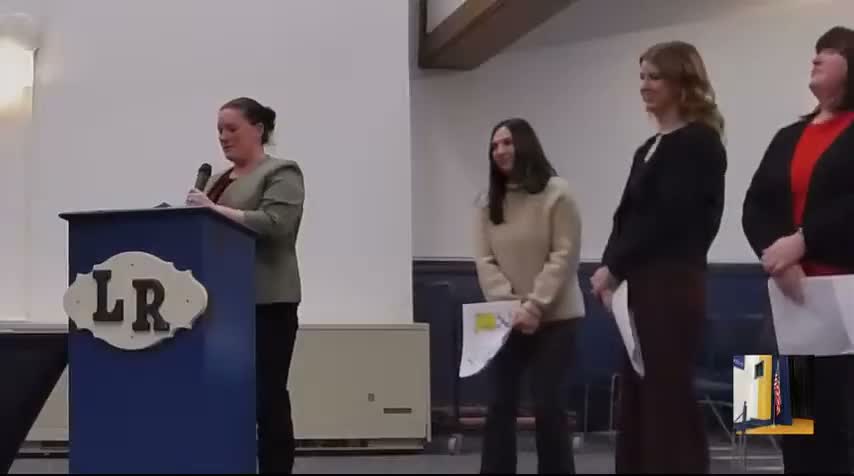
Jen Mower, the district supervisor of humanities for preschool through sixth grade, told the Roxbury Township Board of Education the district piloted two literacy programs and that HMH Interreading (version 3) is the one recommended for wider use. “Interreading…is a program based on teacher feedback,” Mower said, adding that elementary reading specialists voted unanimously for the program and that roughly 70% of piloting teachers across both programs preferred it.
Mower described the program as a structured‑literacy approach that combines phonics and phonemic‑awareness instruction with authentic, award‑winning texts, built‑in teacher manuals and assessments. She said the program provides “workbooks” that include literature students can mark up, an online component, and “tabletop books” for teacher/student use in class. The program will keep small‑group instruction and add tools to support English‑language development, she said.
Two pilot teachers who spoke to the board described classroom results. Becky Freeborn, who teaches resource‑room second and third grade at Nixon, said Interreading ‘‘meets the needs of a diverse group of learners’’ and includes multilingual supports and extensive online resources that helped planning and differentiation. Juliana DeCosta, a Nixon kindergarten teacher, told the board that the program’s decodable texts and vocabulary supports had produced observable growth in students’ phonics and reading skills during the pilot.
Mower said the district will phase the program in across grades: kindergarten will begin full implementation next year because incoming students will start fresh with the materials; grades 1–3 will continue to use the district’s Wilson Foundations program for the foundational skills component (30 minutes of the language arts block) while other grade‑level components phase in; grades 4–6 will move to the full program earlier because foundational skills will already be in place. The rollout includes summer and on‑demand training for teachers and shipments of all classroom materials in the spring so teachers can prepare.
The presentation also covered assessment and data tools. Mower said Interreading includes weekly, module and progress‑monitoring assessments and optional online practice tools (Amira was cited as one such support) intended to give teachers real‑time data to guide small‑group instruction and provide parent communication opportunities.
The board asked about technology use, differentiation for above‑grade readers and how the program supports multilingual learners. Mower said teachers can use the materials entirely on paper or use the online platform; the online system produces a numerical reading level to help match texts to advanced readers and supports multilingual lessons for classroom and small‑group instruction.
The board did not take a final vote on program adoption at the meeting; presenters said information nights for parents are planned and that the program launch is scheduled for the fall term.
Mower described the program as a structured‑literacy approach that combines phonics and phonemic‑awareness instruction with authentic, award‑winning texts, built‑in teacher manuals and assessments. She said the program provides “workbooks” that include literature students can mark up, an online component, and “tabletop books” for teacher/student use in class. The program will keep small‑group instruction and add tools to support English‑language development, she said.
Two pilot teachers who spoke to the board described classroom results. Becky Freeborn, who teaches resource‑room second and third grade at Nixon, said Interreading ‘‘meets the needs of a diverse group of learners’’ and includes multilingual supports and extensive online resources that helped planning and differentiation. Juliana DeCosta, a Nixon kindergarten teacher, told the board that the program’s decodable texts and vocabulary supports had produced observable growth in students’ phonics and reading skills during the pilot.
Mower said the district will phase the program in across grades: kindergarten will begin full implementation next year because incoming students will start fresh with the materials; grades 1–3 will continue to use the district’s Wilson Foundations program for the foundational skills component (30 minutes of the language arts block) while other grade‑level components phase in; grades 4–6 will move to the full program earlier because foundational skills will already be in place. The rollout includes summer and on‑demand training for teachers and shipments of all classroom materials in the spring so teachers can prepare.
The presentation also covered assessment and data tools. Mower said Interreading includes weekly, module and progress‑monitoring assessments and optional online practice tools (Amira was cited as one such support) intended to give teachers real‑time data to guide small‑group instruction and provide parent communication opportunities.
The board asked about technology use, differentiation for above‑grade readers and how the program supports multilingual learners. Mower said teachers can use the materials entirely on paper or use the online platform; the online system produces a numerical reading level to help match texts to advanced readers and supports multilingual lessons for classroom and small‑group instruction.
The board did not take a final vote on program adoption at the meeting; presenters said information nights for parents are planned and that the program launch is scheduled for the fall term.
View the Full Meeting & All Its Details
This article offers just a summary. Unlock complete video, transcripts, and insights as a Founder Member.
✓
Watch full, unedited meeting videos
✓
Search every word spoken in unlimited transcripts
✓
AI summaries & real-time alerts (all government levels)
✓
Permanent access to expanding government content
30-day money-back guarantee
