Committee approves requirement for small state sites to replace two‑stroke lawn equipment with electric at retirement
March 02, 2026 | 2026 Utah Legislature, Utah Legislature, Utah Legislative Branch, Utah
This article was created by AI summarizing key points discussed. AI makes mistakes, so for full details and context, please refer to the video of the full meeting. Please report any errors so we can fix them. Report an error »
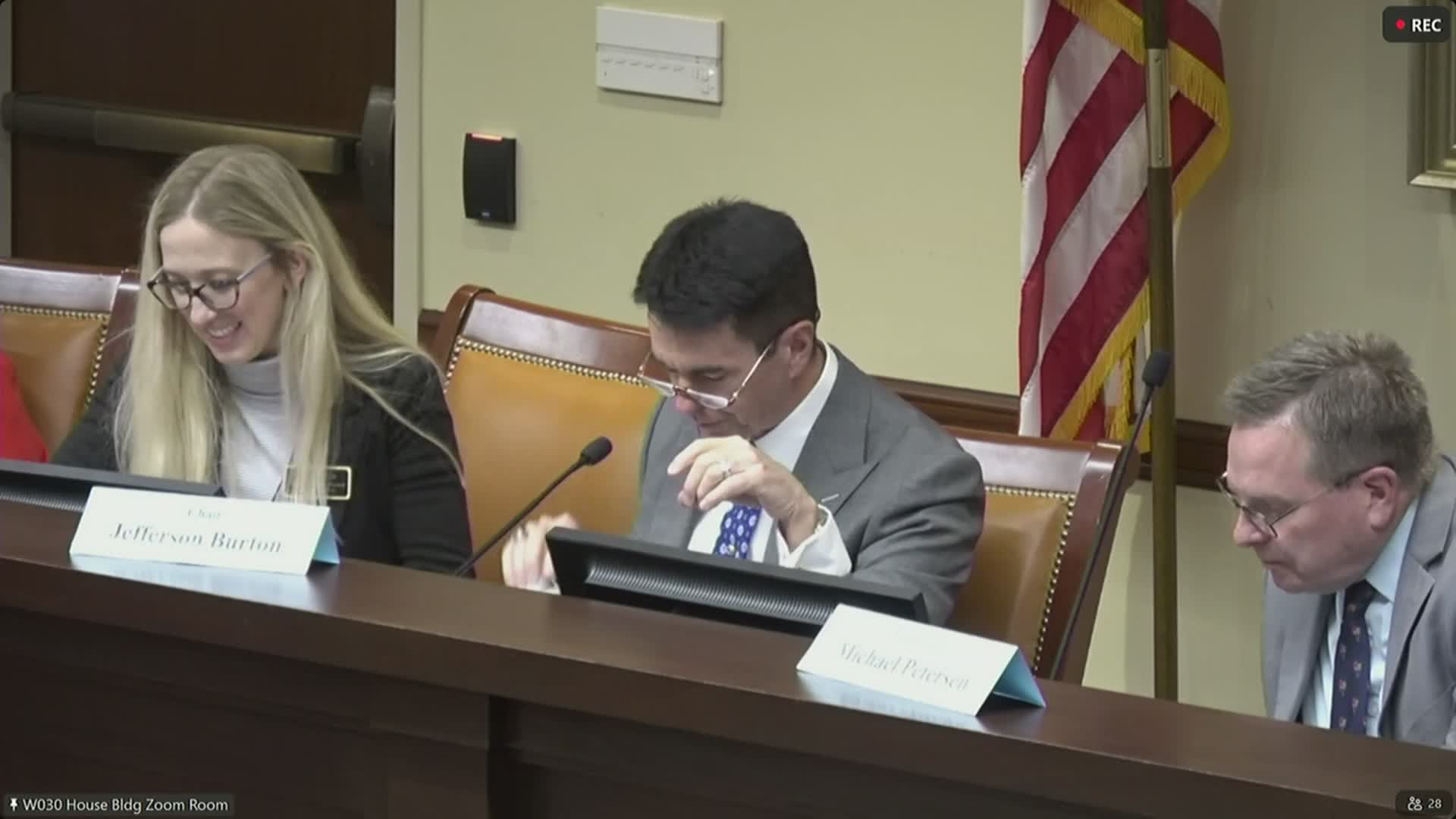
The Government Operations Committee on March 3 voted 7–3 to advance Senate Bill 176, a measure that would require state facilities along the Wasatch Front measuring under 50,000 square feet to replace two‑stroke gasoline landscaping equipment with electric models when the existing machines reach the end of their useful life.
Senator (presenting) said the change builds on a Division of Facilities and Construction Management pilot that tested electric landscaping tools and found long‑term savings, reduced noise and measurable air‑quality benefits. "Doing so has great measurable impacts for air quality," the sponsor told the committee, and urged members to support the second substitute as amended.
Andy Marm, director of DFCM, told the committee the 50,000 square‑foot threshold was selected because that is roughly the range pilot crews could maintain on a single battery charge without operational hardship. Marm said the pilot equipment remains in rotation and that the principal technical limitation encountered was battery life requiring return trips to trucks to swap batteries. "We found that that 50,000 square feet is right about the sweet spot where we can load a battery, take care of the grounds, and then be on our way without much hardship," Marm said.
Bryce Bird, director of the Division of Air Quality, told the committee the measure is "cost neutral for the state, but it's not air quality neutral," arguing two‑stroke engines are highly polluting and that replacing them would noticeably reduce local emissions. Bird noted existing incentive programs (airincentives.utah.gov) that complement adoption.
Committee members questioned whether mandating electrification was necessary where agencies had already adopted some electric equipment and sought clarification about the bill's cost‑prohibitive exception. Sponsor and staff said the bill intentionally leaves discretion to local facility managers to opt out in cases where terrain, slope, stoniness or cost make electric equipment impracticable.
The committee adopted a House amendment and then moved to a favorable recommendation on the second substitute as amended. The voice vote was tallied at 7–3, advancing SB176 out of committee.
What happens next: SB176 will be scheduled for floor action in the originating chamber unless amended further; the committee record shows staff and agencies plan to continue monitoring reliability and total‑cost comparisons as equipment is replaced at natural end of life.
Senator (presenting) said the change builds on a Division of Facilities and Construction Management pilot that tested electric landscaping tools and found long‑term savings, reduced noise and measurable air‑quality benefits. "Doing so has great measurable impacts for air quality," the sponsor told the committee, and urged members to support the second substitute as amended.
Andy Marm, director of DFCM, told the committee the 50,000 square‑foot threshold was selected because that is roughly the range pilot crews could maintain on a single battery charge without operational hardship. Marm said the pilot equipment remains in rotation and that the principal technical limitation encountered was battery life requiring return trips to trucks to swap batteries. "We found that that 50,000 square feet is right about the sweet spot where we can load a battery, take care of the grounds, and then be on our way without much hardship," Marm said.
Bryce Bird, director of the Division of Air Quality, told the committee the measure is "cost neutral for the state, but it's not air quality neutral," arguing two‑stroke engines are highly polluting and that replacing them would noticeably reduce local emissions. Bird noted existing incentive programs (airincentives.utah.gov) that complement adoption.
Committee members questioned whether mandating electrification was necessary where agencies had already adopted some electric equipment and sought clarification about the bill's cost‑prohibitive exception. Sponsor and staff said the bill intentionally leaves discretion to local facility managers to opt out in cases where terrain, slope, stoniness or cost make electric equipment impracticable.
The committee adopted a House amendment and then moved to a favorable recommendation on the second substitute as amended. The voice vote was tallied at 7–3, advancing SB176 out of committee.
What happens next: SB176 will be scheduled for floor action in the originating chamber unless amended further; the committee record shows staff and agencies plan to continue monitoring reliability and total‑cost comparisons as equipment is replaced at natural end of life.
Don't Miss a Word: See the Full Meeting!
Go beyond summaries. Unlock every video, transcript, and key insight with a Founder Membership.
✓
Get instant access to full meeting videos
✓
Search and clip any phrase from complete transcripts
✓
Receive AI-powered summaries & custom alerts
✓
Enjoy lifetime, unrestricted access to government data
30-day money-back guarantee
