Committee advances bill requiring shelters to notify rescues and allow quick transfers before euthanasia
March 02, 2026 | 2026 Utah Legislature, Utah Legislature, Utah Legislative Branch, Utah
This article was created by AI summarizing key points discussed. AI makes mistakes, so for full details and context, please refer to the video of the full meeting. Please report any errors so we can fix them. Report an error »
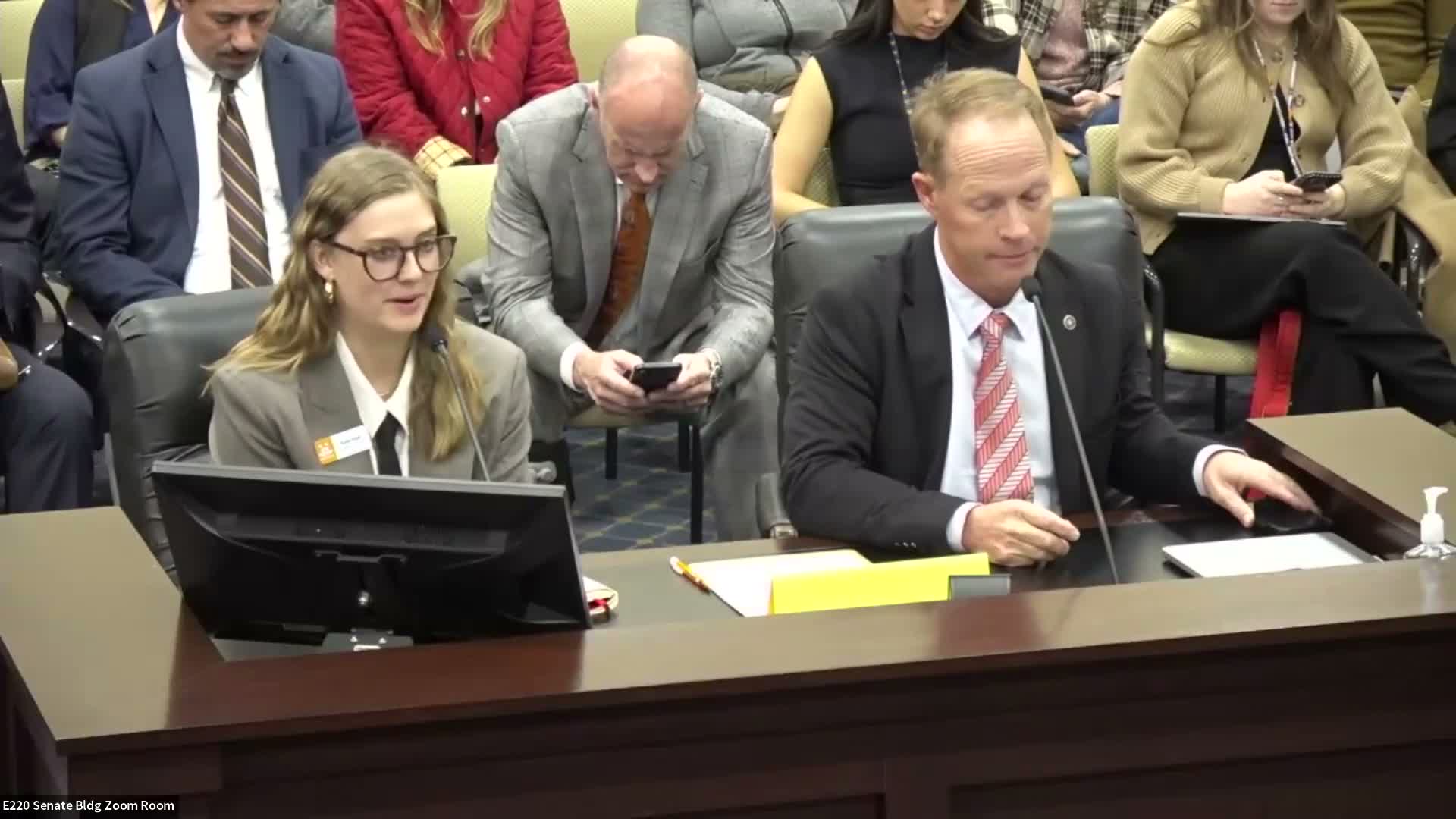
The House Political Subdivisions Committee on Wednesday adopted and recommended favorably second substitute Senate Bill 201, a measure that changes when and how municipal and county animal shelters notify rescue partners and creates a two-business-day pickup window for rescues before euthanasia decisions proceed.
Senator Grover, who brought the bill from the Senate, told the committee the second substitute reflects work with stakeholders and further clarifies operational details. "We've been working with stakeholders," Grover said. "Since the last committee meeting, we've been working even more." Kate Hall of Best Friends Animal Society, who spoke for the bill, summarized three main changes: notification method set by shelters, a two-business-day rescue pickup requirement, and clarified release-from-liability language for bad actors. "The first 1 clarifies that the notification method is established by the shelters," Hall said. "The second change ... the rescue group must collect within 2 days of notice."
Supporters — including shelter directors and rescue volunteers — said the bill will improve coordination and give animals more chances to be rehomed. Talia Butler, division director of Salt Lake County Animal Services, said Salt Lake County handles "10,000 plus a year" and credited rescue partners with increasing placement opportunities. "Taking an animal off our hands or out of our care ... saves taxpayer money," Butler said. Siri Maine, director/supervisor of Weber County animal services, said the bill would increase accountability and collaboration with rescue groups.
Opponents, chiefly municipal shelter and animal-control professionals, warned the bill would increase holding days and operational costs without providing funding. "The shelter rarely euthanizes for space," said Carrie Ward, who said she has worked in municipal shelters for 16 years and spoke in a personal capacity. Ward said extending timelines "increases confinement time, stress, disease, strain of staff, and taxpayers." Ian Williams, president of the Utah Animal Control Officers Association, criticized the substitute fiscal note and said a prior fiscal estimate of at least $6,000 ongoing had been dropped. "It still means that there's additional shelter days... staffing, housing, feeding, cleaning, vet care and liability," Williams said, calling for clearer drafting and broader dangerous-animal language than the dog-only carve-out in the substitute.
Representative Sam Arthur moved the committee adoption of the second substitute and then moved to recommend the bill favorably. After debate and public testimony, the committee voted to recommend SB201 favorably. The clerk read the recorded opposition: "the motion carries 5 to 4 with Representative Walter, Koehler, Fotisimono, and Hansen in opposition," according to the hearing record.
Proponents said the bill will create predictable, short transfer windows that help shelters and rescues coordinate placement; opponents said the state must address capacity and funding to avoid shifting costs to municipal shelters. The committee’s action sends the substitute to the next step in the legislative process with a favorable recommendation.
Senator Grover, who brought the bill from the Senate, told the committee the second substitute reflects work with stakeholders and further clarifies operational details. "We've been working with stakeholders," Grover said. "Since the last committee meeting, we've been working even more." Kate Hall of Best Friends Animal Society, who spoke for the bill, summarized three main changes: notification method set by shelters, a two-business-day rescue pickup requirement, and clarified release-from-liability language for bad actors. "The first 1 clarifies that the notification method is established by the shelters," Hall said. "The second change ... the rescue group must collect within 2 days of notice."
Supporters — including shelter directors and rescue volunteers — said the bill will improve coordination and give animals more chances to be rehomed. Talia Butler, division director of Salt Lake County Animal Services, said Salt Lake County handles "10,000 plus a year" and credited rescue partners with increasing placement opportunities. "Taking an animal off our hands or out of our care ... saves taxpayer money," Butler said. Siri Maine, director/supervisor of Weber County animal services, said the bill would increase accountability and collaboration with rescue groups.
Opponents, chiefly municipal shelter and animal-control professionals, warned the bill would increase holding days and operational costs without providing funding. "The shelter rarely euthanizes for space," said Carrie Ward, who said she has worked in municipal shelters for 16 years and spoke in a personal capacity. Ward said extending timelines "increases confinement time, stress, disease, strain of staff, and taxpayers." Ian Williams, president of the Utah Animal Control Officers Association, criticized the substitute fiscal note and said a prior fiscal estimate of at least $6,000 ongoing had been dropped. "It still means that there's additional shelter days... staffing, housing, feeding, cleaning, vet care and liability," Williams said, calling for clearer drafting and broader dangerous-animal language than the dog-only carve-out in the substitute.
Representative Sam Arthur moved the committee adoption of the second substitute and then moved to recommend the bill favorably. After debate and public testimony, the committee voted to recommend SB201 favorably. The clerk read the recorded opposition: "the motion carries 5 to 4 with Representative Walter, Koehler, Fotisimono, and Hansen in opposition," according to the hearing record.
Proponents said the bill will create predictable, short transfer windows that help shelters and rescues coordinate placement; opponents said the state must address capacity and funding to avoid shifting costs to municipal shelters. The committee’s action sends the substitute to the next step in the legislative process with a favorable recommendation.
View the Full Meeting & All Its Details
This article offers just a summary. Unlock complete video, transcripts, and insights as a Founder Member.
✓
Watch full, unedited meeting videos
✓
Search every word spoken in unlimited transcripts
✓
AI summaries & real-time alerts (all government levels)
✓
Permanent access to expanding government content
30-day money-back guarantee
