Senate Health Committee advances broad slate of public‑health bills; most pass, one measure fails
March 02, 2026 | 2026 Utah Legislature, Utah Legislature, Utah Legislative Branch, Utah
This article was created by AI summarizing key points discussed. AI makes mistakes, so for full details and context, please refer to the video of the full meeting. Please report any errors so we can fix them. Report an error »
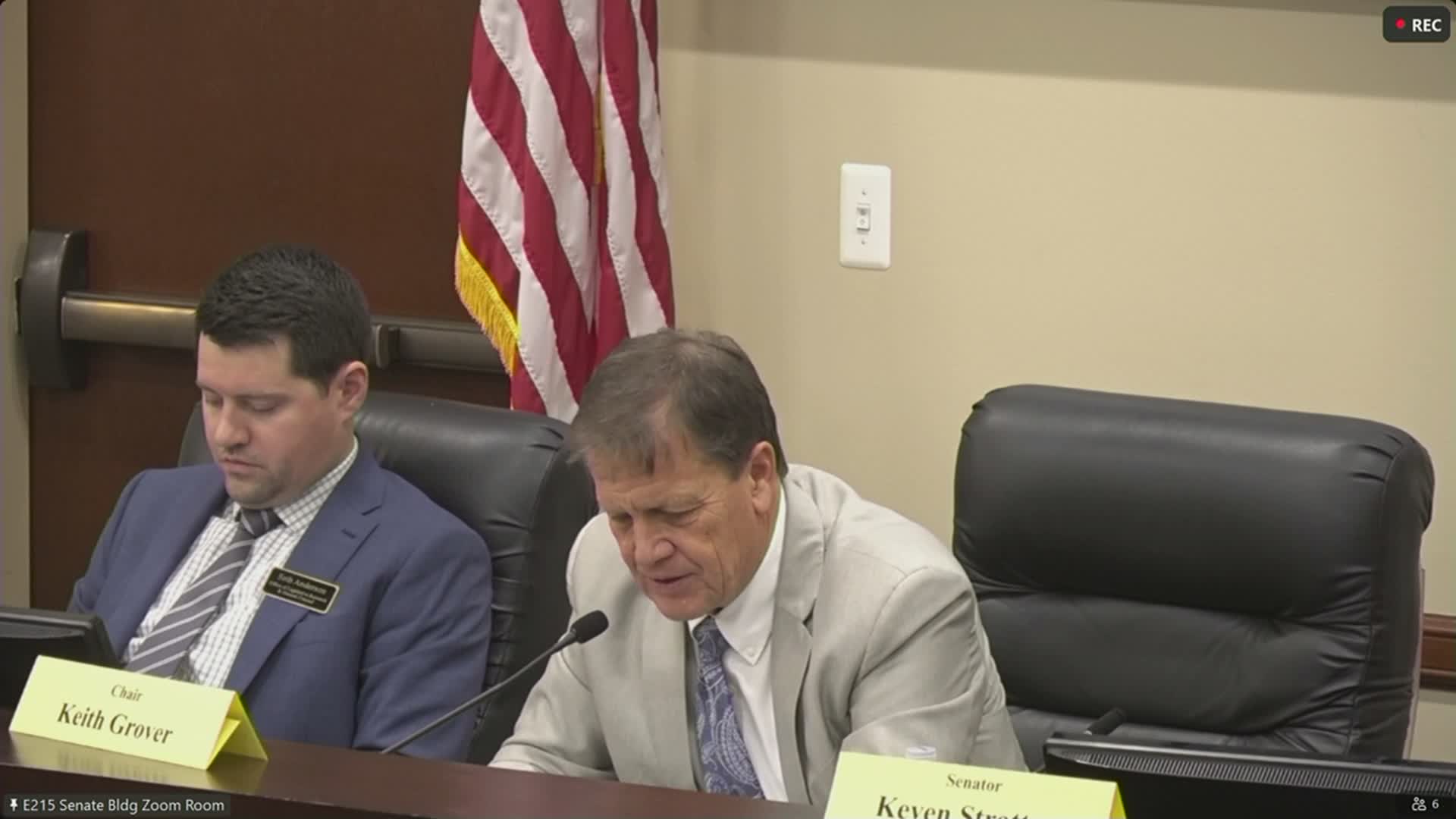
The Utah Senate Health and Human Services Standing Committee on March 4 heard presentations and public comment on a series of public‑health bills and voted to advance most to the Senate with favorable recommendations or place them on the consent calendar.
Among the measures the committee approved were SB 314, which would create a DHHS population‑health outreach program on sleep disorders; HB 15, which adjusts the state’s process if federal changes threaten the Medicaid expansion and preserves flexibility to restore targeted adult benefits; HB 468 to require insurers in select rural counties to contract with the state’s mobile mammography providers; and HCR 10, which would add bioidentical‑hormone coverage for PEHP beneficiaries (amended to add the word “perimenopause”).
Dr. David Blodgett, introduced to the committee as an expert on sleep, urged adoption of SB 314 and summarized the case for outreach: "About 35 percent of Utahns don't get enough sleep. That's 1,500,000 Utahns," and "about 15 percent of Utahns have some sort of a sleep disorder. That's 500,000 Utahns." The Utah Medical Association’s Michelle Macomber told the committee it "supports this bill and think[s] that sleep issues and problems have been rising."
The committee also moved a number of bills that primarily made technical or administrative changes. Sponsor discussion of SB 317 described it as updating statutory language from "opiate" to "opioid" in several definitions; the committee adopted a substitute and passed it. Representative sponsors repeatedly cited zero or minimal fiscal notes as a reason to expedite several items onto the consent calendar.
A number of bills drew public testimony. Stephanie Burdick of the Protect Medicaid Utah Coalition praised HB 15’s treatment of the Targeted Adult Medicaid (TAM) program as a flexible tool that has supported recovery and housing services. Mobile‑unit coordinators and rural health advocates described being turned away from screening appointments because some insurers did not contract with mobile mammography providers, testimony that supporters used to argue HB 468 will improve access for rural women.
Votes at a glance
• SB 314 (Sleep disorder education amendments) — Passed favorably in committee; placed on consent.
• SB 317 (Opioid terminology amendments, substitute) — Substitute adopted; passed favorably; placed on consent.
• HB 15 (Medicaid amendments, second substitute) — Passed favorably unanimously.
• HB 468 (Mobile mammography amendments, second substitute) — Passed favorably; placed on consent.
• ACR 8 (PEHP weight‑management pilot) — Passed favorably; placed on consent.
• HB 454 (Public assistance fraud amendments) — Passed favorably; placed on consent.
• HB 559 (Pregnancy and infant loss amendments, substitute) — Passed favorably unanimously; placed on consent.
• HB 321 (Inmate medical treatment rates, second substitute) — Passed favorably.
• HB 531 (Scarification/body‑art amendments, third substitute) — Passed favorably.
• HB 471 (Social service/snap & medicaid alignment) — First substitute passed favorably.
• HB 350 (Foods available at schools, substitute) — Passed favorably, committee vote 5–1.
• HCR 10 (PEHP bioidentical hormone coverage, as amended) — Passed favorably; placed on consent.
• HB 388 (Public‑health hazard/decontamination amendments) — Motion to pass failed in committee (see separate story).
Why this matters: The committee’s actions will send most of these items to the full Senate, several with expedited consent treatment that typically fast‑tracks floor consideration. Measures touching Medicaid structure, insurance coverage for preventive services, and school nutrition have statewide implications for access and spending priorities; the committee’s unanimous or near‑unanimous recommendations increase the chance the bills will reach the floor with momentum.
What’s next: Bills placed on the consent calendar will be scheduled for routine floor consideration; others will be scheduled for debate on the Senate floor. The committee adjourned without further votes; HB 388, the contested decontamination measure, failed at committee and will not advance from this panel unless revived by other action.
Among the measures the committee approved were SB 314, which would create a DHHS population‑health outreach program on sleep disorders; HB 15, which adjusts the state’s process if federal changes threaten the Medicaid expansion and preserves flexibility to restore targeted adult benefits; HB 468 to require insurers in select rural counties to contract with the state’s mobile mammography providers; and HCR 10, which would add bioidentical‑hormone coverage for PEHP beneficiaries (amended to add the word “perimenopause”).
Dr. David Blodgett, introduced to the committee as an expert on sleep, urged adoption of SB 314 and summarized the case for outreach: "About 35 percent of Utahns don't get enough sleep. That's 1,500,000 Utahns," and "about 15 percent of Utahns have some sort of a sleep disorder. That's 500,000 Utahns." The Utah Medical Association’s Michelle Macomber told the committee it "supports this bill and think[s] that sleep issues and problems have been rising."
The committee also moved a number of bills that primarily made technical or administrative changes. Sponsor discussion of SB 317 described it as updating statutory language from "opiate" to "opioid" in several definitions; the committee adopted a substitute and passed it. Representative sponsors repeatedly cited zero or minimal fiscal notes as a reason to expedite several items onto the consent calendar.
A number of bills drew public testimony. Stephanie Burdick of the Protect Medicaid Utah Coalition praised HB 15’s treatment of the Targeted Adult Medicaid (TAM) program as a flexible tool that has supported recovery and housing services. Mobile‑unit coordinators and rural health advocates described being turned away from screening appointments because some insurers did not contract with mobile mammography providers, testimony that supporters used to argue HB 468 will improve access for rural women.
Votes at a glance
• SB 314 (Sleep disorder education amendments) — Passed favorably in committee; placed on consent.
• SB 317 (Opioid terminology amendments, substitute) — Substitute adopted; passed favorably; placed on consent.
• HB 15 (Medicaid amendments, second substitute) — Passed favorably unanimously.
• HB 468 (Mobile mammography amendments, second substitute) — Passed favorably; placed on consent.
• ACR 8 (PEHP weight‑management pilot) — Passed favorably; placed on consent.
• HB 454 (Public assistance fraud amendments) — Passed favorably; placed on consent.
• HB 559 (Pregnancy and infant loss amendments, substitute) — Passed favorably unanimously; placed on consent.
• HB 321 (Inmate medical treatment rates, second substitute) — Passed favorably.
• HB 531 (Scarification/body‑art amendments, third substitute) — Passed favorably.
• HB 471 (Social service/snap & medicaid alignment) — First substitute passed favorably.
• HB 350 (Foods available at schools, substitute) — Passed favorably, committee vote 5–1.
• HCR 10 (PEHP bioidentical hormone coverage, as amended) — Passed favorably; placed on consent.
• HB 388 (Public‑health hazard/decontamination amendments) — Motion to pass failed in committee (see separate story).
Why this matters: The committee’s actions will send most of these items to the full Senate, several with expedited consent treatment that typically fast‑tracks floor consideration. Measures touching Medicaid structure, insurance coverage for preventive services, and school nutrition have statewide implications for access and spending priorities; the committee’s unanimous or near‑unanimous recommendations increase the chance the bills will reach the floor with momentum.
What’s next: Bills placed on the consent calendar will be scheduled for routine floor consideration; others will be scheduled for debate on the Senate floor. The committee adjourned without further votes; HB 388, the contested decontamination measure, failed at committee and will not advance from this panel unless revived by other action.
Don't Miss a Word: See the Full Meeting!
Go beyond summaries. Unlock every video, transcript, and key insight with a Founder Membership.
✓
Get instant access to full meeting videos
✓
Search and clip any phrase from complete transcripts
✓
Receive AI-powered summaries & custom alerts
✓
Enjoy lifetime, unrestricted access to government data
30-day money-back guarantee
