House advances dozens of bills across committees; many reports adopted by voice vote
March 03, 2026 | HOUSE OF REPRESENTATIVES, Committees, Legislative, Maryland
This article was created by AI summarizing key points discussed. AI makes mistakes, so for full details and context, please refer to the video of the full meeting. Please report any errors so we can fix them. Report an error »
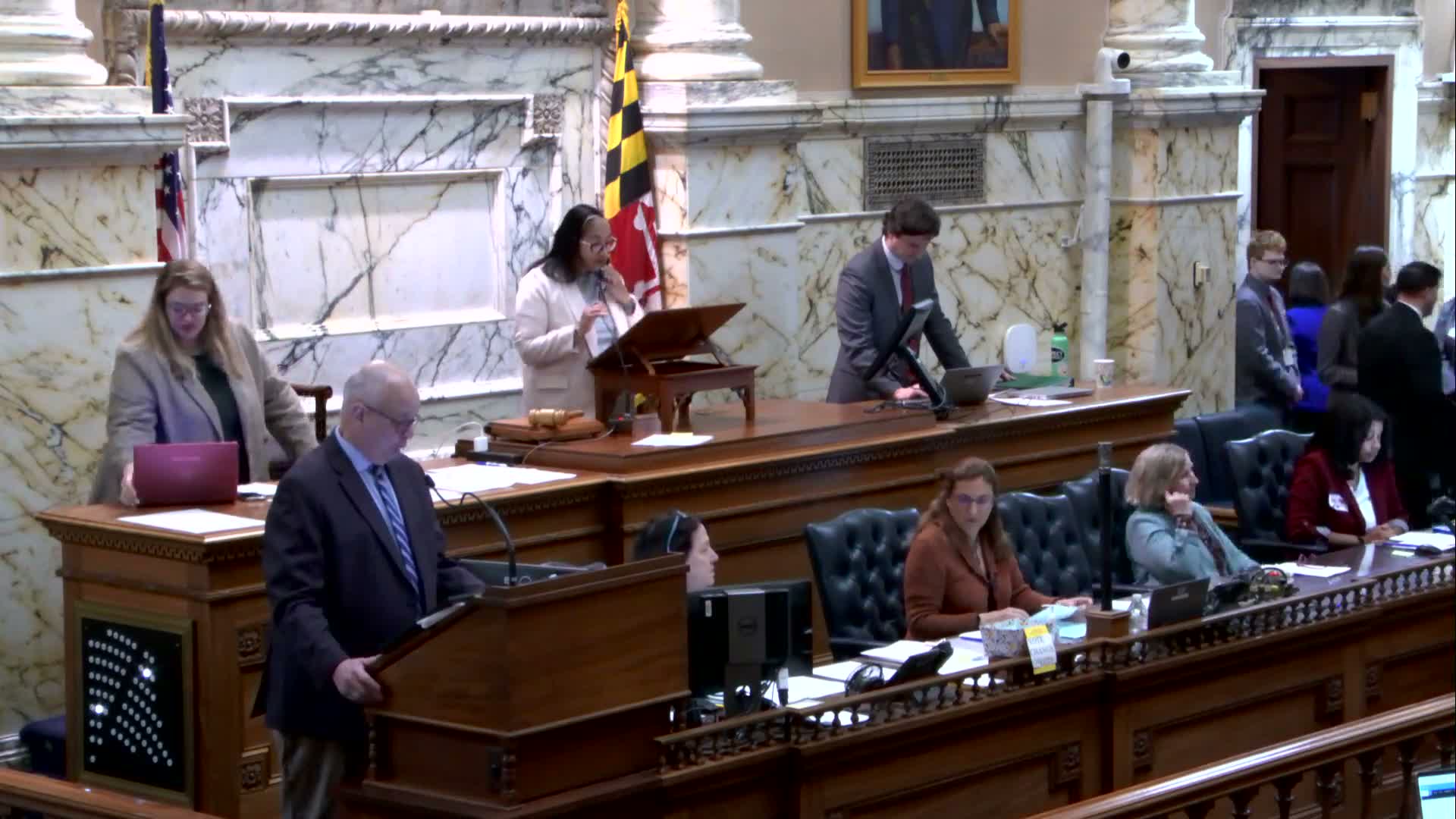
The Maryland House of Delegates on Feb. 21 carried favorable committee reports on a broad slate of bills across appropriations, environment and transportation, health, judiciary and ways and means committees.
Clerk readings and voice votes carried measures that included extensions to the Maryland Horse Industry Board, a prohibition on slaughtering racehorses for commercial purposes, administrative reporting requirements for the Attorney General's Environment and Natural Resources Crimes Unit, and a departmental housekeeping bill for the Office of Home Energy Programs to streamline redeterminations. Other measures advanced included interstate licensure compacts, consumer‑protection adjustments for pet cremation and burial services, and technical amendments across education and judiciary packages. Several bills received technical or clarifying amendments on the floor before the favorable reports were adopted.
Most actions were taken by voice vote: the Speaker called for ‘‘aye’’ and the membership signaled approval; where amendments were offered, they were read and adopted before the report was carried. When bills were carried, the clerk printed them for third reading or, where requested, the House placed measures in special order for consideration at a later, specified time.
Why it matters: carrying committee reports by the full House is the routine floor step that moves bills from committee toward final consideration. For the public, this session meant many proposals will return for a third reading vote or be subject to floor amendments in the next legislative day.
What comes next: Bills auto‑printed for third reading will appear on the next floor calendar for final debate or vote. Where the House placed bills in special order, sponsors indicated plans to offer or consider amendments on the following day.
Clerk readings and voice votes carried measures that included extensions to the Maryland Horse Industry Board, a prohibition on slaughtering racehorses for commercial purposes, administrative reporting requirements for the Attorney General's Environment and Natural Resources Crimes Unit, and a departmental housekeeping bill for the Office of Home Energy Programs to streamline redeterminations. Other measures advanced included interstate licensure compacts, consumer‑protection adjustments for pet cremation and burial services, and technical amendments across education and judiciary packages. Several bills received technical or clarifying amendments on the floor before the favorable reports were adopted.
Most actions were taken by voice vote: the Speaker called for ‘‘aye’’ and the membership signaled approval; where amendments were offered, they were read and adopted before the report was carried. When bills were carried, the clerk printed them for third reading or, where requested, the House placed measures in special order for consideration at a later, specified time.
Why it matters: carrying committee reports by the full House is the routine floor step that moves bills from committee toward final consideration. For the public, this session meant many proposals will return for a third reading vote or be subject to floor amendments in the next legislative day.
What comes next: Bills auto‑printed for third reading will appear on the next floor calendar for final debate or vote. Where the House placed bills in special order, sponsors indicated plans to offer or consider amendments on the following day.
View the Full Meeting & All Its Details
This article offers just a summary. Unlock complete video, transcripts, and insights as a Founder Member.
✓
Watch full, unedited meeting videos
✓
Search every word spoken in unlimited transcripts
✓
AI summaries & real-time alerts (all government levels)
✓
Permanent access to expanding government content
30-day money-back guarantee
