Falmouth Board of Health debates short‑term rental bylaw ahead of town meeting, agrees to craft joint statement
March 03, 2026 | Town of Falmouth, Barnstable County, Massachusetts
This article was created by AI summarizing key points discussed. AI makes mistakes, so for full details and context, please refer to the video of the full meeting. Please report any errors so we can fix them. Report an error »
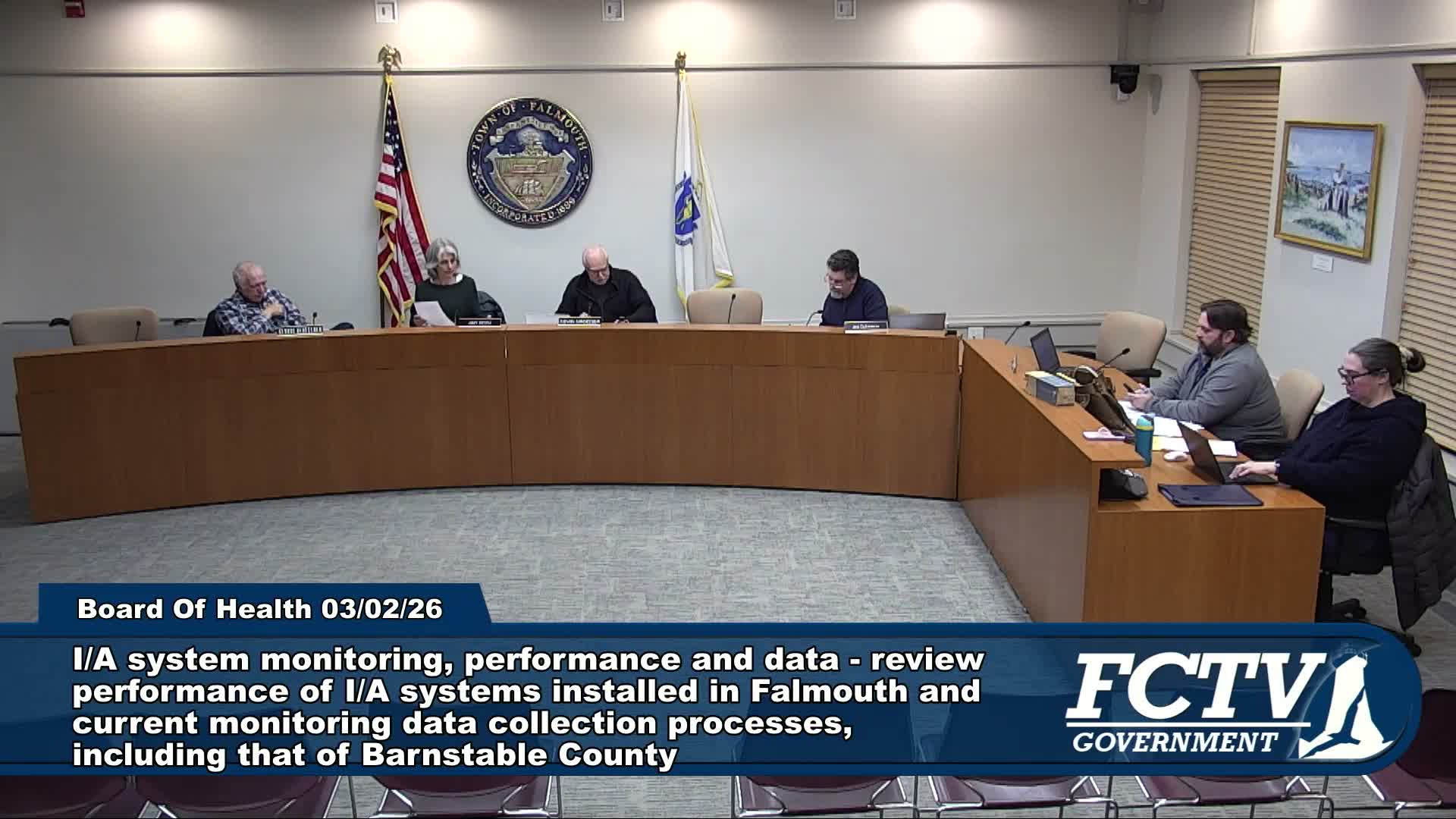
The Falmouth Board of Health reviewed a proposed short‑term rental bylaw slated for April town meeting and engaged in an extended debate over scope, staffing and enforcement. The proposed bylaw would enhance registration and require periodic inspections in some circumstances, and the board discussed whether the health department should be the enforcing authority or whether responsibilities belong with building services, the select board or a combination.
Board members weighed competing priorities. Some members argued short‑term rentals pose a lower direct public‑health threat than long‑term housing problems and that the town should prioritize restaurant inspections, communicable‑disease work, or public‑health nursing. Others noted the bylaw’s revenue potential (registration fees) could fund additional inspectors who could also address long‑term rental concerns. The health agent and staff clarified that state code already requires some inspection elements and that building and fire departments play a role in safety and habitability inspections.
Practical questions dominated: who will perform inspections, whether existing staffing can handle an expanded workload, how to locate long‑term rentals (which lack an easy central list), and whether short‑term rental fees would be dedicated to new staffing. The board recognized that drafting and enforcing a full inspection program would require additional staff or third‑party assistance and could create significant administrative and court‑enforcement work for non‑complying owners.
Rather than take a single position at the meeting, members agreed to prepare short individual statements outlining their views; staff will compile those into one unified statement for Town Meeting. Board members suggested options to recommend indefinite postponement for more work, to propose amendments removing the Board of Health as the primary enforcement authority, or to endorse the enhanced registration while reserving comment on enforcement and fee allocation.
Why it matters: The bylaw addresses nuisance, occupancy and safety concerns and could reshape local registration, inspection and enforcement practices. The board sought to clarify its practical role and resource needs before Town Meeting representation.
Next steps: Board members will email short statements to staff and the chair; staff and board members may propose an amendment ahead of the April 6 town meeting if consensus emerges.
Board members weighed competing priorities. Some members argued short‑term rentals pose a lower direct public‑health threat than long‑term housing problems and that the town should prioritize restaurant inspections, communicable‑disease work, or public‑health nursing. Others noted the bylaw’s revenue potential (registration fees) could fund additional inspectors who could also address long‑term rental concerns. The health agent and staff clarified that state code already requires some inspection elements and that building and fire departments play a role in safety and habitability inspections.
Practical questions dominated: who will perform inspections, whether existing staffing can handle an expanded workload, how to locate long‑term rentals (which lack an easy central list), and whether short‑term rental fees would be dedicated to new staffing. The board recognized that drafting and enforcing a full inspection program would require additional staff or third‑party assistance and could create significant administrative and court‑enforcement work for non‑complying owners.
Rather than take a single position at the meeting, members agreed to prepare short individual statements outlining their views; staff will compile those into one unified statement for Town Meeting. Board members suggested options to recommend indefinite postponement for more work, to propose amendments removing the Board of Health as the primary enforcement authority, or to endorse the enhanced registration while reserving comment on enforcement and fee allocation.
Why it matters: The bylaw addresses nuisance, occupancy and safety concerns and could reshape local registration, inspection and enforcement practices. The board sought to clarify its practical role and resource needs before Town Meeting representation.
Next steps: Board members will email short statements to staff and the chair; staff and board members may propose an amendment ahead of the April 6 town meeting if consensus emerges.
Don't Miss a Word: See the Full Meeting!
Go beyond summaries. Unlock every video, transcript, and key insight with a Founder Membership.
✓
Get instant access to full meeting videos
✓
Search and clip any phrase from complete transcripts
✓
Receive AI-powered summaries & custom alerts
✓
Enjoy lifetime, unrestricted access to government data
30-day money-back guarantee
