Appeals court hears clash over successor judge’s authority and whether case is moot after agreed parenting plan
March 03, 2026 | Legislative Ethics Board, Legislative Agencies, Legislative Sessions, Washington
This article was created by AI summarizing key points discussed. AI makes mistakes, so for full details and context, please refer to the video of the full meeting. Please report any errors so we can fix them. Report an error »
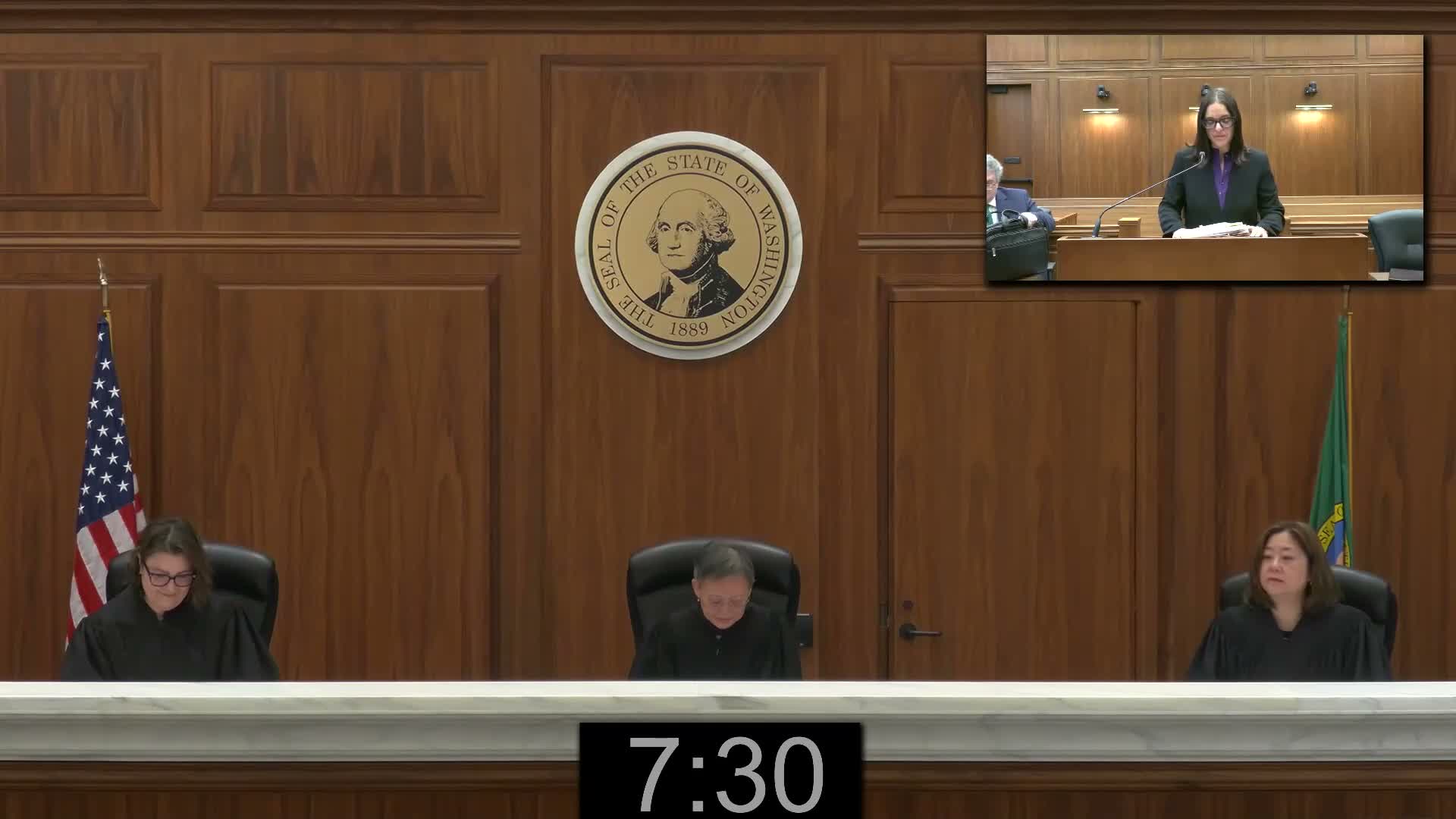
An appellate panel on the oral-argument calendar heard competing legal arguments over whether a successor judge lacked authority to enter new findings of fact on remand and whether the appeal is moot because the parties later entered an agreed parenting plan.
Risham Nassar, attorney for appellant Gina Bloom, told the court that "it is well settled that a successor judge is without power to enter findings of fact on the basis of testimony heard by the predecessor judge." Nassar argued the successor judge here "went into the trial record" and issued findings based on what she read, which Nassar said improperly allowed the judge to "cherry pick" parts of the paper record rather than hold a fresh evidentiary hearing.
Nassar cited Washington precedent and referenced statutory and rules authority on remand procedure. He said the court’s remand required the trial court to perform the two-step analysis for histories of domestic violence and that allowing successor judges to resolve those questions from a cold record would be a dangerous expansion of trial-court authority. He added that vacating the successor judge’s findings would have a concrete effect on the children’s custody and relocation rights because the challenged findings attach to the original parenting plan.
Respondent counsel Kevin Hohelter urged dismissal on mootness grounds, saying the parties later entered an agreed final parenting plan that "incorporates the very findings that are at the heart of this appeal," and that by agreeing to entry of those findings "Ms. Bloom has waived any challenge to those findings." He told the court that if the facts relied on by the successor judge were truly undisputed, the matter could be treated like a summary-judgment procedure under CR 56 and that no additional hearing was required; if factual disputes existed, Hohelter said Bloom had had opportunities to identify them and had not done so in the trial-level filings.
Throughout argument, justices probed whether Cressetto (Crosetto on the transcript) supplies the controlling framework—distinguishing when party consent exists from when it does not—and asked how a successor judge should treat credibility determinations in a record produced at trial. One justice pressed both sides on whether vacating the later findings could provide meaningful relief given the subsequent agreed parenting plan; Nassar countered that the court can still provide effective relief because the contested findings bear on the legal foundation of custody and relocation rights tied to the original parenting plan (the trial court entry referenced in the record is dated 07/14/2022).
No decision was announced from the bench. After rebuttal argument, the panel recessed; the court did not indicate an immediate ruling on mootness or on the merits.
Risham Nassar, attorney for appellant Gina Bloom, told the court that "it is well settled that a successor judge is without power to enter findings of fact on the basis of testimony heard by the predecessor judge." Nassar argued the successor judge here "went into the trial record" and issued findings based on what she read, which Nassar said improperly allowed the judge to "cherry pick" parts of the paper record rather than hold a fresh evidentiary hearing.
Nassar cited Washington precedent and referenced statutory and rules authority on remand procedure. He said the court’s remand required the trial court to perform the two-step analysis for histories of domestic violence and that allowing successor judges to resolve those questions from a cold record would be a dangerous expansion of trial-court authority. He added that vacating the successor judge’s findings would have a concrete effect on the children’s custody and relocation rights because the challenged findings attach to the original parenting plan.
Respondent counsel Kevin Hohelter urged dismissal on mootness grounds, saying the parties later entered an agreed final parenting plan that "incorporates the very findings that are at the heart of this appeal," and that by agreeing to entry of those findings "Ms. Bloom has waived any challenge to those findings." He told the court that if the facts relied on by the successor judge were truly undisputed, the matter could be treated like a summary-judgment procedure under CR 56 and that no additional hearing was required; if factual disputes existed, Hohelter said Bloom had had opportunities to identify them and had not done so in the trial-level filings.
Throughout argument, justices probed whether Cressetto (Crosetto on the transcript) supplies the controlling framework—distinguishing when party consent exists from when it does not—and asked how a successor judge should treat credibility determinations in a record produced at trial. One justice pressed both sides on whether vacating the later findings could provide meaningful relief given the subsequent agreed parenting plan; Nassar countered that the court can still provide effective relief because the contested findings bear on the legal foundation of custody and relocation rights tied to the original parenting plan (the trial court entry referenced in the record is dated 07/14/2022).
No decision was announced from the bench. After rebuttal argument, the panel recessed; the court did not indicate an immediate ruling on mootness or on the merits.
View the Full Meeting & All Its Details
This article offers just a summary. Unlock complete video, transcripts, and insights as a Founder Member.
✓
Watch full, unedited meeting videos
✓
Search every word spoken in unlimited transcripts
✓
AI summaries & real-time alerts (all government levels)
✓
Permanent access to expanding government content
30-day money-back guarantee
