York City review board conditionally approves larger storefront opening at 101 North Newberry
February 27, 2026 | York City, York County, Pennsylvania
This article was created by AI summarizing key points discussed. AI makes mistakes, so for full details and context, please refer to the video of the full meeting. Please report any errors so we can fix them. Report an error »
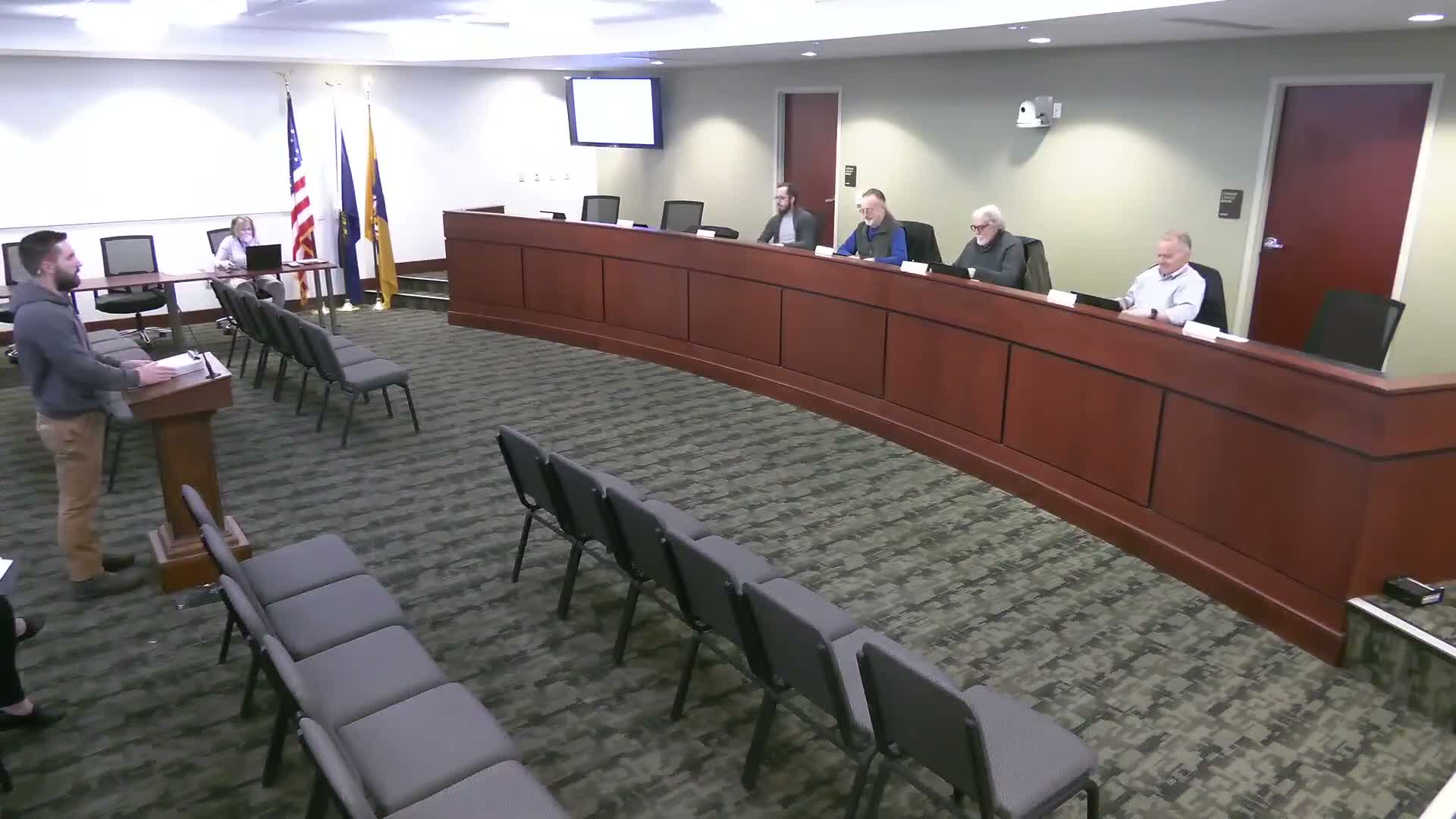
The York City Historical Architectural Review Board on Thursday conditionally approved a proposal to enlarge a storefront opening at 101 North Newberry, but required the applicant to submit final drawings showing two vertical elements and additional documentation before the permit is finalized.
The applicant’s representative told the board the goal was “to kinda go through last time. We’re looking to add a window” and presented updated sketches and supplemental photos after earlier drawings were judged insufficient. Committee members raised concerns about the change in proportion, noting the existing storefront includes a horizontal element (a transom or mullion) that currently balances the bay window above.
Board members said the proposed single, nearly 8-foot opening alters the façade’s vertical rhythm and may require structural intervention. One member said an engineer or plans reviewer should confirm whether a structural header or middle support is needed before the owner orders materials; another said the change “does not meet the design guidelines” and cited the Secretary of the Interior’s standards as a guiding reference for compatibility.
Members suggested lower-cost aesthetic alternatives — simulated divided lights (SDL) or an applied mullion — that would retain more vertical proportion while allowing a large single pane of glass. The applicant expressed cost concerns and said bringing in an engineer or additional fees could make the project unaffordable for the owner.
The board also advised consulting the city permits office because changing the width of the opening triggers the Uniform Construction Code and a building permit. Staff offered contact information for Sheldon Scott, deputy director of the Department of Inspection, to help the applicant understand what plan details and structural calculations the plans reviewer will require.
After discussion, a board member moved to approve the application as amended, requiring drawings that show the addition of two vertical elements aligned with the jambs of the windows above and submission of further documentation to the city; the motion was seconded, put to a voice vote and approved. The motion was recorded as a conditional approval pending final permit drawings and any structural information the permits office requires.
The applicant thanked the board and said they would return with sketches and cost estimates. The board’s conditional approval allows the applicant to pursue permit review but requires that the final appearance reflect the vertical proportions and the documented structural solution.
The applicant’s representative told the board the goal was “to kinda go through last time. We’re looking to add a window” and presented updated sketches and supplemental photos after earlier drawings were judged insufficient. Committee members raised concerns about the change in proportion, noting the existing storefront includes a horizontal element (a transom or mullion) that currently balances the bay window above.
Board members said the proposed single, nearly 8-foot opening alters the façade’s vertical rhythm and may require structural intervention. One member said an engineer or plans reviewer should confirm whether a structural header or middle support is needed before the owner orders materials; another said the change “does not meet the design guidelines” and cited the Secretary of the Interior’s standards as a guiding reference for compatibility.
Members suggested lower-cost aesthetic alternatives — simulated divided lights (SDL) or an applied mullion — that would retain more vertical proportion while allowing a large single pane of glass. The applicant expressed cost concerns and said bringing in an engineer or additional fees could make the project unaffordable for the owner.
The board also advised consulting the city permits office because changing the width of the opening triggers the Uniform Construction Code and a building permit. Staff offered contact information for Sheldon Scott, deputy director of the Department of Inspection, to help the applicant understand what plan details and structural calculations the plans reviewer will require.
After discussion, a board member moved to approve the application as amended, requiring drawings that show the addition of two vertical elements aligned with the jambs of the windows above and submission of further documentation to the city; the motion was seconded, put to a voice vote and approved. The motion was recorded as a conditional approval pending final permit drawings and any structural information the permits office requires.
The applicant thanked the board and said they would return with sketches and cost estimates. The board’s conditional approval allows the applicant to pursue permit review but requires that the final appearance reflect the vertical proportions and the documented structural solution.
View the Full Meeting & All Its Details
This article offers just a summary. Unlock complete video, transcripts, and insights as a Founder Member.
✓
Watch full, unedited meeting videos
✓
Search every word spoken in unlimited transcripts
✓
AI summaries & real-time alerts (all government levels)
✓
Permanent access to expanding government content
30-day money-back guarantee
