Sponsor, BetMGM and revenue office outline consumer safeguards and fiscal estimates for mobile sports betting bill
February 27, 2026 | 2026 Legislature Alaska, Alaska
This article was created by AI summarizing key points discussed. AI makes mistakes, so for full details and context, please refer to the video of the full meeting. Please report any errors so we can fix them. Report an error »
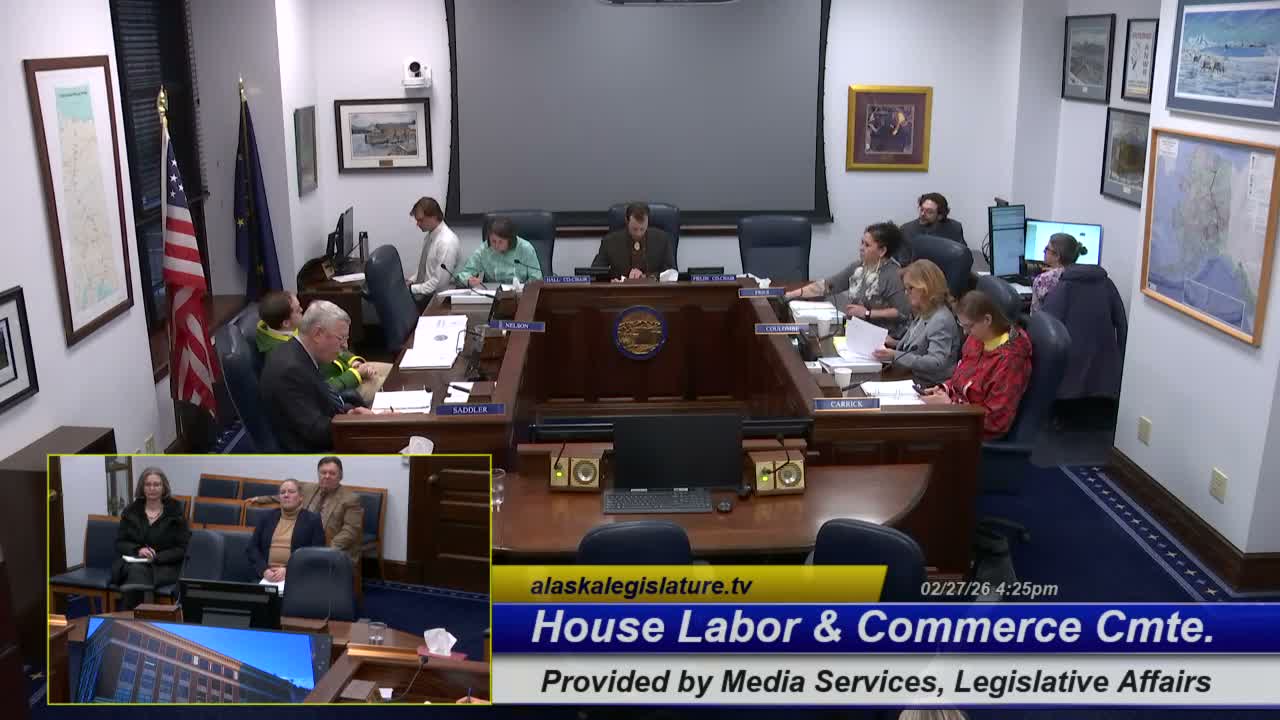
Representative David Nelson reintroduced HB145 to the House Labor and Commerce Committee on Feb. 7, describing the measure as legalizing mobile sports wagering to create a new revenue stream for Alaska and to draw consumers away from unregulated offshore operators into a regulated market with consumer protections.
Richard Taylor, director of responsible gambling for BetMGM, testified in strong support. "HB145 gives Alaska the ability to replace that unsafe environment with a regulated market that protects consumers and generates tax revenue for the state," Taylor said. He described company and industry tools that would be required in a regulated market: age and identity verification using bank-level security, geofencing to ensure wagers originate inside regulated jurisdictions, deposit and loss limits, self-exclusion, and operator procedures for checking and intervening when customers display signs of problem gambling.
Committee members probed the likely market effects and social costs. When asked how much activity increases after legalization, Taylor said markets typically see an initial spike as a new legal product launches and offered to provide state-by-state data to the committee post-hearing. Taylor said about "1 to 2% of accounts do enter into a self exclusion" in jurisdictions where the operator and regulators maintain such programs; he explained that operators work with statewide self-exclusion lists and may suspend or close accounts when communications or behaviors raise concern.
Representative Sadler and others asked the sponsors and industry to provide comparative data on problem-gambling prevalence and the expected social cost per person with a gambling disorder, noting estimates discussed in the hearing ranged from roughly 2% prevalence in harder-to-access markets to as much as 6% where gambling is ubiquitous. Several members said they want both proponent testimony and opposing perspectives before deciding.
On fiscal impact, acting Tax Director Brandon Spanos (Department of Revenue) told the committee the fiscal note projects annual revenue beginning in FY2028 in a wide range from $1,000,000 to $17,000,000, with a median expected revenue of about $12,000,000. Spanos cautioned that the estimate is uncertain and based on comparisons to other states that have legalized sports wagering.
Committee members asked for a comparative table showing differences across states, requested data from operators on patron-volume increases and social-cost estimates, and sought testimony from opponents before concluding the hearing. The committee took no vote and said it would return for further questions and examination of HB145.
Richard Taylor, director of responsible gambling for BetMGM, testified in strong support. "HB145 gives Alaska the ability to replace that unsafe environment with a regulated market that protects consumers and generates tax revenue for the state," Taylor said. He described company and industry tools that would be required in a regulated market: age and identity verification using bank-level security, geofencing to ensure wagers originate inside regulated jurisdictions, deposit and loss limits, self-exclusion, and operator procedures for checking and intervening when customers display signs of problem gambling.
Committee members probed the likely market effects and social costs. When asked how much activity increases after legalization, Taylor said markets typically see an initial spike as a new legal product launches and offered to provide state-by-state data to the committee post-hearing. Taylor said about "1 to 2% of accounts do enter into a self exclusion" in jurisdictions where the operator and regulators maintain such programs; he explained that operators work with statewide self-exclusion lists and may suspend or close accounts when communications or behaviors raise concern.
Representative Sadler and others asked the sponsors and industry to provide comparative data on problem-gambling prevalence and the expected social cost per person with a gambling disorder, noting estimates discussed in the hearing ranged from roughly 2% prevalence in harder-to-access markets to as much as 6% where gambling is ubiquitous. Several members said they want both proponent testimony and opposing perspectives before deciding.
On fiscal impact, acting Tax Director Brandon Spanos (Department of Revenue) told the committee the fiscal note projects annual revenue beginning in FY2028 in a wide range from $1,000,000 to $17,000,000, with a median expected revenue of about $12,000,000. Spanos cautioned that the estimate is uncertain and based on comparisons to other states that have legalized sports wagering.
Committee members asked for a comparative table showing differences across states, requested data from operators on patron-volume increases and social-cost estimates, and sought testimony from opponents before concluding the hearing. The committee took no vote and said it would return for further questions and examination of HB145.
View the Full Meeting & All Its Details
This article offers just a summary. Unlock complete video, transcripts, and insights as a Founder Member.
✓
Watch full, unedited meeting videos
✓
Search every word spoken in unlimited transcripts
✓
AI summaries & real-time alerts (all government levels)
✓
Permanent access to expanding government content
30-day money-back guarantee
