Lawmakers hear broad support and technical concerns on guardianship overhaul; bill set aside for further review
March 02, 2026 | 2026 Legislature Alaska, Alaska
This article was created by AI summarizing key points discussed. AI makes mistakes, so for full details and context, please refer to the video of the full meeting. Please report any errors so we can fix them. Report an error »
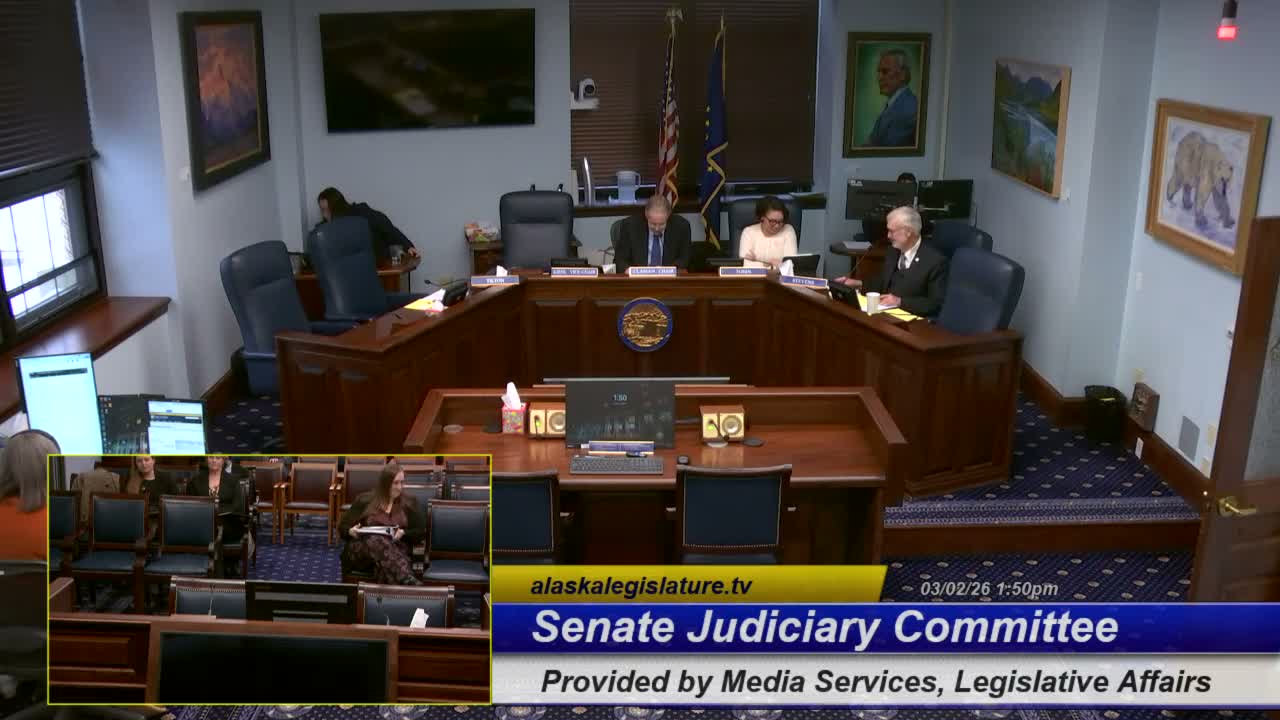
The Alaska Senate Judiciary Committee on March 2 heard detailed testimony on Senate Bill 190, a proposed Uniform Act on guardianship and conservatorship, including support from national model-drafters and disability advocates and technical concerns from the Alaska court system and state agencies. After testimony, the committee set the bill aside for further review and invited sponsor amendments by March 9 at 5 p.m.
Noah Klein, associate counsel for the Alaska court system, described several operational impacts if SB190 becomes law: the courts would need to rewrite probate rules, update forms and website guidance, and add judicial training. He said the bill would eliminate testamentary appointments (creating a small number of additional hearings), require appointment of court "visitors" in some minor guardianship cases (the bill does not specify visitor training or who would pay costs), and make monitoring of guardianships statutory rather than optional. Klein said the bill lowers the age at which a minor can object to appointment to 12, shortens the deadline for guardianship plans from 90 days to 60 days, and expands guardianship reporting requirements "from about 8 items to about 15–16." He asked that the effective date be delayed (suggesting July 2027) to allow rulemaking and form updates.
James Denson, director of the Office of Public Advocacy, warned that sweeping changes could generate new case law and increase workloads for the public guardian section and family guardians, especially in rural areas; he described the fiscal note as indeterminate because amendments could change resource needs. Diana Thornton, administrative services director at the Department of Public Safety, said DPS's fiscal estimate covers a one-time programming change to the criminal history registry to add new protective-order categories, including programming, testing and deployment costs.
Witnesses who spoke in favor included Benjamin Wazewski of the Uniform Law Commission, who said SB190 reflects a national effort to modernize guardianship law and has been adopted in several states; Michael Christian of the Statewide Independent Living Council and Naomi Stettison of Reach Inc. described how supported decision-making and less-restrictive alternatives can preserve autonomy for people with disabilities and urged lawmakers to advance the bill.
The chair closed public testimony, set SB190 aside for further review, and requested that any sponsor amendments be submitted electronically by Monday, March 9 at 5 p.m. The committee did not vote on the bill during this meeting.
Noah Klein, associate counsel for the Alaska court system, described several operational impacts if SB190 becomes law: the courts would need to rewrite probate rules, update forms and website guidance, and add judicial training. He said the bill would eliminate testamentary appointments (creating a small number of additional hearings), require appointment of court "visitors" in some minor guardianship cases (the bill does not specify visitor training or who would pay costs), and make monitoring of guardianships statutory rather than optional. Klein said the bill lowers the age at which a minor can object to appointment to 12, shortens the deadline for guardianship plans from 90 days to 60 days, and expands guardianship reporting requirements "from about 8 items to about 15–16." He asked that the effective date be delayed (suggesting July 2027) to allow rulemaking and form updates.
James Denson, director of the Office of Public Advocacy, warned that sweeping changes could generate new case law and increase workloads for the public guardian section and family guardians, especially in rural areas; he described the fiscal note as indeterminate because amendments could change resource needs. Diana Thornton, administrative services director at the Department of Public Safety, said DPS's fiscal estimate covers a one-time programming change to the criminal history registry to add new protective-order categories, including programming, testing and deployment costs.
Witnesses who spoke in favor included Benjamin Wazewski of the Uniform Law Commission, who said SB190 reflects a national effort to modernize guardianship law and has been adopted in several states; Michael Christian of the Statewide Independent Living Council and Naomi Stettison of Reach Inc. described how supported decision-making and less-restrictive alternatives can preserve autonomy for people with disabilities and urged lawmakers to advance the bill.
The chair closed public testimony, set SB190 aside for further review, and requested that any sponsor amendments be submitted electronically by Monday, March 9 at 5 p.m. The committee did not vote on the bill during this meeting.
Don't Miss a Word: See the Full Meeting!
Go beyond summaries. Unlock every video, transcript, and key insight with a Founder Membership.
✓
Get instant access to full meeting videos
✓
Search and clip any phrase from complete transcripts
✓
Receive AI-powered summaries & custom alerts
✓
Enjoy lifetime, unrestricted access to government data
30-day money-back guarantee
