Glen Rock board flags tough budget year as trustees weigh cuts, committee work
March 02, 2026 | Glen Rock Public School District, School Districts, New Jersey
This article was created by AI summarizing key points discussed. AI makes mistakes, so for full details and context, please refer to the video of the full meeting. Please report any errors so we can fix them. Report an error »
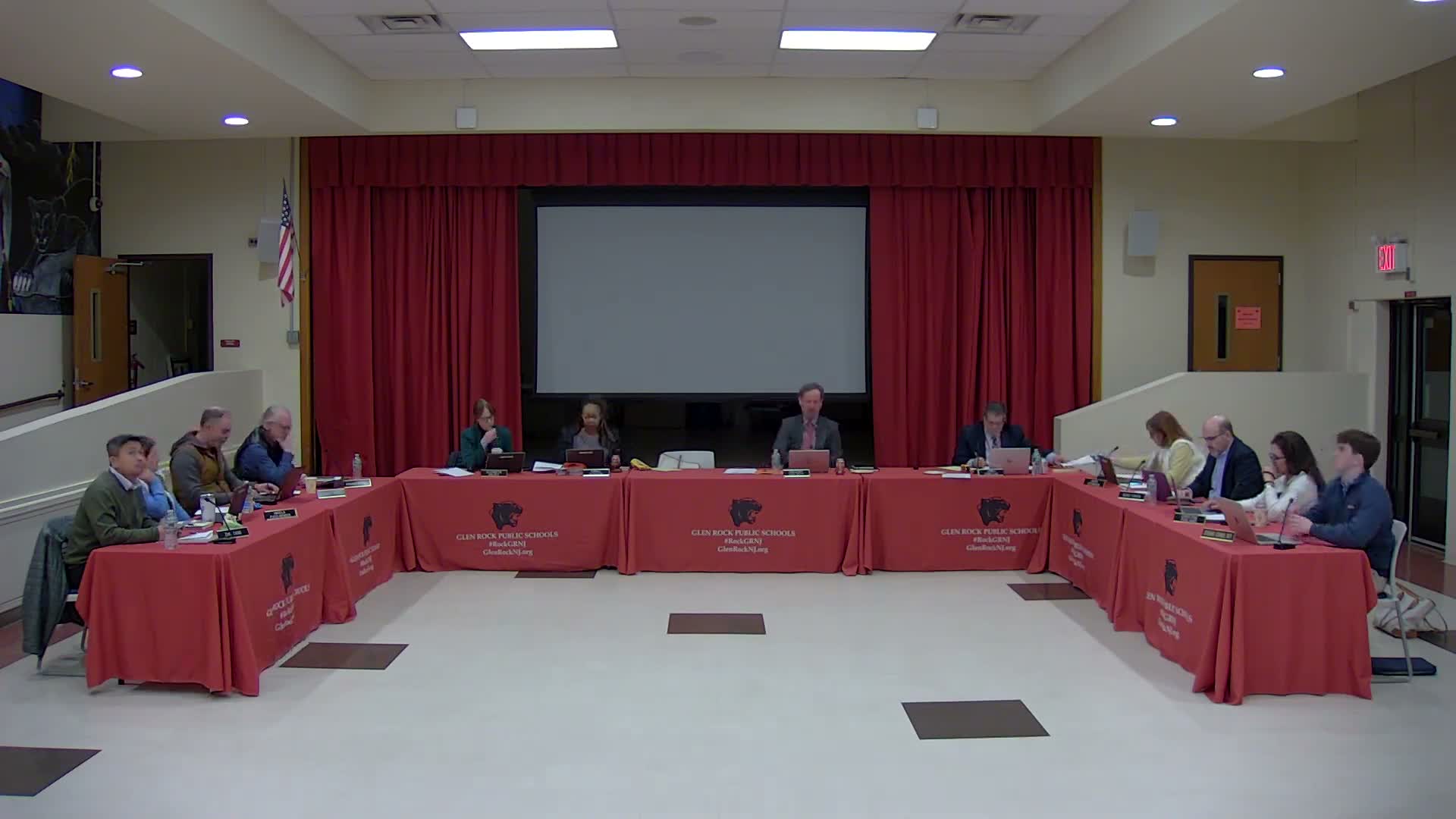
Glen Rock — Trustees at the Glen Rock Board of Education’s March 2 meeting were briefed on the district’s 2026–27 budget outlook and agreed to continue detailed committee work as state aid numbers and health‑insurance costs tighten the district’s finances.
James, the budget committee chair, told the board the district is facing the "same challenging budget year" as many New Jersey districts and described a timeline that hinges on state aid finalization in mid‑March. "The next milestone that we have is March 12, where we'll know the final numbers of the New Jersey state aid," he said. "That is the glide slope towards what we have of 05/05/2026, where we're going to approve our finalized budget." (Budget Committee Chair)
Business Administrator Mister Canales outlined the technical timeline: "I should get the numbers the morning of March 12, and the committee will meet in the evening of March 12," he said. Canales and trustees described continuing work to reduce reliance on excess surplus and to prioritize where cuts or savings might be made.
Trustees praised the committee’s micro‑meeting approach — small groups of trustees and administrators that reviewed lines in detail — but several members pressed for more comparative data and clearer public presentations. One trustee said the board needs both qualitative context about what programs deliver and quantitative comparisons to similar districts before endorsing substantive cuts.
Public commenters and some trustees urged sharper scrutiny of administrative and legal spending. Resident Sanjeev Ori told the board it must find "efficiencies" and produce clearer public materials showing 10‑year trends and how proposed choices would affect services. "We're spending too much time discussing things that don't matter," he said during public comment. (Sanjeev Ori, resident)
Board members discussed potential savings already realized — a new photocopier contract that saved about $30,000 and a Verizon data‑line audit that reduced costs by about $35,000 — but warned that health‑care increases could swamp incremental savings. Trustees agreed to continue using the budget committee and micro‑meetings to test options, requested more visual briefings for the public, and scheduled committee milestones leading to tentative budget submission later in March.
The board emphasized that the process will separate discussion (options and trade‑offs), direction (staff follow‑up and data requests) and formal decisions (votes on the tentative budget and later public hearing). The committee expects the district to present a tentative budget for county review in late March and to hold the required public hearing in early May.
James, the budget committee chair, told the board the district is facing the "same challenging budget year" as many New Jersey districts and described a timeline that hinges on state aid finalization in mid‑March. "The next milestone that we have is March 12, where we'll know the final numbers of the New Jersey state aid," he said. "That is the glide slope towards what we have of 05/05/2026, where we're going to approve our finalized budget." (Budget Committee Chair)
Business Administrator Mister Canales outlined the technical timeline: "I should get the numbers the morning of March 12, and the committee will meet in the evening of March 12," he said. Canales and trustees described continuing work to reduce reliance on excess surplus and to prioritize where cuts or savings might be made.
Trustees praised the committee’s micro‑meeting approach — small groups of trustees and administrators that reviewed lines in detail — but several members pressed for more comparative data and clearer public presentations. One trustee said the board needs both qualitative context about what programs deliver and quantitative comparisons to similar districts before endorsing substantive cuts.
Public commenters and some trustees urged sharper scrutiny of administrative and legal spending. Resident Sanjeev Ori told the board it must find "efficiencies" and produce clearer public materials showing 10‑year trends and how proposed choices would affect services. "We're spending too much time discussing things that don't matter," he said during public comment. (Sanjeev Ori, resident)
Board members discussed potential savings already realized — a new photocopier contract that saved about $30,000 and a Verizon data‑line audit that reduced costs by about $35,000 — but warned that health‑care increases could swamp incremental savings. Trustees agreed to continue using the budget committee and micro‑meetings to test options, requested more visual briefings for the public, and scheduled committee milestones leading to tentative budget submission later in March.
The board emphasized that the process will separate discussion (options and trade‑offs), direction (staff follow‑up and data requests) and formal decisions (votes on the tentative budget and later public hearing). The committee expects the district to present a tentative budget for county review in late March and to hold the required public hearing in early May.
Don't Miss a Word: See the Full Meeting!
Go beyond summaries. Unlock every video, transcript, and key insight with a Founder Membership.
✓
Get instant access to full meeting videos
✓
Search and clip any phrase from complete transcripts
✓
Receive AI-powered summaries & custom alerts
✓
Enjoy lifetime, unrestricted access to government data
30-day money-back guarantee
