Local officials tell Alaska committee rising health‑care costs are straining municipal budgets
March 02, 2026 | 2026 Legislature Alaska, Alaska
This article was created by AI summarizing key points discussed. AI makes mistakes, so for full details and context, please refer to the video of the full meeting. Please report any errors so we can fix them. Report an error »
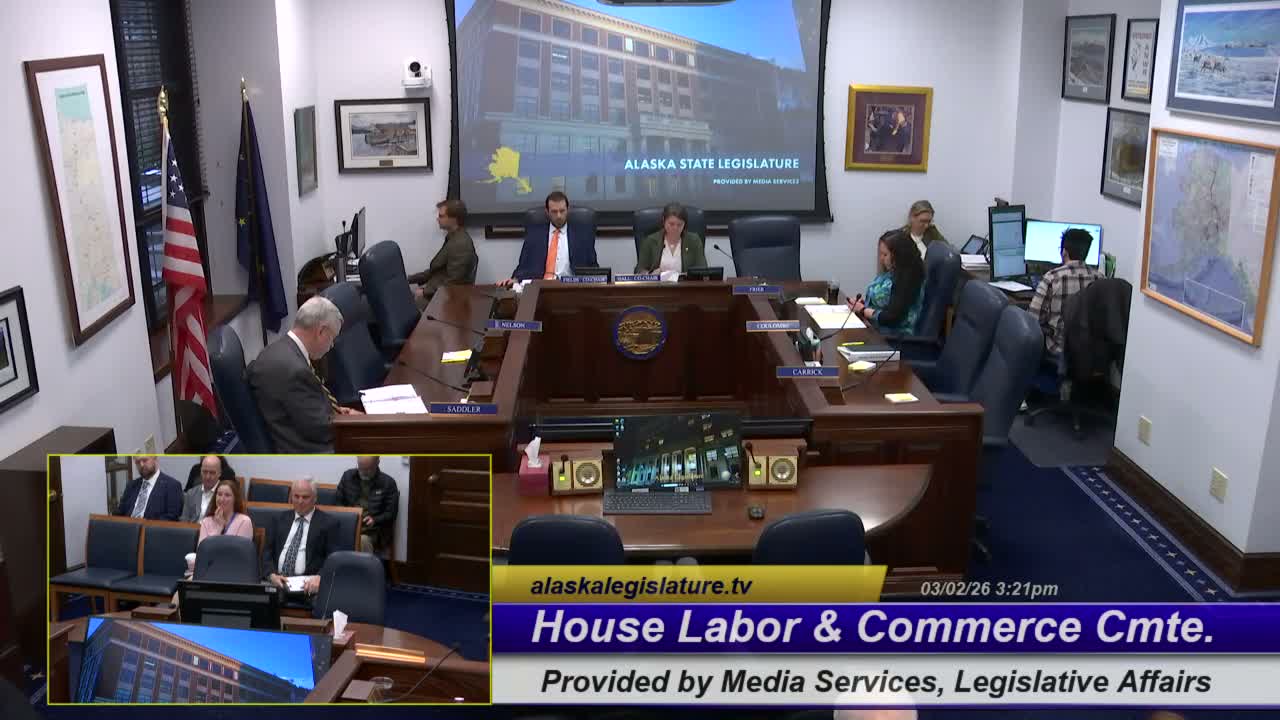
Anna Brawley, vice chair of the Anchorage Assembly, told the House Labor and Commerce Committee on March 2 that the city’s self‑insured municipal plan has seen steep increases in both utilization costs and per‑member claims in recent years, and that stop‑loss coverage only partly limits budget exposure. Brawley said per‑member average claims have grown from levels that were in the low thousands toward about $3,000, and she described total municipal plan costs rising into the tens of millions annually. She did not present a specific state‑level bill but urged investment in employer‑run clinics and preventive primary care to reduce long‑term costs.
Why it matters: Municipal health plans and school districts bear rising premium and claims costs that compete with other local priorities, such as classroom staffing and infrastructure. Presenters said those pressures can lead to higher premiums for employees, benefit reductions, or cuts elsewhere in municipal budgets.
Terry Haynes, mayor of Kodiak, said expiration of temporary federal marketplace premium tax credits risks returning many small business owners, including fishermen, to uninsurance or sharply higher premiums. Haynes cited Centers for Medicare & Medicaid Services marketplace enrollment figures and state Division of Insurance estimates to show examples of projected premium increases for older individual earners when enhanced subsidies ended.
Maureen Hall, a Juneau Assemblymember and former school nurse, urged the committee to prioritize three local strategies: bolster the health‑care workforce (including housing and immigration stability for providers), restore school‑nurse capacity (which she called the “hidden” local health system), and fund upstream prevention programs. Hall highlighted Bartlett Regional Hospital’s Hello Baby program as an example of a prevention model that reduces downstream costs and supports family stability.
Committee follow‑up: Committee members asked for written copies of testimony (Brawley agreed to provide them) and pressed witnesses on where municipalities negotiate insurance (Brawley identified HR and municipal management offices) and the limits of local authority. Witnesses repeatedly said many cost drivers—technology, national pricing trends and federal policy—are outside municipal control but that local prevention and clinic models can lower costs over time.
What’s next: The committee did not propose immediate state action during this hearing; members discussed researching state plan options and fiscal‑note treatments of prevention and workforce investments.
Why it matters: Municipal health plans and school districts bear rising premium and claims costs that compete with other local priorities, such as classroom staffing and infrastructure. Presenters said those pressures can lead to higher premiums for employees, benefit reductions, or cuts elsewhere in municipal budgets.
Terry Haynes, mayor of Kodiak, said expiration of temporary federal marketplace premium tax credits risks returning many small business owners, including fishermen, to uninsurance or sharply higher premiums. Haynes cited Centers for Medicare & Medicaid Services marketplace enrollment figures and state Division of Insurance estimates to show examples of projected premium increases for older individual earners when enhanced subsidies ended.
Maureen Hall, a Juneau Assemblymember and former school nurse, urged the committee to prioritize three local strategies: bolster the health‑care workforce (including housing and immigration stability for providers), restore school‑nurse capacity (which she called the “hidden” local health system), and fund upstream prevention programs. Hall highlighted Bartlett Regional Hospital’s Hello Baby program as an example of a prevention model that reduces downstream costs and supports family stability.
Committee follow‑up: Committee members asked for written copies of testimony (Brawley agreed to provide them) and pressed witnesses on where municipalities negotiate insurance (Brawley identified HR and municipal management offices) and the limits of local authority. Witnesses repeatedly said many cost drivers—technology, national pricing trends and federal policy—are outside municipal control but that local prevention and clinic models can lower costs over time.
What’s next: The committee did not propose immediate state action during this hearing; members discussed researching state plan options and fiscal‑note treatments of prevention and workforce investments.
Don't Miss a Word: See the Full Meeting!
Go beyond summaries. Unlock every video, transcript, and key insight with a Founder Membership.
✓
Get instant access to full meeting videos
✓
Search and clip any phrase from complete transcripts
✓
Receive AI-powered summaries & custom alerts
✓
Enjoy lifetime, unrestricted access to government data
30-day money-back guarantee
