Commission weighs ADA change on dementia and proposes legislative and disability subcommittees
March 02, 2026 | Fairfield, Fairfield, Connecticut
This article was created by AI summarizing key points discussed. AI makes mistakes, so for full details and context, please refer to the video of the full meeting. Please report any errors so we can fix them. Report an error »
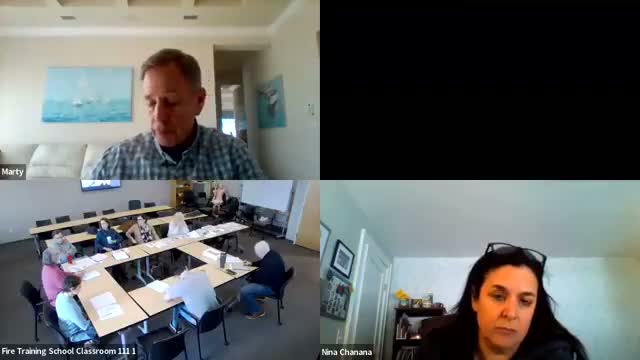
Commission staff told members that dementia will be interpreted as a disability under the Americans with Disabilities Act beginning May 1, and commissioners discussed the likely implications for town programs, staff training and services.
Julie (staff member) told the commission that the ADA update "include[s] dementia as a disability starting May 1," and said the town will need to explore training needs, facility access, and what services senior centers and other town buildings must provide. A dementia practitioner attending the meeting described gaps for people with mild to moderate impairment who are not yet appropriate for adult day care and said short‑term drop‑in services or memory cafes could be "a game changer" for families needing respite.
Members suggested forming two working groups: a legislative advocacy subcommittee to monitor state proposals affecting seniors and people with disabilities, and a disabilities subcommittee to explore training, liability and program design. Commissioners discussed legal limits on the commission acting as a lobbyist and noted that individual members retain private‑citizen advocacy rights; staff said they would follow up with the town attorney and the lobbyist about formal constraints.
Commissioners asked for concrete next steps: compiling ideas for services and possible pilot programs, consulting the town risk manager and attorney on liability, and inviting experts (Agency on Aging, dementia specialists) to present at upcoming meetings.
Julie (staff member) told the commission that the ADA update "include[s] dementia as a disability starting May 1," and said the town will need to explore training needs, facility access, and what services senior centers and other town buildings must provide. A dementia practitioner attending the meeting described gaps for people with mild to moderate impairment who are not yet appropriate for adult day care and said short‑term drop‑in services or memory cafes could be "a game changer" for families needing respite.
Members suggested forming two working groups: a legislative advocacy subcommittee to monitor state proposals affecting seniors and people with disabilities, and a disabilities subcommittee to explore training, liability and program design. Commissioners discussed legal limits on the commission acting as a lobbyist and noted that individual members retain private‑citizen advocacy rights; staff said they would follow up with the town attorney and the lobbyist about formal constraints.
Commissioners asked for concrete next steps: compiling ideas for services and possible pilot programs, consulting the town risk manager and attorney on liability, and inviting experts (Agency on Aging, dementia specialists) to present at upcoming meetings.
Don't Miss a Word: See the Full Meeting!
Go beyond summaries. Unlock every video, transcript, and key insight with a Founder Membership.
✓
Get instant access to full meeting videos
✓
Search and clip any phrase from complete transcripts
✓
Receive AI-powered summaries & custom alerts
✓
Enjoy lifetime, unrestricted access to government data
30-day money-back guarantee
