Appeals panel hears dispute over probation revocation and 'true threat' standard in Stephen Stone case
March 02, 2026 | Judicial - Appeals Court Oral Arguments, Judicial, Massachusetts
This article was created by AI summarizing key points discussed. AI makes mistakes, so for full details and context, please refer to the video of the full meeting. Please report any errors so we can fix them. Report an error »
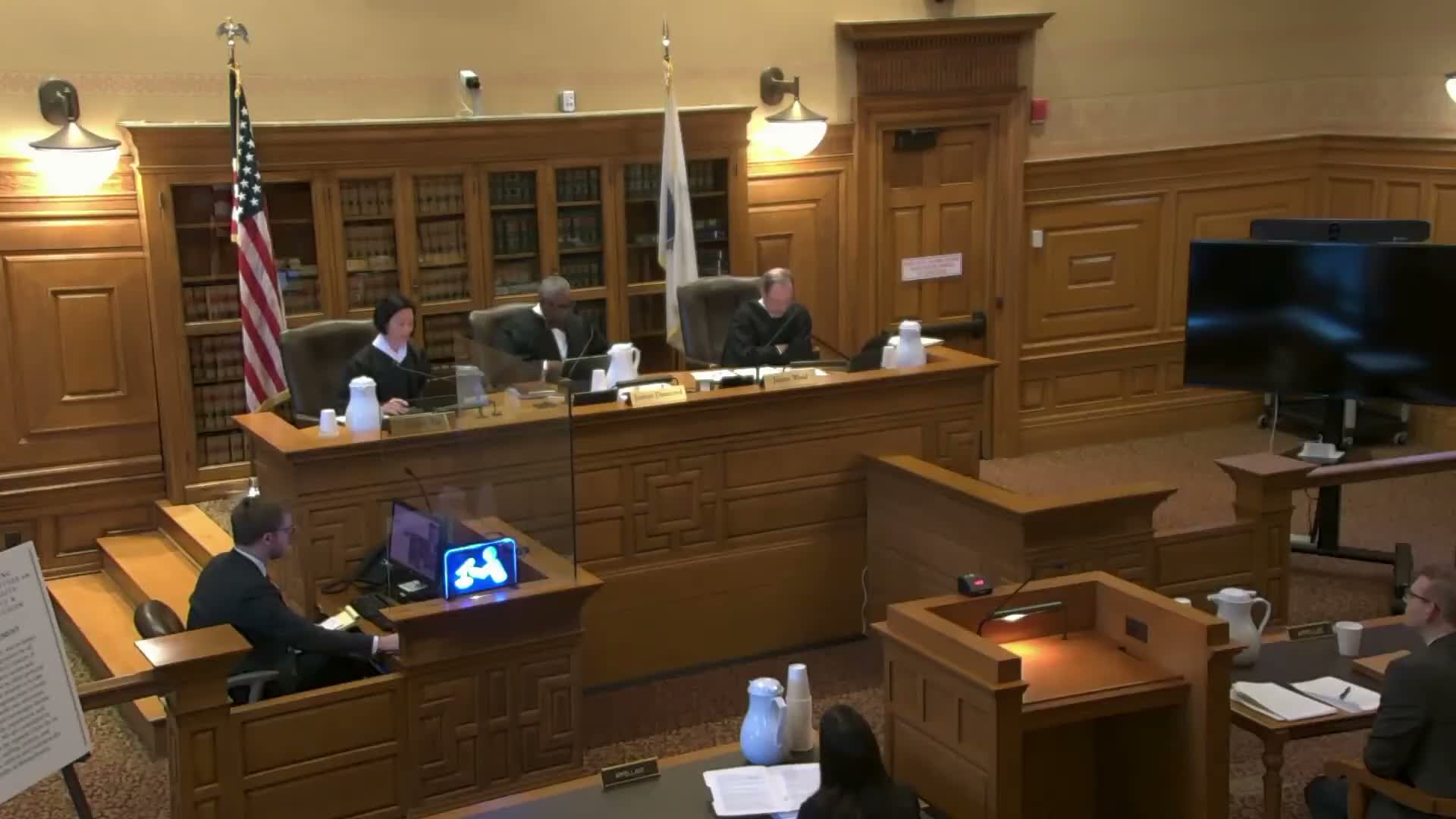
A three-justice panel of the Massachusetts Appeals Court heard oral argument in Commonwealth v. Stephen Charles Stone, Docket No. 25-P-0586, over whether the superior court applied the correct mens rea when it revoked Stone's probation and imposed a six-to-eight year sentence.
Defense counsel Ruth O'Meara Costello told the panel she would rest part of her argument on waiver issues but primarily asked the court to apply Counterman v. Colorado, the U.S. Supreme Court decision requiring that, for some threat-based offenses, a conviction must rest on a defendant's conscious disregard of a substantial risk that statements would be viewed as threats. Costello argued the probation hearing record showed the communications (including texts in which Stone said he could "sleep outside your house" and would seek a new probation officer) were hyperbolic protest rather than objective threats needing the Counterman mens rea: "I do think that the law is actually very clear that ... Counterman applies," she said.
The panel repeatedly pressed whether the notice of violation put Stone on adequate notice of the precise basis for revocation. Several justices asked whether the violation notice alleged "threatening" behavior or referred to witness intimidation, and whether the judge's commentary that "you're not a candidate for probation" could be separated from the nature of the violations when assessing disposition on remand. Costello acknowledged that the probation officer may have subjectively perceived a threat but said the dispositive question is the defendant's mens rea.
Assistant Attorney General Andrei Anashevsky urged the court to affirm. "This court should affirm the order, revoking the defendant's probation and the 6 to 8 year sentence imposed," he said, stressing the lower court's discretion at probation proceedings and the preponderance-of-the-evidence standard that governs revocation hearings. Anashevsky told the panel the contested text messages could support multiple criminal theories and that, given Stone's record and conduct, the judge's disposition fell within the wide discretion the court may consider in fashioning a sentence.
The justices queried the parties on controlling state cases cited by both sides (including Commonwealth v. Arroyo, Bain, King and Eldred), whether a vacated threats finding would require a remand to let a trial judge reassess disposition, and how to balance notice formalities against factual conduct. Costello emphasized that when a single proven violation may have been essential to the judge's disposition, appellate law can require remand to the superior court to determine sanction anew.
After extended questioning and rebuttal, the panel took the matter as submitted. No decision was announced from the bench; the court will issue its ruling in due course.
What this means going forward: the panel must decide whether Counterman's mens rea requirement applies in the probation-revocation context at issue and, if so, whether vacating a threats finding requires remand to the superior court to revisit disposition.
Defense counsel Ruth O'Meara Costello told the panel she would rest part of her argument on waiver issues but primarily asked the court to apply Counterman v. Colorado, the U.S. Supreme Court decision requiring that, for some threat-based offenses, a conviction must rest on a defendant's conscious disregard of a substantial risk that statements would be viewed as threats. Costello argued the probation hearing record showed the communications (including texts in which Stone said he could "sleep outside your house" and would seek a new probation officer) were hyperbolic protest rather than objective threats needing the Counterman mens rea: "I do think that the law is actually very clear that ... Counterman applies," she said.
The panel repeatedly pressed whether the notice of violation put Stone on adequate notice of the precise basis for revocation. Several justices asked whether the violation notice alleged "threatening" behavior or referred to witness intimidation, and whether the judge's commentary that "you're not a candidate for probation" could be separated from the nature of the violations when assessing disposition on remand. Costello acknowledged that the probation officer may have subjectively perceived a threat but said the dispositive question is the defendant's mens rea.
Assistant Attorney General Andrei Anashevsky urged the court to affirm. "This court should affirm the order, revoking the defendant's probation and the 6 to 8 year sentence imposed," he said, stressing the lower court's discretion at probation proceedings and the preponderance-of-the-evidence standard that governs revocation hearings. Anashevsky told the panel the contested text messages could support multiple criminal theories and that, given Stone's record and conduct, the judge's disposition fell within the wide discretion the court may consider in fashioning a sentence.
The justices queried the parties on controlling state cases cited by both sides (including Commonwealth v. Arroyo, Bain, King and Eldred), whether a vacated threats finding would require a remand to let a trial judge reassess disposition, and how to balance notice formalities against factual conduct. Costello emphasized that when a single proven violation may have been essential to the judge's disposition, appellate law can require remand to the superior court to determine sanction anew.
After extended questioning and rebuttal, the panel took the matter as submitted. No decision was announced from the bench; the court will issue its ruling in due course.
What this means going forward: the panel must decide whether Counterman's mens rea requirement applies in the probation-revocation context at issue and, if so, whether vacating a threats finding requires remand to the superior court to revisit disposition.
Don't Miss a Word: See the Full Meeting!
Go beyond summaries. Unlock every video, transcript, and key insight with a Founder Membership.
✓
Get instant access to full meeting videos
✓
Search and clip any phrase from complete transcripts
✓
Receive AI-powered summaries & custom alerts
✓
Enjoy lifetime, unrestricted access to government data
30-day money-back guarantee
