Appeals court weighs whether manager's search of backpack created state action in Carvajal Morales suppression fight
March 02, 2026 | Judicial - Appeals Court Oral Arguments, Judicial, Massachusetts
This article was created by AI summarizing key points discussed. AI makes mistakes, so for full details and context, please refer to the video of the full meeting. Please report any errors so we can fix them. Report an error »
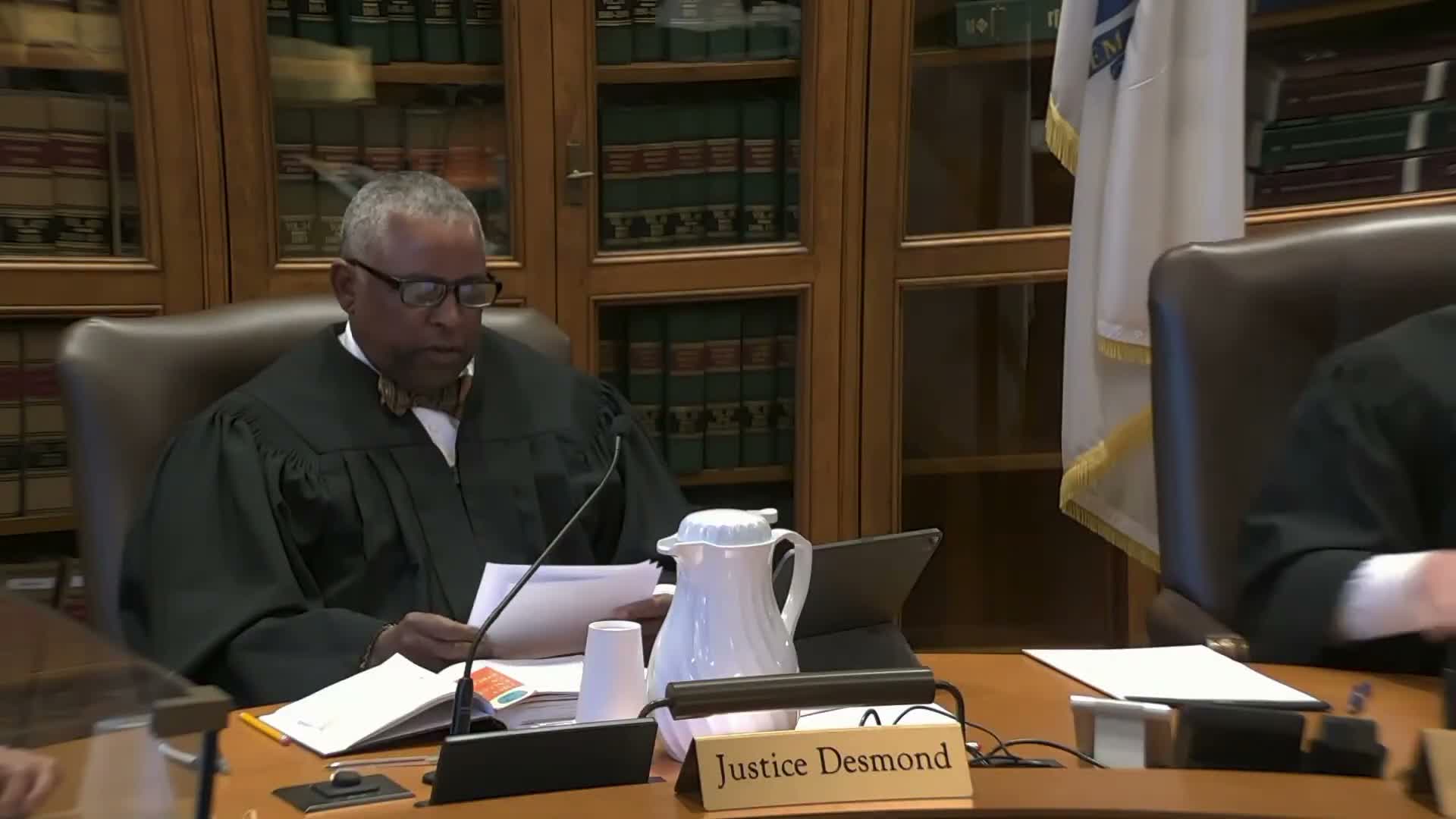
The Appeals Court heard argument in Commonwealth v. Carvajal Morales, Docket No. 25-P-0420, over whether evidence obtained after a workplace discovery of a firearm should have been suppressed.
Appellant counsel Ian Konowitz told the panel the record lacked a transcript of the suppression hearing and that without it the court could not reliably infer key facts. He identified the central factual dispute as whether the general manager of the workplace, Kristen Picard, opened the defendant's backpack and discovered the firearm before police arrived — a sequence the motion judge's findings say occurred. Konowitz said the video and judge's findings leave gaps and that the absence of a full suppression-transcript record makes appellate resolution difficult.
Commonwealth counsel Molly Paris responded that the motion judge found no state action and that the factual findings (including officer testimony and admitted video clips and the 911 call) supported denial of suppression. Paris said the manager "searched the employee locker room, discovered the firearm" and that her actions, followed by officers retrieving the bag, did not convert the conduct into a warrantless government search.
The panel pressed both sides about the evidentiary record (which counsel acknowledged could include multiple video clips and a 911 call not included in the appendix provided to the court) and discussed controlling precedents such as Brandwein and Benoit on closed containers and private-party searches. The parties debated whether the police's later opening of a closed container would constitute state action that triggers the Fourth Amendment warrant requirement.
After questioning on record adequacy and the motion judge's factual findings, the court submitted the matter for decision. No ruling was announced at argument.
Context: the appeal focuses on the distinction between private-party conduct (a manager locating and securing property) and subsequent police action; how the court rules will affect suppression doctrine in workplace-search contexts and the handling of incomplete suppression-hearing records on appeal.
Appellant counsel Ian Konowitz told the panel the record lacked a transcript of the suppression hearing and that without it the court could not reliably infer key facts. He identified the central factual dispute as whether the general manager of the workplace, Kristen Picard, opened the defendant's backpack and discovered the firearm before police arrived — a sequence the motion judge's findings say occurred. Konowitz said the video and judge's findings leave gaps and that the absence of a full suppression-transcript record makes appellate resolution difficult.
Commonwealth counsel Molly Paris responded that the motion judge found no state action and that the factual findings (including officer testimony and admitted video clips and the 911 call) supported denial of suppression. Paris said the manager "searched the employee locker room, discovered the firearm" and that her actions, followed by officers retrieving the bag, did not convert the conduct into a warrantless government search.
The panel pressed both sides about the evidentiary record (which counsel acknowledged could include multiple video clips and a 911 call not included in the appendix provided to the court) and discussed controlling precedents such as Brandwein and Benoit on closed containers and private-party searches. The parties debated whether the police's later opening of a closed container would constitute state action that triggers the Fourth Amendment warrant requirement.
After questioning on record adequacy and the motion judge's factual findings, the court submitted the matter for decision. No ruling was announced at argument.
Context: the appeal focuses on the distinction between private-party conduct (a manager locating and securing property) and subsequent police action; how the court rules will affect suppression doctrine in workplace-search contexts and the handling of incomplete suppression-hearing records on appeal.
Don't Miss a Word: See the Full Meeting!
Go beyond summaries. Unlock every video, transcript, and key insight with a Founder Membership.
✓
Get instant access to full meeting videos
✓
Search and clip any phrase from complete transcripts
✓
Receive AI-powered summaries & custom alerts
✓
Enjoy lifetime, unrestricted access to government data
30-day money-back guarantee
