Appeals court revisits improper-storage and possession evidence in Henry appeal
March 02, 2026 | Judicial - Appeals Court Oral Arguments, Judicial, Massachusetts
This article was created by AI summarizing key points discussed. AI makes mistakes, so for full details and context, please refer to the video of the full meeting. Please report any errors so we can fix them. Report an error »
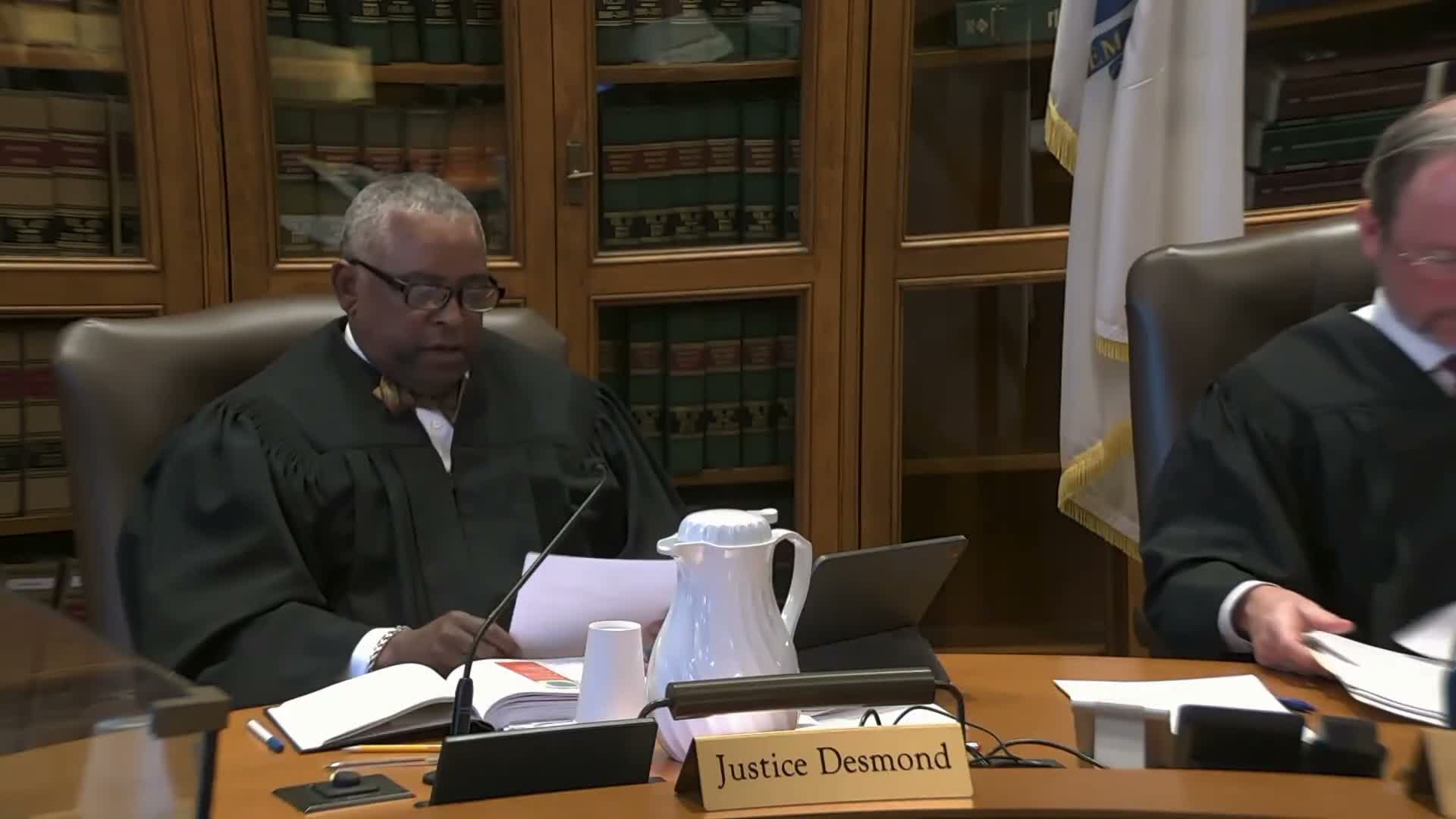
The Appeals Court heard argument in Commonwealth v. Artemis Henry, Docket No. 23-P-0820, addressing whether the Commonwealth proved improper storage and constructive possession of a firearm found in a backpack.
Defense counsel Hayne Barnwell told the panel the gun was "readily and easily accessible" but that the Commonwealth failed to show improper storage under the statute because the defendant's conduct and the timing (he was a short distance from the vehicle and returned quickly) did not support the theory the prosecution advanced at trial. Barnwell argued the jury received an improvised theory of liability at trial and, relying on Grandison precedent, sought a new trial if the Commonwealth had pressed a different theory at trial than it later relied on in closing.
The panel questioned the sequence of events: whether the defendant had left the vehicle and for how long, who instructed him to retrieve belongings, and whether evidence (including trooper testimony and a brief video clip) supported the Commonwealth's constructive-possession argument. The Commonwealth's ADA Jamie Michael Charles emphasized that the trooper testified the defendant later admitted he had forgotten the gun was in the backpack and that the chronology in the record allowed a jury to find improper storage or constructive possession.
Arguments also addressed confrontation-clause objections to RMV records used at trial and whether those records were testimonial or ordinary business records; counsel debated precedent distinguishing business records from documents prepared in anticipation of trial.
After extended questioning, the panel took the matter under advisement. The court did not announce a decision at argument.
Why it matters: the case raises timing and control questions that determine how courts treat firearms left in vehicles or unattended backpacks and the permissible scope of evidence (administrative records) prosecutors can introduce without violating confrontation rights.
Defense counsel Hayne Barnwell told the panel the gun was "readily and easily accessible" but that the Commonwealth failed to show improper storage under the statute because the defendant's conduct and the timing (he was a short distance from the vehicle and returned quickly) did not support the theory the prosecution advanced at trial. Barnwell argued the jury received an improvised theory of liability at trial and, relying on Grandison precedent, sought a new trial if the Commonwealth had pressed a different theory at trial than it later relied on in closing.
The panel questioned the sequence of events: whether the defendant had left the vehicle and for how long, who instructed him to retrieve belongings, and whether evidence (including trooper testimony and a brief video clip) supported the Commonwealth's constructive-possession argument. The Commonwealth's ADA Jamie Michael Charles emphasized that the trooper testified the defendant later admitted he had forgotten the gun was in the backpack and that the chronology in the record allowed a jury to find improper storage or constructive possession.
Arguments also addressed confrontation-clause objections to RMV records used at trial and whether those records were testimonial or ordinary business records; counsel debated precedent distinguishing business records from documents prepared in anticipation of trial.
After extended questioning, the panel took the matter under advisement. The court did not announce a decision at argument.
Why it matters: the case raises timing and control questions that determine how courts treat firearms left in vehicles or unattended backpacks and the permissible scope of evidence (administrative records) prosecutors can introduce without violating confrontation rights.
View the Full Meeting & All Its Details
This article offers just a summary. Unlock complete video, transcripts, and insights as a Founder Member.
✓
Watch full, unedited meeting videos
✓
Search every word spoken in unlimited transcripts
✓
AI summaries & real-time alerts (all government levels)
✓
Permanent access to expanding government content
30-day money-back guarantee
