Senate narrows, then passes bill making targeted alerts that impede an arrest a crime; Miranda ID amendment fails
March 02, 2026 | 2026 Legislature Arizona, Arizona
This article was created by AI summarizing key points discussed. AI makes mistakes, so for full details and context, please refer to the video of the full meeting. Please report any errors so we can fix them. Report an error »
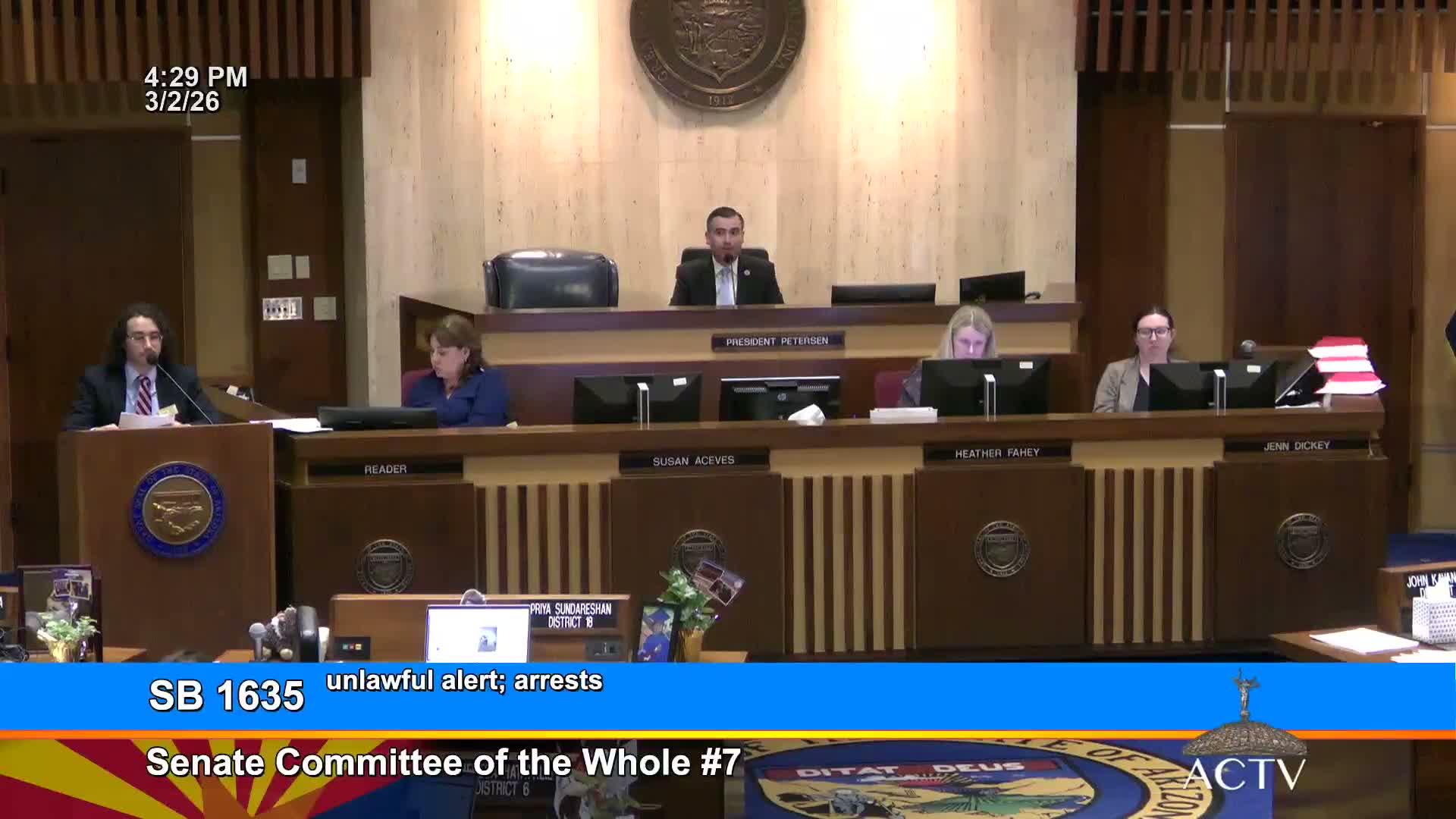
The Senate debated SB 16‑35 at length after the sponsor offered an amendment intended to narrow the bill’s focus to alerts that knowingly and specifically impede an imminent arrest of a particular person.
Sponsor Senator John Kavanaugh (floor) said the amendment clarified the target, limiting criminal liability to communications that "delay or prevent the lawful arrest of a specific person" during a real‑time, imminent law‑enforcement effort. He argued the narrower language avoided criminalizing general speech such as shouting a warning about a police presence.
Other senators pressed constitutional concerns. Senator Ortiz and several colleagues warned that existing statutes (for example, hindering prosecution and resisting arrest) already criminalize assistance that impedes apprehension and that the new statute risked chilling lawful speech and protest. "This bill is about scaring Arizonans from talking to their neighbors," Senator Ortiz said, citing First Amendment protections.
Senator Catherine Miranda offered a floor amendment requiring law‑enforcement officers (including federal officers operating in the state) to visibly display names or badge numbers and to prohibit facial coverings that conceal identity while performing enforcement duties. She said unidentifiable, masked officers have been implicated in lethal enforcement incidents and that identification would increase accountability. The Miranda amendment was defeated on a division (17 no, 13 yes).
After extended debate and recorded explanations of vote from senators on both sides — many framing the issue as a tension between community safety and free‑speech protections — the Senate adopted the narrowed Kavanaugh amendment and passed SB 16‑35 as amended.
What happens next: The bill was ordered transmitted to the House. Opponents signaled concerns about prosecutorial discretion and potential misapplication; supporters said the narrower text addresses many constitutional issues while helping law enforcement prevent targeted interference in imminent arrests.
Sponsor Senator John Kavanaugh (floor) said the amendment clarified the target, limiting criminal liability to communications that "delay or prevent the lawful arrest of a specific person" during a real‑time, imminent law‑enforcement effort. He argued the narrower language avoided criminalizing general speech such as shouting a warning about a police presence.
Other senators pressed constitutional concerns. Senator Ortiz and several colleagues warned that existing statutes (for example, hindering prosecution and resisting arrest) already criminalize assistance that impedes apprehension and that the new statute risked chilling lawful speech and protest. "This bill is about scaring Arizonans from talking to their neighbors," Senator Ortiz said, citing First Amendment protections.
Senator Catherine Miranda offered a floor amendment requiring law‑enforcement officers (including federal officers operating in the state) to visibly display names or badge numbers and to prohibit facial coverings that conceal identity while performing enforcement duties. She said unidentifiable, masked officers have been implicated in lethal enforcement incidents and that identification would increase accountability. The Miranda amendment was defeated on a division (17 no, 13 yes).
After extended debate and recorded explanations of vote from senators on both sides — many framing the issue as a tension between community safety and free‑speech protections — the Senate adopted the narrowed Kavanaugh amendment and passed SB 16‑35 as amended.
What happens next: The bill was ordered transmitted to the House. Opponents signaled concerns about prosecutorial discretion and potential misapplication; supporters said the narrower text addresses many constitutional issues while helping law enforcement prevent targeted interference in imminent arrests.
Don't Miss a Word: See the Full Meeting!
Go beyond summaries. Unlock every video, transcript, and key insight with a Founder Membership.
✓
Get instant access to full meeting videos
✓
Search and clip any phrase from complete transcripts
✓
Receive AI-powered summaries & custom alerts
✓
Enjoy lifetime, unrestricted access to government data
30-day money-back guarantee
