Broadband privacy bill fails do‑pass but is sent to 40th day for further work
March 03, 2026 | 2026 Legislature SD, South Dakota
This article was created by AI summarizing key points discussed. AI makes mistakes, so for full details and context, please refer to the video of the full meeting. Please report any errors so we can fix them. Report an error »
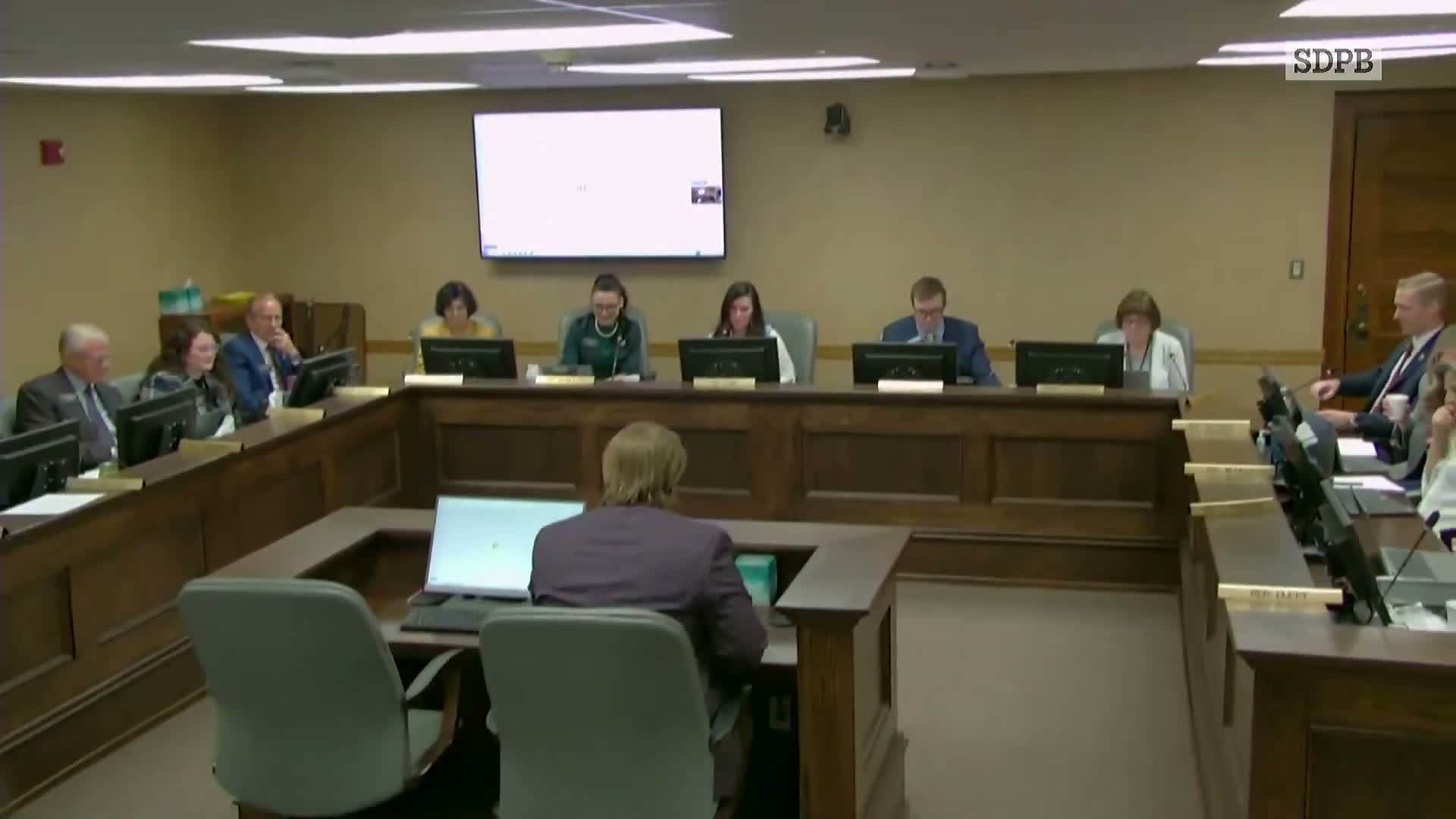
Senator Mike Rolle presented Senate Bill 110 to limit how broadband Internet access providers use, disclose and sell customers' personally identifiable information, arguing broadband is a near‑necessary utility for many South Dakotans and requires stronger state safeguards.
Why it matters: Rolle said the bill would require opt‑in consent for selling customer personal information, require reasonable security measures, and obligate providers to notify customers about data collection practices. "Our proposed protecting our citizens from large utility companies and their ability to sell private information, without our citizens' consent would be an appropriate place to start," he told the committee.
Proponents including the ACLU and AARP argued the bill would strengthen Fourth and First Amendment protections by limiting commercial and government access to granular ISP data. Samantha Chapman of the ACLU said ISPs can assemble intimate profiles from browsing and location data and that consumers should retain ownership over their digital lives.
Opponents — including local broadband providers, trade groups and industry associations — argued the bill was duplicative, unenforceable or would impose heavy compliance costs on small, rural companies. Justin Smith, representing the Greater Sioux Falls Chamber of Commerce and Mid Continent Communications, called SB 110 "a solution in search of a problem" in South Dakota and said the bill lacked enforcement mechanisms and clear penalties. Kara Semler of the South Dakota Telecommunications Association said many member companies already comply with federal customer‑privacy rules (CPNI).
Committee action: A do‑pass motion on SB 110 failed on roll call, 3 yeas to 9 nays with 1 excused. Following debate, the committee then voted to place the bill on the 40th first‑day calendar for further consideration; that motion passed on roll call, 10 yeas, 2 nays, 1 excused.
What remains: Committee members raised questions about where the measure belongs in state code (Title 49, chapter 31 was questioned), who would enforce it (the PUC or the attorney general) and whether the bill should be narrowed or expanded to be tech‑neutral. Senator Rolle said the bill could be refined in further study and cited other states that have passed similar measures.
Ending: The committee declined to report SB 110 with a do‑pass recommendation but moved it to a later calendar slot for continued work and discussion.
Why it matters: Rolle said the bill would require opt‑in consent for selling customer personal information, require reasonable security measures, and obligate providers to notify customers about data collection practices. "Our proposed protecting our citizens from large utility companies and their ability to sell private information, without our citizens' consent would be an appropriate place to start," he told the committee.
Proponents including the ACLU and AARP argued the bill would strengthen Fourth and First Amendment protections by limiting commercial and government access to granular ISP data. Samantha Chapman of the ACLU said ISPs can assemble intimate profiles from browsing and location data and that consumers should retain ownership over their digital lives.
Opponents — including local broadband providers, trade groups and industry associations — argued the bill was duplicative, unenforceable or would impose heavy compliance costs on small, rural companies. Justin Smith, representing the Greater Sioux Falls Chamber of Commerce and Mid Continent Communications, called SB 110 "a solution in search of a problem" in South Dakota and said the bill lacked enforcement mechanisms and clear penalties. Kara Semler of the South Dakota Telecommunications Association said many member companies already comply with federal customer‑privacy rules (CPNI).
Committee action: A do‑pass motion on SB 110 failed on roll call, 3 yeas to 9 nays with 1 excused. Following debate, the committee then voted to place the bill on the 40th first‑day calendar for further consideration; that motion passed on roll call, 10 yeas, 2 nays, 1 excused.
What remains: Committee members raised questions about where the measure belongs in state code (Title 49, chapter 31 was questioned), who would enforce it (the PUC or the attorney general) and whether the bill should be narrowed or expanded to be tech‑neutral. Senator Rolle said the bill could be refined in further study and cited other states that have passed similar measures.
Ending: The committee declined to report SB 110 with a do‑pass recommendation but moved it to a later calendar slot for continued work and discussion.
Don't Miss a Word: See the Full Meeting!
Go beyond summaries. Unlock every video, transcript, and key insight with a Founder Membership.
✓
Get instant access to full meeting videos
✓
Search and clip any phrase from complete transcripts
✓
Receive AI-powered summaries & custom alerts
✓
Enjoy lifetime, unrestricted access to government data
30-day money-back guarantee
