Bangor committee weighs moratorium, new rules for data centers amid energy and water concerns
March 03, 2026 | Bangor City, Penobscot County, Maine
This article was created by AI summarizing key points discussed. AI makes mistakes, so for full details and context, please refer to the video of the full meeting. Please report any errors so we can fix them. Report an error »
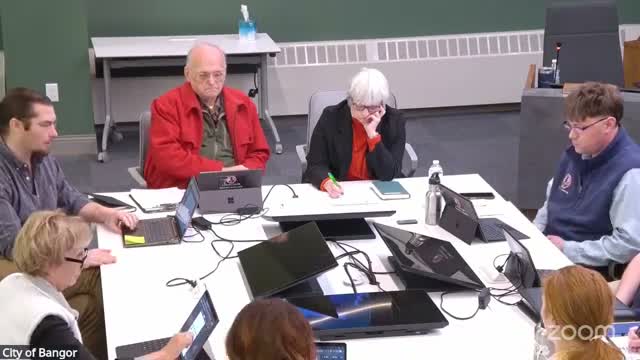
The Bangor City Economic Development Committee debated whether to pause new data-center approvals as staff outlined a suite of regulatory options for the city.
"This is not about Bangor going into an agreement for a data center," Committee Chair Councilor Leonard said, framing the discussion as a policy exercise. A staff member told the committee that communities nationwide are confronting high electricity and water demands from modern facilities and recommended a "menu" of tools: require on-site or procured renewable energy, community-benefit agreements, noise and fuel-source limits, clearer land-use definitions, overlay districts, conditional-use approval and targeted tax or assessment mechanisms such as a TIF for data-center equipment.
The staff member said some of the newest facilities support intensive artificial-intelligence computing and "use a ton of water to cool that through evaporative cooling," and recommended clarifying the city code so data centers are defined and regulated separately from other "major central service facilities." The staff presentation also flagged that some jurisdictions impose higher assessments on equipment and dedicate proceeds to affordable housing.
Several council members expressed sharp concerns about grid capacity and local impacts. "Maine does not have a very strong grid," Councilor Leonard said, adding that without infrastructure improvements "we are absolutely not ready" to host such centers. Another councilor said the primary economic benefit is in construction jobs and urged project-labor agreements or prevailing-wage protections for any local developments.
A committee member moved "in favor of a temporary moratorium on data centers that allow the city the time to really think through that question appropriately." Several members voiced support and asked staff to investigate the legal authority and next steps; staff agreed to check viability and return with recommendations.
The committee did not adopt ordinance language or a timeline at the meeting. Councilors and staff said further work is needed on definitions, zoning restrictions, environmental and health impacts, and on whether the city could require infrastructure and non-utility water sources before permitting a facility.
Next steps: staff will investigate the legality and feasibility of a temporary moratorium and report back with draft options for zoning and permitting changes.
"This is not about Bangor going into an agreement for a data center," Committee Chair Councilor Leonard said, framing the discussion as a policy exercise. A staff member told the committee that communities nationwide are confronting high electricity and water demands from modern facilities and recommended a "menu" of tools: require on-site or procured renewable energy, community-benefit agreements, noise and fuel-source limits, clearer land-use definitions, overlay districts, conditional-use approval and targeted tax or assessment mechanisms such as a TIF for data-center equipment.
The staff member said some of the newest facilities support intensive artificial-intelligence computing and "use a ton of water to cool that through evaporative cooling," and recommended clarifying the city code so data centers are defined and regulated separately from other "major central service facilities." The staff presentation also flagged that some jurisdictions impose higher assessments on equipment and dedicate proceeds to affordable housing.
Several council members expressed sharp concerns about grid capacity and local impacts. "Maine does not have a very strong grid," Councilor Leonard said, adding that without infrastructure improvements "we are absolutely not ready" to host such centers. Another councilor said the primary economic benefit is in construction jobs and urged project-labor agreements or prevailing-wage protections for any local developments.
A committee member moved "in favor of a temporary moratorium on data centers that allow the city the time to really think through that question appropriately." Several members voiced support and asked staff to investigate the legal authority and next steps; staff agreed to check viability and return with recommendations.
The committee did not adopt ordinance language or a timeline at the meeting. Councilors and staff said further work is needed on definitions, zoning restrictions, environmental and health impacts, and on whether the city could require infrastructure and non-utility water sources before permitting a facility.
Next steps: staff will investigate the legality and feasibility of a temporary moratorium and report back with draft options for zoning and permitting changes.
Don't Miss a Word: See the Full Meeting!
Go beyond summaries. Unlock every video, transcript, and key insight with a Founder Membership.
✓
Get instant access to full meeting videos
✓
Search and clip any phrase from complete transcripts
✓
Receive AI-powered summaries & custom alerts
✓
Enjoy lifetime, unrestricted access to government data
30-day money-back guarantee
