Larimer County lawyers, local coalition press PUC for stricter pipeline leak detection and faster repairs
March 03, 2026 | Larimer County, Colorado
This article was created by AI summarizing key points discussed. AI makes mistakes, so for full details and context, please refer to the video of the full meeting. Please report any errors so we can fix them. Report an error »
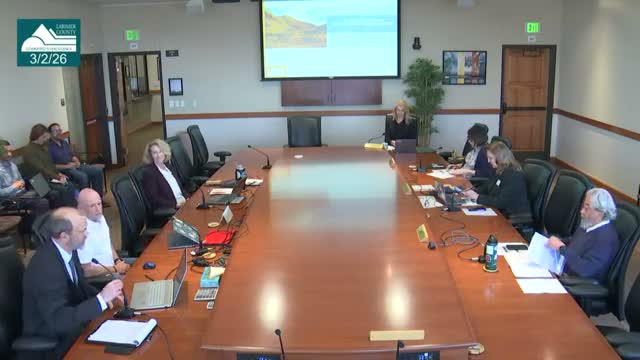
Matt Suresh, Larimer County’s special counsel on oil and gas, told the County Commissioners at a March 2 work session that the county is part of a multi‑jurisdiction coalition pressing state regulators to lower proposed leak‑detection thresholds and tighten repair timelines.
Suresh said the PUC’s current pipeline rulemaking proposes a 10 kilograms‑per‑hour detection threshold that “is a leak that can be seen from space,” and argued it is inappropriate for distribution lines that serve homes. He told commissioners the county is urging regulators to follow PHMSA’s earlier recommendation of about 0.2 kilograms per hour for distribution systems and to adopt leak grading that accounts for environmental harms in addition to immediate public safety risks.
Why it matters: higher detection thresholds can leave small but cumulatively significant methane leaks undetected in residential distribution networks; methane is a potent greenhouse gas and local officials said they want state rules that address both public safety and climate impacts. Suresh described a newly proposed leak grading system with three grades: Grade 1 (immediate repair), Grade 2 (repair within one year, though PHMSA guidance includes a 30‑day requirement for high‑pressure leaks near homes), and Grade 3 (repair within two years). The county’s coalition filed joint exceptions and a reconsideration petition; Suresh said a PUC reconsideration decision is expected within about a month.
The discussion also covered parallel Air Quality Control Commission action. Suresh said the AQCC adopted regulations on Feb. 20 that, for the first time in Colorado, require leak detection and repair (LDAR) at wellhead‑only facilities and at older wells that have shown higher leak rates. “We’ve seen about a 20% leak rate in those older facilities,” he said, and staff described toolsets such as infrared cameras and instrument checks required at least annually.
Suresh also described an AQCC fee rulemaking to provide more stable funding to the Air Pollution Control Division; some fees under consideration were characterized as rising by as much as 60%, and Suresh said the oil and gas industry pushed back strongly during the rulemaking. Commissioners and staff agreed the county’s visible support for agency capacity and the coalition’s coordinated filings help amplify local concerns.
Commissioner Kristen Stevens asked whether the coalition and the PUC reauthorization process might sway the outcome; Suresh said legislative attention and the reauthorization review could elevate the issue but emphasized the formal process is the primary path for relief to avoid ex parte communication. Commissioners requested the presentation slides and thanked staff for coordinating the coalition.
Next steps: county staff expect a PUC reconsideration decision soon and plan to continue coordinated comments with local governments and conservation partners.
Suresh said the PUC’s current pipeline rulemaking proposes a 10 kilograms‑per‑hour detection threshold that “is a leak that can be seen from space,” and argued it is inappropriate for distribution lines that serve homes. He told commissioners the county is urging regulators to follow PHMSA’s earlier recommendation of about 0.2 kilograms per hour for distribution systems and to adopt leak grading that accounts for environmental harms in addition to immediate public safety risks.
Why it matters: higher detection thresholds can leave small but cumulatively significant methane leaks undetected in residential distribution networks; methane is a potent greenhouse gas and local officials said they want state rules that address both public safety and climate impacts. Suresh described a newly proposed leak grading system with three grades: Grade 1 (immediate repair), Grade 2 (repair within one year, though PHMSA guidance includes a 30‑day requirement for high‑pressure leaks near homes), and Grade 3 (repair within two years). The county’s coalition filed joint exceptions and a reconsideration petition; Suresh said a PUC reconsideration decision is expected within about a month.
The discussion also covered parallel Air Quality Control Commission action. Suresh said the AQCC adopted regulations on Feb. 20 that, for the first time in Colorado, require leak detection and repair (LDAR) at wellhead‑only facilities and at older wells that have shown higher leak rates. “We’ve seen about a 20% leak rate in those older facilities,” he said, and staff described toolsets such as infrared cameras and instrument checks required at least annually.
Suresh also described an AQCC fee rulemaking to provide more stable funding to the Air Pollution Control Division; some fees under consideration were characterized as rising by as much as 60%, and Suresh said the oil and gas industry pushed back strongly during the rulemaking. Commissioners and staff agreed the county’s visible support for agency capacity and the coalition’s coordinated filings help amplify local concerns.
Commissioner Kristen Stevens asked whether the coalition and the PUC reauthorization process might sway the outcome; Suresh said legislative attention and the reauthorization review could elevate the issue but emphasized the formal process is the primary path for relief to avoid ex parte communication. Commissioners requested the presentation slides and thanked staff for coordinating the coalition.
Next steps: county staff expect a PUC reconsideration decision soon and plan to continue coordinated comments with local governments and conservation partners.
View the Full Meeting & All Its Details
This article offers just a summary. Unlock complete video, transcripts, and insights as a Founder Member.
✓
Watch full, unedited meeting videos
✓
Search every word spoken in unlimited transcripts
✓
AI summaries & real-time alerts (all government levels)
✓
Permanent access to expanding government content
30-day money-back guarantee
