Pulaski County redevelopment commission weighs façade grant pilot, design standards and accessibility
February 27, 2026 | Pulaski County, Indiana
This article was created by AI summarizing key points discussed. AI makes mistakes, so for full details and context, please refer to the video of the full meeting. Please report any errors so we can fix them. Report an error »
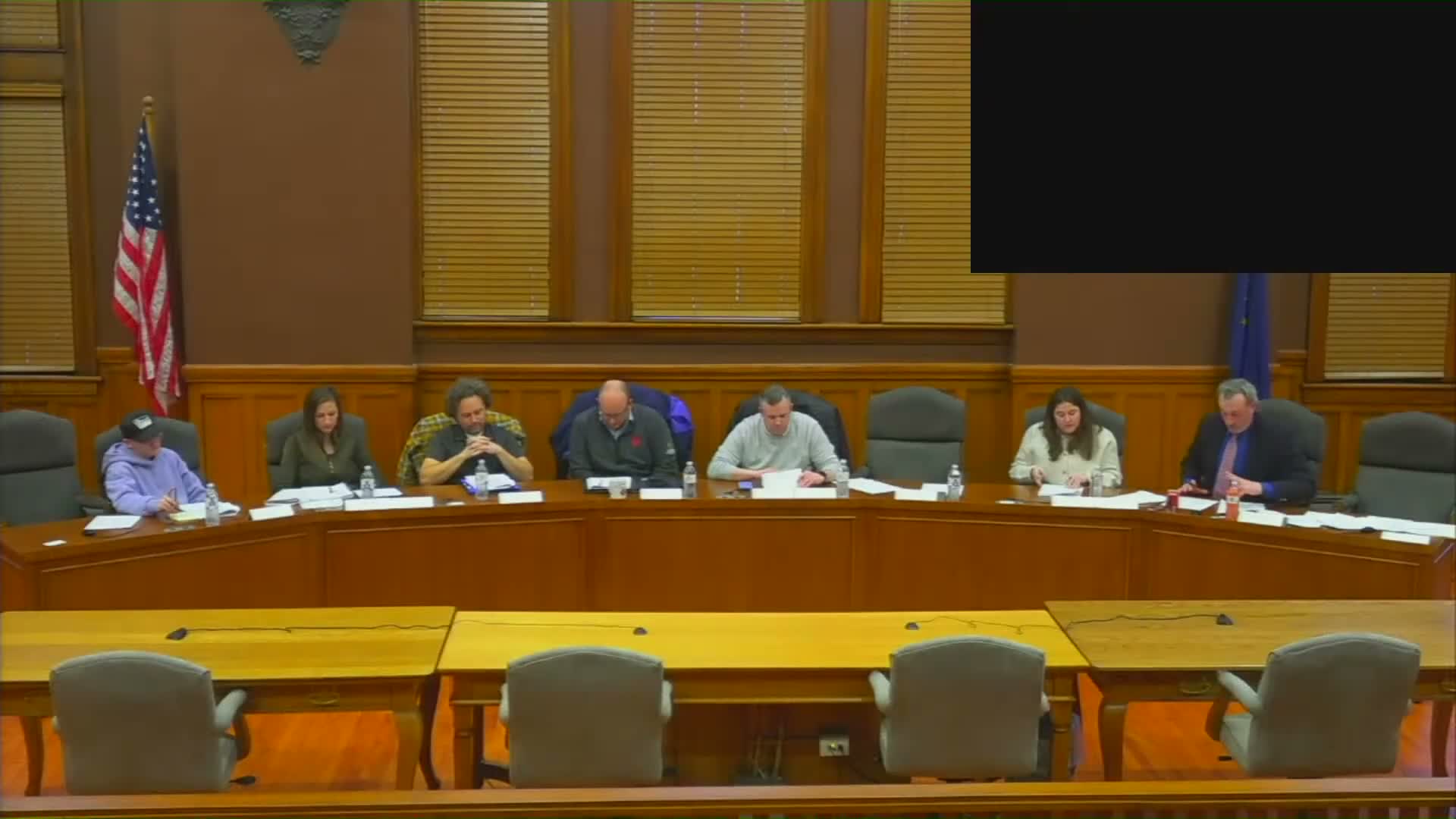
At a Redevelopment Commission meeting, members discussed a proposed façade grant pilot intended to help restore storefronts and commercial buildings and to attract visitors and investment.
The director introduced a draft program (pages 24–29 of the meeting packet) outlining eligible projects, application requirements and possible award limits. "I think the biggest question is that from what they offer ... a $30,000 max seems high to me," the director said, arguing the commission should consider a smaller per-project cap in the pilot year ("5 or 10,000 max" as a starting point) to stretch limited funds across more properties.
Why it matters: members said visible downtown improvements can catalyze private investment and increase tourism; several commissioners pushed to pair grant awards with design standards so funds restore — rather than cover — incompatible materials. "We're not going to give you money to put metal siding over your downtown building," the director said, stressing architectural guidelines.
Key details: commissioners asked whether the program would reimburse owners (owner pays upfront and seeks reimbursement) or whether the commission could pay contractors directly. The director suggested invoice-based payments as a middle ground to avoid leaving small vendors unpaid. Members also discussed pairing grants with low-interest microloans or a revolving-loan fund to cover unexpected costs and stretch limited public dollars.
Geographic scope and partnerships: commissioners debated restricting eligibility to designated downtowns or opening the program countywide. Multiple members recommended coordinating with local Main Street organizations and exploring state programs to increase available funding and reduce administrative burden.
Accessibility and standards: one commissioner urged that accessibility improvements be considered eligible costs where feasible; others cautioned that ADA-compliance upgrades can be expensive and might consume most of a small grant. The director said program rules commonly include architectural standards and suggested accessibility could be encouraged but may need separate funding mechanisms.
What’s next: the commission did not adopt the program; members asked the director to gather model applications and partner contacts and to return refined language after additional review and stakeholder consultation.
The director introduced a draft program (pages 24–29 of the meeting packet) outlining eligible projects, application requirements and possible award limits. "I think the biggest question is that from what they offer ... a $30,000 max seems high to me," the director said, arguing the commission should consider a smaller per-project cap in the pilot year ("5 or 10,000 max" as a starting point) to stretch limited funds across more properties.
Why it matters: members said visible downtown improvements can catalyze private investment and increase tourism; several commissioners pushed to pair grant awards with design standards so funds restore — rather than cover — incompatible materials. "We're not going to give you money to put metal siding over your downtown building," the director said, stressing architectural guidelines.
Key details: commissioners asked whether the program would reimburse owners (owner pays upfront and seeks reimbursement) or whether the commission could pay contractors directly. The director suggested invoice-based payments as a middle ground to avoid leaving small vendors unpaid. Members also discussed pairing grants with low-interest microloans or a revolving-loan fund to cover unexpected costs and stretch limited public dollars.
Geographic scope and partnerships: commissioners debated restricting eligibility to designated downtowns or opening the program countywide. Multiple members recommended coordinating with local Main Street organizations and exploring state programs to increase available funding and reduce administrative burden.
Accessibility and standards: one commissioner urged that accessibility improvements be considered eligible costs where feasible; others cautioned that ADA-compliance upgrades can be expensive and might consume most of a small grant. The director said program rules commonly include architectural standards and suggested accessibility could be encouraged but may need separate funding mechanisms.
What’s next: the commission did not adopt the program; members asked the director to gather model applications and partner contacts and to return refined language after additional review and stakeholder consultation.
View the Full Meeting & All Its Details
This article offers just a summary. Unlock complete video, transcripts, and insights as a Founder Member.
✓
Watch full, unedited meeting videos
✓
Search every word spoken in unlimited transcripts
✓
AI summaries & real-time alerts (all government levels)
✓
Permanent access to expanding government content
30-day money-back guarantee
