Forest Park audit: clean opinion but recurring control weakness leaves council with questions
March 03, 2026 | Forest Park, Clayton County, Georgia
This article was created by AI summarizing key points discussed. AI makes mistakes, so for full details and context, please refer to the video of the full meeting. Please report any errors so we can fix them. Report an error »
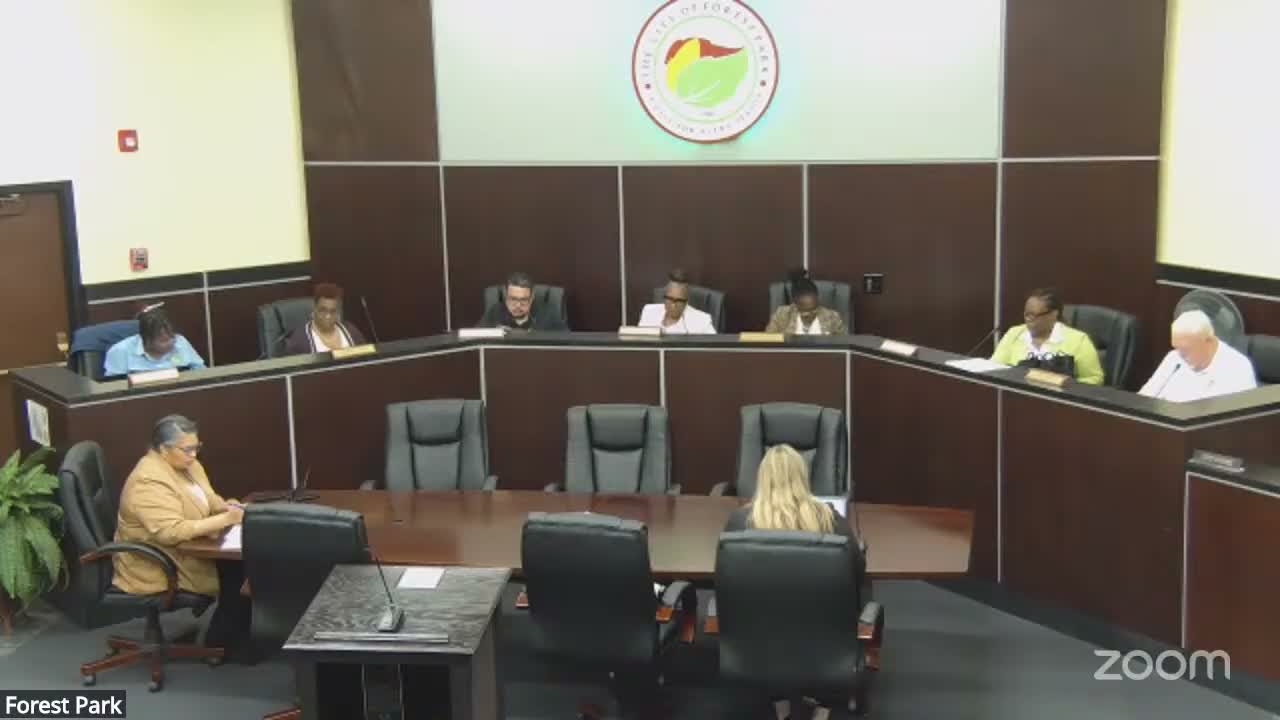
Forest Park’s external auditors told the mayor and council on March 2 that the city’s fiscal year 2025 financial statements earned an unmodified opinion, the highest level of assurance an independent CPA can give, but auditors also reported a recurring, significant internal-control deficiency.
Ryan Jones, a partner with Malden and Jenkins, said the audit produced a clean opinion on both the basic financial statements and the city’s compliance with federal awards, including testing of ARPA expenditures. "Our opinion on the city's financial statements for fiscal year 2025 is an unmodified opinion," Jones said, noting that the firm performed procedures under generally accepted auditing standards.
Why the clean opinion nonetheless included a notable deficiency was the focus of council questions. Jones told council auditors tested a sample of 25 manual journal entries and found 21 that lacked evidence someone other than the preparer had reviewed them. "We consider it a significant deficiency in internal controls," he said, adding the issue has recurred in prior audits.
Councilmembers pressed Director Wiggins and audit staff for specifics about the city’s fiscal picture: unassigned general-fund balance decreased from roughly $14.6 million at the end of 2024 to about $10.5 million at the end of 2025, unassigned reserves fell to about 2.9 months of expenditures (from 4.8 months), and total expenditures rose from about $36.1 million to $41.9 million. Jones also noted the most significant estimate on the statements: an actuarially determined OPEB liability of about $2.7 million.
Staff told council some of the movement was driven by salary increases, a $1.3 million land purchase identified as a public-works capital outlay, transfers to capital funds (about $950,000), and timing differences in property-tax collections. "Most of that is salaries plus we also spent $1,300,000 in buying some land," a finance official said in response to questions.
Council members asked whether policy or process changes would prevent future recurrence of the journal-entry issue. Director Wiggins said management has implemented compensating controls: "Whoever creates the journal entry does not approve it, and the chief staff accountant now reviews entries," he said, adding the team narrowed prior occurrences down to a single remaining exception.
Auditors also reported nonmaterial issues: about $143,000 liability in the urban redevelopment agency fund that staff is working to settle, and roughly $81,000 of duplicated capital capitalizations removed in fiscal 2025. On federal compliance testing, Jones said the firm tested ARPA expenditures (about $2,000,000 of fiscal-25 spending) and issued an unmodified opinion. He described the audit as providing reasonable — not absolute — assurance on the statements.
Council members said they appreciated improvements but asked for follow-up: clearer reporting on department-by-department overages, authorship and review trails for accounting adjustments, and a timeline for eliminating the remaining issues. The audit packet and management responses will remain on record for council oversight.
Ryan Jones, a partner with Malden and Jenkins, said the audit produced a clean opinion on both the basic financial statements and the city’s compliance with federal awards, including testing of ARPA expenditures. "Our opinion on the city's financial statements for fiscal year 2025 is an unmodified opinion," Jones said, noting that the firm performed procedures under generally accepted auditing standards.
Why the clean opinion nonetheless included a notable deficiency was the focus of council questions. Jones told council auditors tested a sample of 25 manual journal entries and found 21 that lacked evidence someone other than the preparer had reviewed them. "We consider it a significant deficiency in internal controls," he said, adding the issue has recurred in prior audits.
Councilmembers pressed Director Wiggins and audit staff for specifics about the city’s fiscal picture: unassigned general-fund balance decreased from roughly $14.6 million at the end of 2024 to about $10.5 million at the end of 2025, unassigned reserves fell to about 2.9 months of expenditures (from 4.8 months), and total expenditures rose from about $36.1 million to $41.9 million. Jones also noted the most significant estimate on the statements: an actuarially determined OPEB liability of about $2.7 million.
Staff told council some of the movement was driven by salary increases, a $1.3 million land purchase identified as a public-works capital outlay, transfers to capital funds (about $950,000), and timing differences in property-tax collections. "Most of that is salaries plus we also spent $1,300,000 in buying some land," a finance official said in response to questions.
Council members asked whether policy or process changes would prevent future recurrence of the journal-entry issue. Director Wiggins said management has implemented compensating controls: "Whoever creates the journal entry does not approve it, and the chief staff accountant now reviews entries," he said, adding the team narrowed prior occurrences down to a single remaining exception.
Auditors also reported nonmaterial issues: about $143,000 liability in the urban redevelopment agency fund that staff is working to settle, and roughly $81,000 of duplicated capital capitalizations removed in fiscal 2025. On federal compliance testing, Jones said the firm tested ARPA expenditures (about $2,000,000 of fiscal-25 spending) and issued an unmodified opinion. He described the audit as providing reasonable — not absolute — assurance on the statements.
Council members said they appreciated improvements but asked for follow-up: clearer reporting on department-by-department overages, authorship and review trails for accounting adjustments, and a timeline for eliminating the remaining issues. The audit packet and management responses will remain on record for council oversight.
Don't Miss a Word: See the Full Meeting!
Go beyond summaries. Unlock every video, transcript, and key insight with a Founder Membership.
✓
Get instant access to full meeting videos
✓
Search and clip any phrase from complete transcripts
✓
Receive AI-powered summaries & custom alerts
✓
Enjoy lifetime, unrestricted access to government data
30-day money-back guarantee
