Klamath County budget workshop: software costs, opioid settlement transfers and tight staffing discussed
March 03, 2026 | Klamath County, Oregon
This article was created by AI summarizing key points discussed. AI makes mistakes, so for full details and context, please refer to the video of the full meeting. Please report any errors so we can fix them. Report an error »
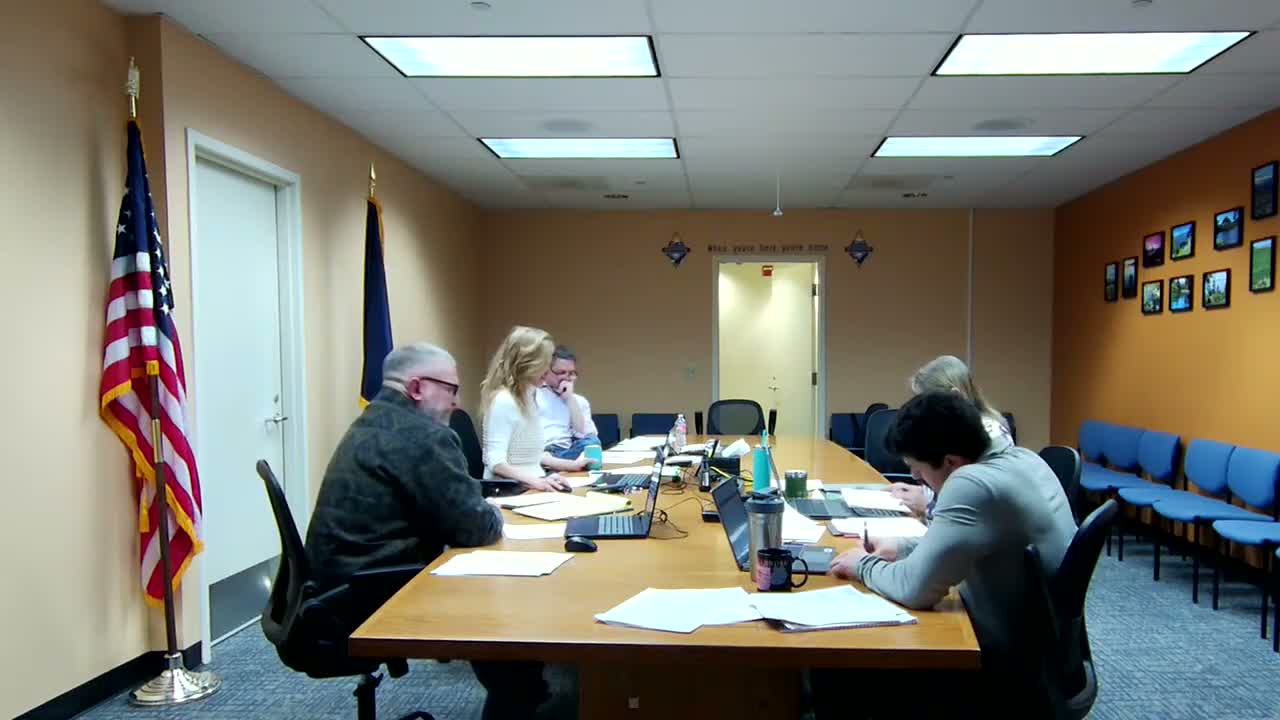
Klamath County commissioners spent the bulk of a budget workshop reviewing department budgets and reserves, with officials flagging higher software costs for finance, planned transfers from reserves including opioid settlement funds, and ongoing staffing pressures in the district attorney’s office.
Finance staff told the board the county will face significant internal service increases driven by software: Springbrook is budgeted at about $75,000 annually and the Tyler subscription was reported at $219,002.68 in subscription costs; implementation and duplicate‑software costs will keep spending higher in the near term. County staff described three Tyler modules under consideration — an inventory module (implementation cited as $4,672 plus 56 implementation hours at $225/hour and an annual SaaS fee of $7,005.46), a cashiering module ($13,804 annual fee) and enterprise asset maintenance with smaller costs — and suggested an interdepartmental technology summit to avoid duplication.
Officials also discussed reserve and settlement funds. The general fund reserve is projected to receive two revenue streams the transcript identified as LATCF and opioid settlement money; staff budgeted a $300,000 transfer in from non‑departmental and proposed a $250,000 transfer to the juvenile detention budget. Separately, a departmental transfer of $4,000,000 was described as a recurring cash buffer to cover periods before property tax receipts, with a projected carryover near $1,235,000 if no new spending occurs.
The DA's office repeatedly framed the overall county budget as unusually lean. Officials said they raised discovery fees to add roughly $30,000 in revenue, are using a marijuana grant to fund a DDA 3 step 7 position, and warned that mental health fund allocations that could provide about $156,000 this year may not be available in future years. The DA’s office reported 30 participants in behavioral intervention court and 38 in community wellness court for 2025 and highlighted that those program needs informed staffing decisions. Staff also said overtime usage has been high; the office is budgeting five DDAs next year with no overtime but noted court schedule pressures might make that difficult.
Other topics included Watermaster office rent/service charges (annual service charge cited at $27,003.64), equipment reserves (noted at $437,000), and use of ARPA funds for juvenile hub contracts. County counsel and commissioners debated whether the sheriff’s office should budget for specialized law‑enforcement legal services or rely on county legal services, noting potential conflict risks and the need to vet outside counsel.
What comes next: officials said some matters (hub contract, equipment purchases) will be addressed in upcoming budget resolutions and staff will bring back detailed figures; commissioners asked staff to convene cross‑departmental discussions on technology needs and to monitor DA overtime and staffing.
Finance staff told the board the county will face significant internal service increases driven by software: Springbrook is budgeted at about $75,000 annually and the Tyler subscription was reported at $219,002.68 in subscription costs; implementation and duplicate‑software costs will keep spending higher in the near term. County staff described three Tyler modules under consideration — an inventory module (implementation cited as $4,672 plus 56 implementation hours at $225/hour and an annual SaaS fee of $7,005.46), a cashiering module ($13,804 annual fee) and enterprise asset maintenance with smaller costs — and suggested an interdepartmental technology summit to avoid duplication.
Officials also discussed reserve and settlement funds. The general fund reserve is projected to receive two revenue streams the transcript identified as LATCF and opioid settlement money; staff budgeted a $300,000 transfer in from non‑departmental and proposed a $250,000 transfer to the juvenile detention budget. Separately, a departmental transfer of $4,000,000 was described as a recurring cash buffer to cover periods before property tax receipts, with a projected carryover near $1,235,000 if no new spending occurs.
The DA's office repeatedly framed the overall county budget as unusually lean. Officials said they raised discovery fees to add roughly $30,000 in revenue, are using a marijuana grant to fund a DDA 3 step 7 position, and warned that mental health fund allocations that could provide about $156,000 this year may not be available in future years. The DA’s office reported 30 participants in behavioral intervention court and 38 in community wellness court for 2025 and highlighted that those program needs informed staffing decisions. Staff also said overtime usage has been high; the office is budgeting five DDAs next year with no overtime but noted court schedule pressures might make that difficult.
Other topics included Watermaster office rent/service charges (annual service charge cited at $27,003.64), equipment reserves (noted at $437,000), and use of ARPA funds for juvenile hub contracts. County counsel and commissioners debated whether the sheriff’s office should budget for specialized law‑enforcement legal services or rely on county legal services, noting potential conflict risks and the need to vet outside counsel.
What comes next: officials said some matters (hub contract, equipment purchases) will be addressed in upcoming budget resolutions and staff will bring back detailed figures; commissioners asked staff to convene cross‑departmental discussions on technology needs and to monitor DA overtime and staffing.
View the Full Meeting & All Its Details
This article offers just a summary. Unlock complete video, transcripts, and insights as a Founder Member.
✓
Watch full, unedited meeting videos
✓
Search every word spoken in unlimited transcripts
✓
AI summaries & real-time alerts (all government levels)
✓
Permanent access to expanding government content
30-day money-back guarantee
