Council rejects proposal to limit public comments to agenda items after members and residents object
March 03, 2026 | Pasadena, Harris County, Texas
This article was created by AI summarizing key points discussed. AI makes mistakes, so for full details and context, please refer to the video of the full meeting. Please report any errors so we can fix them. Report an error »
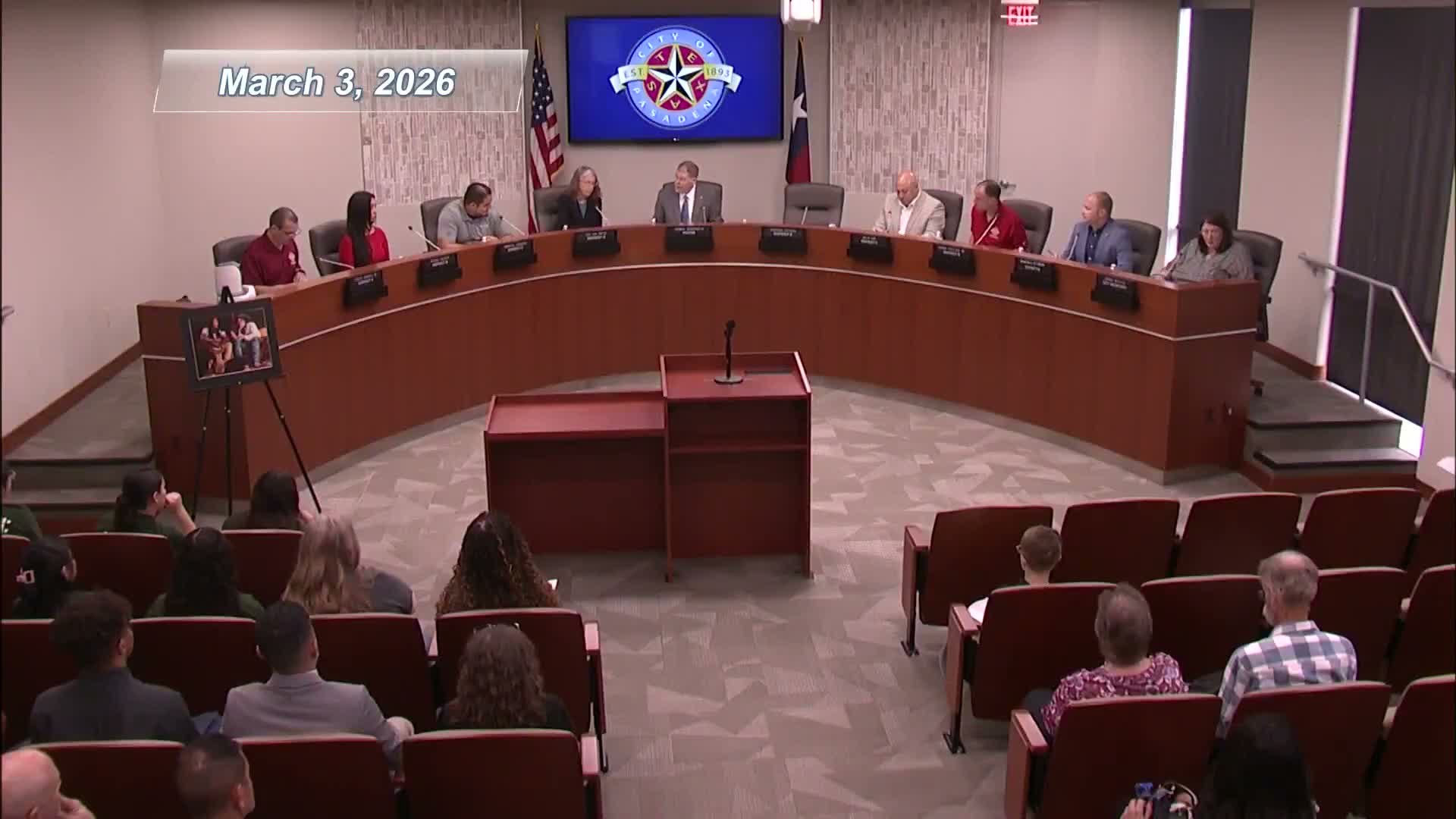
The Pasadena City Council declined to adopt a proposed change to its rules of conduct that would have limited public comment at council meetings to items listed on the agenda, after several councilmembers and speakers said the restriction would unduly curtail residents’ access to the governing body.
At issue was an ordinance (listed in the agenda as Ordinance 2026‑52, item 2k in the packet) that would amend the code of ordinances at sections governing order of business and rules of conduct to narrow the subjects permissible during public comment. Councilwoman Van Hout argued the change would bar people from raising real‑time concerns — such as a resident whose fence was damaged during a city pipeline repair, requests to change local codes (garage sales), water‑bill disputes, or accessibility problems like a person in a wheelchair unable to reach a community center — unless they were put on the agenda in advance.
Van Hout said the current code already allows the city to prohibit loud, profane, abusive or disruptive language and that narrowing the rule would force residents to contact the city secretary well in advance to speak about common neighborhood problems. "This is the place that anyone can bring a problem with the city and be heard," she said in the meeting record, urging a 'no' vote on the change.
Councilwoman Valerio likewise opposed the proposal, saying the council should apply existing rules consistently rather than curtail citizen access. Valerio added that limiting comment to agenda items could encourage councilmembers to discuss matters outside of an open meeting, which she said is undesirable.
The transcript shows council debate and a recorded 'no' on item 2k; the motion to adopt the narrower rules failed. Supporters of limiting public comment argued it would reduce repetitive or abusive remarks, but councilmembers who voted against the ordinance framed the change as an unnecessary restriction on public participation.
Why it matters: City council meetings are a primary avenue for residents to raise problems requiring municipal action. The council’s rejection of this change preserves the broader opportunity for unscheduled public comment, while the discussion underscored an outstanding implementation issue: several councilmembers urged stricter and more consistent enforcement of existing rules governing disorderly conduct rather than a change in what topics residents may raise.
Next steps: The transcript indicates councilmembers asked only for consistent application of current rules; no follow‑up directive to staff was recorded to prepare alternate language or enforcement guidelines in this session.
At issue was an ordinance (listed in the agenda as Ordinance 2026‑52, item 2k in the packet) that would amend the code of ordinances at sections governing order of business and rules of conduct to narrow the subjects permissible during public comment. Councilwoman Van Hout argued the change would bar people from raising real‑time concerns — such as a resident whose fence was damaged during a city pipeline repair, requests to change local codes (garage sales), water‑bill disputes, or accessibility problems like a person in a wheelchair unable to reach a community center — unless they were put on the agenda in advance.
Van Hout said the current code already allows the city to prohibit loud, profane, abusive or disruptive language and that narrowing the rule would force residents to contact the city secretary well in advance to speak about common neighborhood problems. "This is the place that anyone can bring a problem with the city and be heard," she said in the meeting record, urging a 'no' vote on the change.
Councilwoman Valerio likewise opposed the proposal, saying the council should apply existing rules consistently rather than curtail citizen access. Valerio added that limiting comment to agenda items could encourage councilmembers to discuss matters outside of an open meeting, which she said is undesirable.
The transcript shows council debate and a recorded 'no' on item 2k; the motion to adopt the narrower rules failed. Supporters of limiting public comment argued it would reduce repetitive or abusive remarks, but councilmembers who voted against the ordinance framed the change as an unnecessary restriction on public participation.
Why it matters: City council meetings are a primary avenue for residents to raise problems requiring municipal action. The council’s rejection of this change preserves the broader opportunity for unscheduled public comment, while the discussion underscored an outstanding implementation issue: several councilmembers urged stricter and more consistent enforcement of existing rules governing disorderly conduct rather than a change in what topics residents may raise.
Next steps: The transcript indicates councilmembers asked only for consistent application of current rules; no follow‑up directive to staff was recorded to prepare alternate language or enforcement guidelines in this session.
Don't Miss a Word: See the Full Meeting!
Go beyond summaries. Unlock every video, transcript, and key insight with a Founder Membership.
✓
Get instant access to full meeting videos
✓
Search and clip any phrase from complete transcripts
✓
Receive AI-powered summaries & custom alerts
✓
Enjoy lifetime, unrestricted access to government data
30-day money-back guarantee
