Kandiyohi County sets April 7 hearing on proposed slow/no-wake ordinance for lakes
March 03, 2026 | Kandiyohi County, Minnesota
This article was created by AI summarizing key points discussed. AI makes mistakes, so for full details and context, please refer to the video of the full meeting. Please report any errors so we can fix them. Report an error »
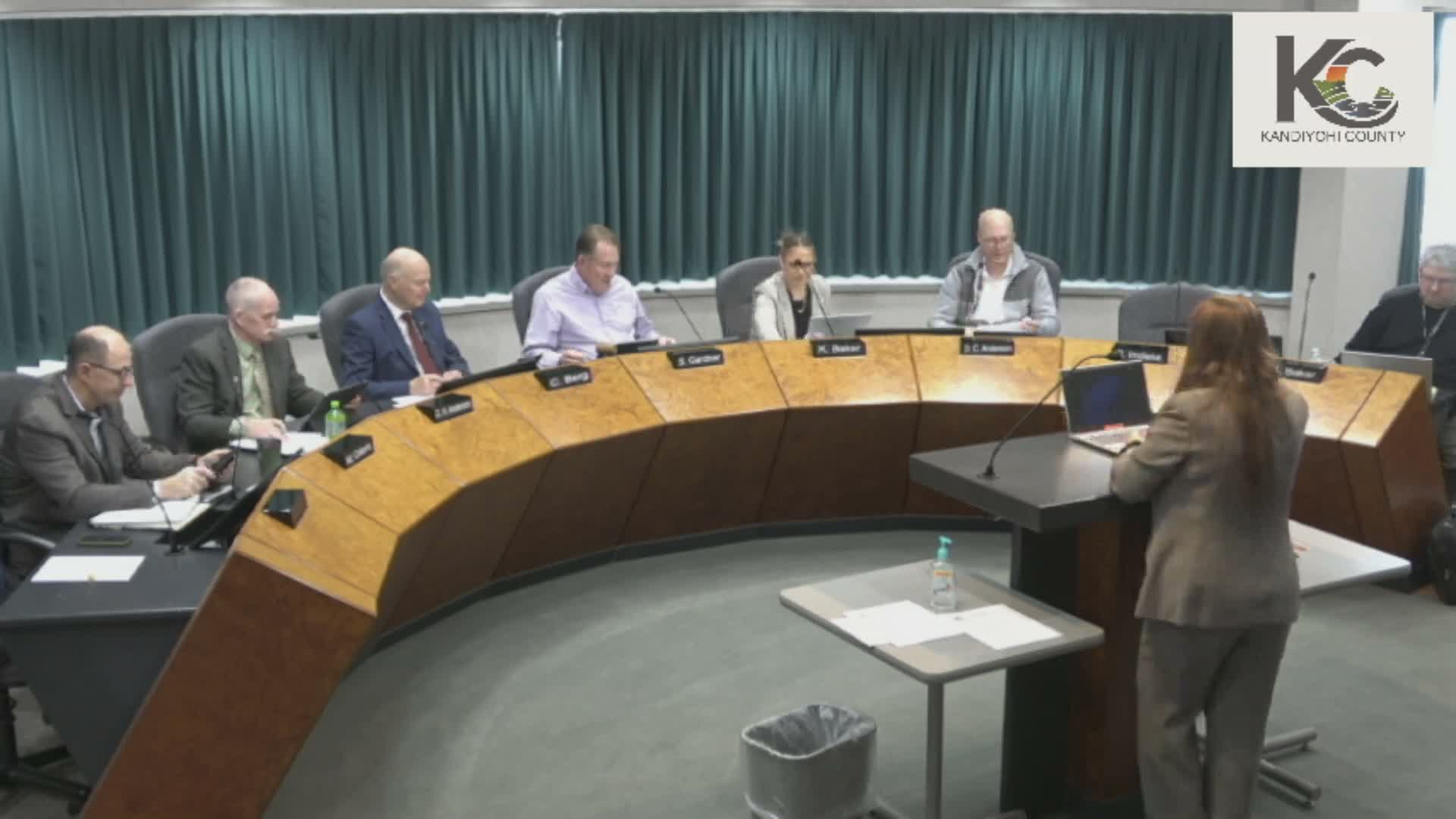
Kandiyohi County commissioners on March 3 held a first review of a draft slow/no-wake ordinance that would automatically impose temporary speed restrictions on designated lakes when specified water-elevation triggers are reached. County Administrator Kelsey Baker said the ordinance is designed to provide ‘‘predetermined trigger elevations’’ and predictable, data-driven protections for shorelines, docks and public access points.
Baker said the county has authority under state law and Minnesota rules cited in the draft and that the ordinance aims to balance property rights and recreational use with shoreline protection and public safety. Senior staff member Austin Hillbrand explained the technical approach: the county merged local lake-elevation readings with DNR data, used ordinary high-water marks as baselines and set trigger elevations for each lake to capture the upper portion of historical high-water events. ‘‘For lakes that consistently went above the ordinary high water mark, I set that wake restriction trigger to cover the upper 50 to 25% above the ordinary high water mark,’’ Hillbrand said.
The draft would define slow/no-wake as no more than 5 miles per hour, the minimum speed necessary to maintain steerage, apply 24 hours per day to designated watercraft, and remain in effect until water levels fall 0.1 foot below the trigger for three consecutive days. The county would post notices online, notify local media, install signage and, where needed, place buoys at public accesses; the Kandiyohi County Sheriff’s Office would be the primary local enforcer while Minnesota DNR conservation officers could enforce misdemeanors under state law.
The ordinance lists several lakes proposed for coverage, including Lake Andrew, Big Kandiyohi, Diamond Lake, Eagle Lake, Elkhorn, Green Lake, Long Lake (Wilmer), Nest Lake, Norway Lake (including the channel into West Norway) and others. Staff said they focused on main recreational lakes and did not include smaller fishing lakes that historically do not reach elevated levels.
Commissioners voted to set a public hearing on the ordinance for April 7 at 9 a.m. to gather public comment and to allow staff time to incorporate feedback and complete statutory postings before the hearing. If the board advances the ordinance after the hearing, it would return to the board for formal action.
Baker said the county has authority under state law and Minnesota rules cited in the draft and that the ordinance aims to balance property rights and recreational use with shoreline protection and public safety. Senior staff member Austin Hillbrand explained the technical approach: the county merged local lake-elevation readings with DNR data, used ordinary high-water marks as baselines and set trigger elevations for each lake to capture the upper portion of historical high-water events. ‘‘For lakes that consistently went above the ordinary high water mark, I set that wake restriction trigger to cover the upper 50 to 25% above the ordinary high water mark,’’ Hillbrand said.
The draft would define slow/no-wake as no more than 5 miles per hour, the minimum speed necessary to maintain steerage, apply 24 hours per day to designated watercraft, and remain in effect until water levels fall 0.1 foot below the trigger for three consecutive days. The county would post notices online, notify local media, install signage and, where needed, place buoys at public accesses; the Kandiyohi County Sheriff’s Office would be the primary local enforcer while Minnesota DNR conservation officers could enforce misdemeanors under state law.
The ordinance lists several lakes proposed for coverage, including Lake Andrew, Big Kandiyohi, Diamond Lake, Eagle Lake, Elkhorn, Green Lake, Long Lake (Wilmer), Nest Lake, Norway Lake (including the channel into West Norway) and others. Staff said they focused on main recreational lakes and did not include smaller fishing lakes that historically do not reach elevated levels.
Commissioners voted to set a public hearing on the ordinance for April 7 at 9 a.m. to gather public comment and to allow staff time to incorporate feedback and complete statutory postings before the hearing. If the board advances the ordinance after the hearing, it would return to the board for formal action.
Don't Miss a Word: See the Full Meeting!
Go beyond summaries. Unlock every video, transcript, and key insight with a Founder Membership.
✓
Get instant access to full meeting videos
✓
Search and clip any phrase from complete transcripts
✓
Receive AI-powered summaries & custom alerts
✓
Enjoy lifetime, unrestricted access to government data
30-day money-back guarantee
