Board approves 2026–27 academic calendar after heated debate over e-learning costs
February 27, 2026 | McLeod County, Minnesota
This article was created by AI summarizing key points discussed. AI makes mistakes, so for full details and context, please refer to the video of the full meeting. Please report any errors so we can fix them. Report an error »
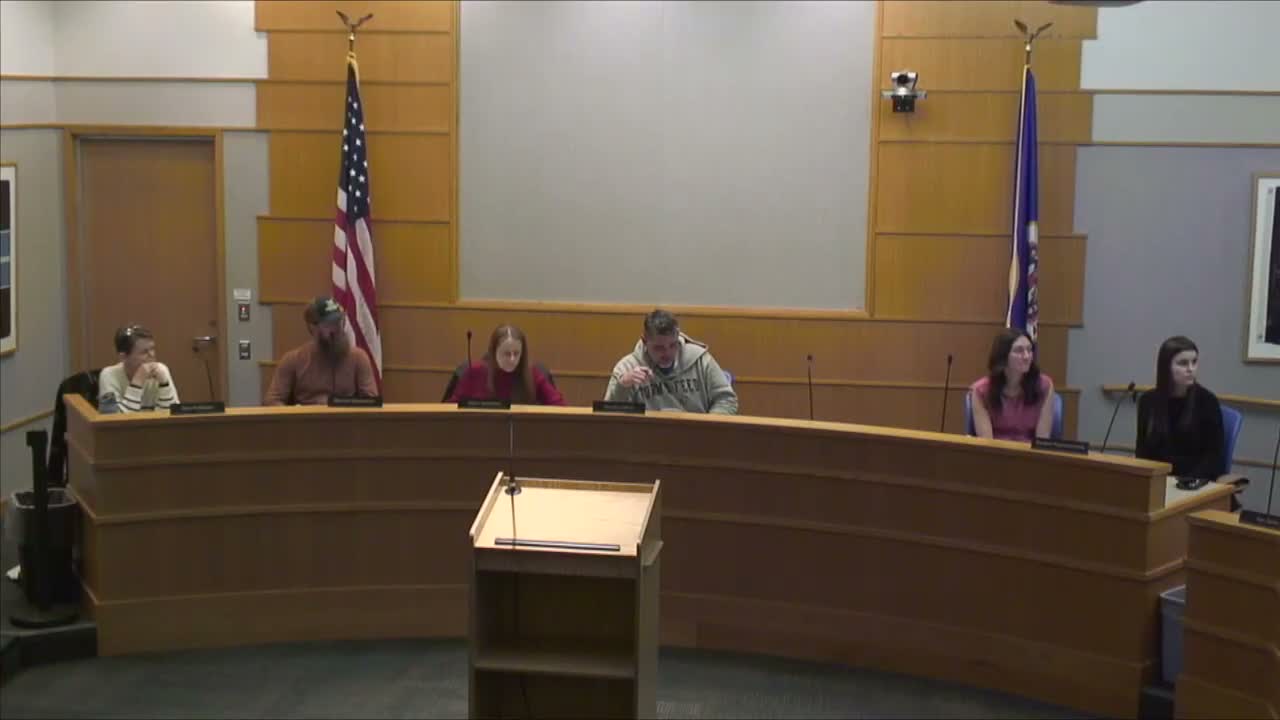
The Hutchinson Public Schools board voted to approve the 2026–27 academic calendar on Feb. 25 after an extended discussion about e-learning days, attendance impacts and potential legislative cost implications.
Pullman moved to approve the calendar and Kelsi seconded; the motion carried on a 3–1 vote. The discussion focused on whether the district should retain e-learning days in the calendar, how to benchmark success for an e-learning day and the financial impact of recent state guidance related to ESST.
Administration provided building-level attendance data from a recent e-learning day: at West Elementary about 16% of students were absent (57 absences); Tiger Elementary had roughly 7% absent (24 absences); Park Elementary about 8% absent (34 absences); middle and high school data were presented as period absences and excused/unexcused counts. Staff absences on an e-learning day were also raised: the administration cited roughly 79–89 staff absences on the e-learning day and compared that to a prior Friday for context.
Board members pressed for objective benchmarks and clearer measures of a "successful" e-learning day, including the number of special-education students who missed one-on-one services and whether the district could sustain instructional quality when dozens of staff were absent. A board member summarized the need for measurable outcomes: "I think we asked for some measurable data. We have to run on objective reality," the member said.
In the budget discussion tied to the calendar, administration and board members cited an ESST law interpretation that could increase district cost if staff were paid for substitute coverage; a speaker referenced a potential cost of about $275,000 if the district were to absorb five such days. One board member explained the change in calculus: "I think that that impact changed," referring to the ESST guidance and estimated financial exposure.
After discussion the board approved the calendar; members asked administration to return with benchmarking proposals and more detailed impact analyses if e-learning remains under consideration for future calendars.
Pullman moved to approve the calendar and Kelsi seconded; the motion carried on a 3–1 vote. The discussion focused on whether the district should retain e-learning days in the calendar, how to benchmark success for an e-learning day and the financial impact of recent state guidance related to ESST.
Administration provided building-level attendance data from a recent e-learning day: at West Elementary about 16% of students were absent (57 absences); Tiger Elementary had roughly 7% absent (24 absences); Park Elementary about 8% absent (34 absences); middle and high school data were presented as period absences and excused/unexcused counts. Staff absences on an e-learning day were also raised: the administration cited roughly 79–89 staff absences on the e-learning day and compared that to a prior Friday for context.
Board members pressed for objective benchmarks and clearer measures of a "successful" e-learning day, including the number of special-education students who missed one-on-one services and whether the district could sustain instructional quality when dozens of staff were absent. A board member summarized the need for measurable outcomes: "I think we asked for some measurable data. We have to run on objective reality," the member said.
In the budget discussion tied to the calendar, administration and board members cited an ESST law interpretation that could increase district cost if staff were paid for substitute coverage; a speaker referenced a potential cost of about $275,000 if the district were to absorb five such days. One board member explained the change in calculus: "I think that that impact changed," referring to the ESST guidance and estimated financial exposure.
After discussion the board approved the calendar; members asked administration to return with benchmarking proposals and more detailed impact analyses if e-learning remains under consideration for future calendars.
Don't Miss a Word: See the Full Meeting!
Go beyond summaries. Unlock every video, transcript, and key insight with a Founder Membership.
✓
Get instant access to full meeting videos
✓
Search and clip any phrase from complete transcripts
✓
Receive AI-powered summaries & custom alerts
✓
Enjoy lifetime, unrestricted access to government data
30-day money-back guarantee
