Mayors and municipal associations urge updating law to allow online publication of legal notices
February 27, 2026 | Planning and Development, House of Representatives, Committees, Legislative, Connecticut
This article was created by AI summarizing key points discussed. AI makes mistakes, so for full details and context, please refer to the video of the full meeting. Please report any errors so we can fix them. Report an error »
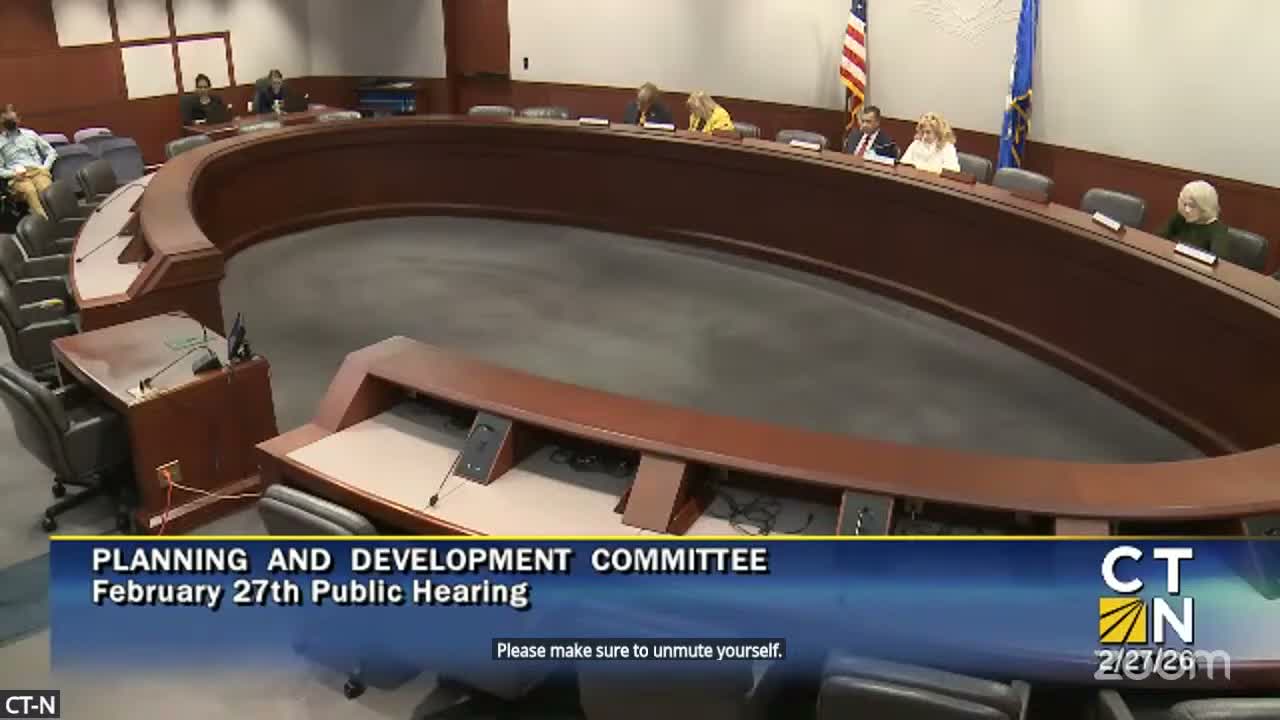
Municipal officials and planning advocates told the Planning and Development Committee that Connecticut’s statutory requirement to publish legal notices in print newspapers is increasingly costly and may not reach residents.
Milford Mayor Rich Smith said his town spends roughly $60,000 annually on legal notices and that an FY23 total for postings was $178,514, telling the committee that online publication on municipal websites would be a more efficient use of local tax dollars. "We're never gonna have a 100% saturation," he said, but argued a preponderance of coverage exists online and that towns can inform residents where to find notices.
The Connecticut Conference of Municipalities and the Connecticut Council of Small Towns supported HB 5289 as an unfunded‑mandate relief and urged clear rules about retention and verifiability of online records. John Guskowski of the American Planning Association said newspapers are less effective today and the bill would modernize how municipalities notify residents.
Representatives of the Connecticut Daily Newspaper Association pushed back, arguing that newspapers — including their online editions — provide passive discovery and independent verification that municipal websites may not. "Newspapers remain the most accessible and verifiable means of public notification," the association's executive director said, and warned about news deserts and uneven municipal technical capacity.
Committee members and witnesses discussed possible technical approaches — including better definitions of circulation, requirements to post notices in multiple places, and record‑retention standards — as a way to balance cost savings, accessibility and the survival of local journalism.
What happens next: The committee will consider amendments and technical language for HB 5289, including options to allow but not require towns to continue print notices where appropriate.
Milford Mayor Rich Smith said his town spends roughly $60,000 annually on legal notices and that an FY23 total for postings was $178,514, telling the committee that online publication on municipal websites would be a more efficient use of local tax dollars. "We're never gonna have a 100% saturation," he said, but argued a preponderance of coverage exists online and that towns can inform residents where to find notices.
The Connecticut Conference of Municipalities and the Connecticut Council of Small Towns supported HB 5289 as an unfunded‑mandate relief and urged clear rules about retention and verifiability of online records. John Guskowski of the American Planning Association said newspapers are less effective today and the bill would modernize how municipalities notify residents.
Representatives of the Connecticut Daily Newspaper Association pushed back, arguing that newspapers — including their online editions — provide passive discovery and independent verification that municipal websites may not. "Newspapers remain the most accessible and verifiable means of public notification," the association's executive director said, and warned about news deserts and uneven municipal technical capacity.
Committee members and witnesses discussed possible technical approaches — including better definitions of circulation, requirements to post notices in multiple places, and record‑retention standards — as a way to balance cost savings, accessibility and the survival of local journalism.
What happens next: The committee will consider amendments and technical language for HB 5289, including options to allow but not require towns to continue print notices where appropriate.
Don't Miss a Word: See the Full Meeting!
Go beyond summaries. Unlock every video, transcript, and key insight with a Founder Membership.
✓
Get instant access to full meeting videos
✓
Search and clip any phrase from complete transcripts
✓
Receive AI-powered summaries & custom alerts
✓
Enjoy lifetime, unrestricted access to government data
30-day money-back guarantee
