Split testimony as lawmakers weigh letting towns ban retail sales of dogs, cats and rabbits
February 27, 2026 | Planning and Development, House of Representatives, Committees, Legislative, Connecticut
This article was created by AI summarizing key points discussed. AI makes mistakes, so for full details and context, please refer to the video of the full meeting. Please report any errors so we can fix them. Report an error »
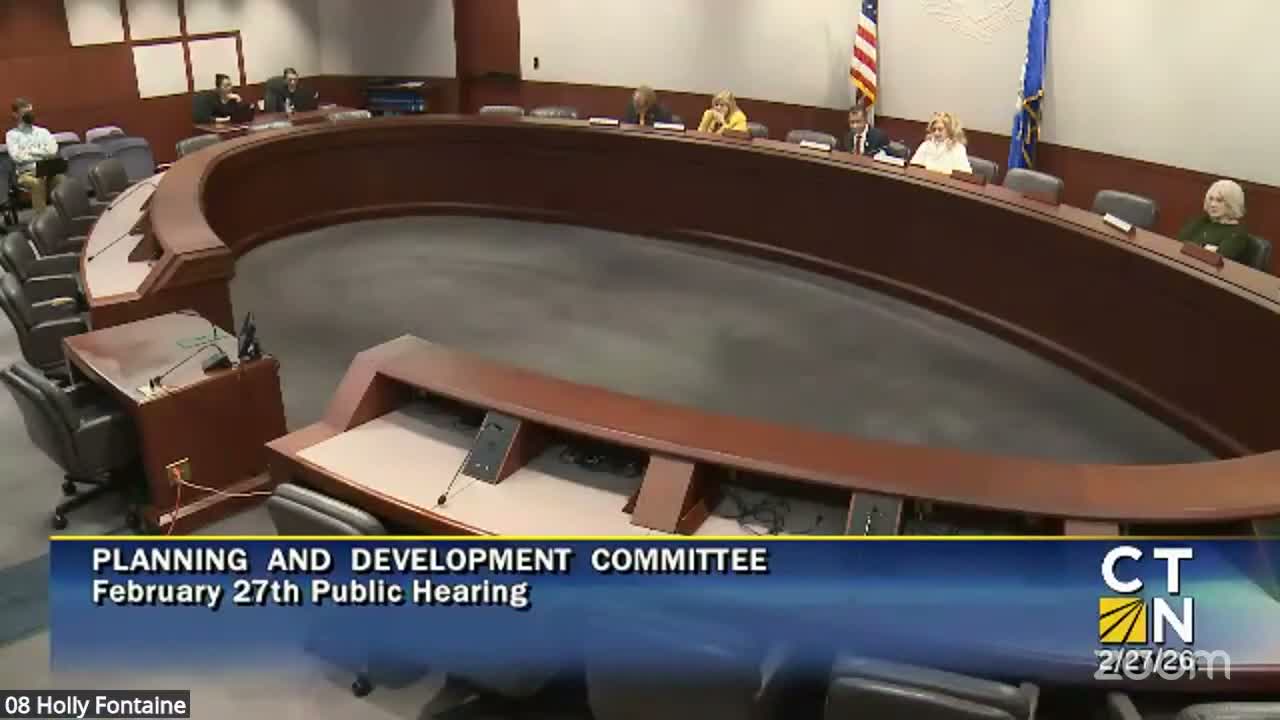
The Planning and Development Committee heard sharply divided testimony on HB 5283, which would authorize municipalities to prohibit the retail sale of dogs, cats and rabbits in pet stores.
Advocates for the measure — including Humane World for Animals, the Connecticut Humane Society and several local officials — said federal and state oversight of large commercial breeders has failed to prevent inhumane conditions at some sources and that giving towns the authority to ban retail sales would reduce demand for the commercial breeding pipeline. "Banning the sale of dogs, cats and rabbits is more important now than ever," said Annie Hornish of Humane World for Animals, citing federal inspector‑general reports on enforcement gaps.
Pet store owners, industry groups and some municipal speakers countered that Connecticut’s state regulations already require pet stores to source only from USDA‑licensed breeders and to provide health records, vet checks and warranties to consumers. Store owners described mandatory health warranties, 21‑day health checks and longer congenital/hereditary warranties and said those consumer protections are enforced by the Department of Agriculture. "Removing regulated stores pushes people towards the Internet, hobby breeders, and underground markets where there are no consumer protections," said Victoria Hamilton of Safari Stands Pet Center.
Several municipal leaders and planning professionals said a compromise approach — allowing towns to make local decisions or requiring stricter statewide sourcing rules — could address concerns without creating an inconsistent patchwork of local ordinances. Committee members questioned both sides about enforcement, the evidence for specific abuses, and whether rescues and importers of animals are subject to the same oversight as retail sellers.
What happens next: The committee will continue to take written testimony and consider whether to advance local‑control language, add clearer standards, or refer the issue to other committees for further review.
Advocates for the measure — including Humane World for Animals, the Connecticut Humane Society and several local officials — said federal and state oversight of large commercial breeders has failed to prevent inhumane conditions at some sources and that giving towns the authority to ban retail sales would reduce demand for the commercial breeding pipeline. "Banning the sale of dogs, cats and rabbits is more important now than ever," said Annie Hornish of Humane World for Animals, citing federal inspector‑general reports on enforcement gaps.
Pet store owners, industry groups and some municipal speakers countered that Connecticut’s state regulations already require pet stores to source only from USDA‑licensed breeders and to provide health records, vet checks and warranties to consumers. Store owners described mandatory health warranties, 21‑day health checks and longer congenital/hereditary warranties and said those consumer protections are enforced by the Department of Agriculture. "Removing regulated stores pushes people towards the Internet, hobby breeders, and underground markets where there are no consumer protections," said Victoria Hamilton of Safari Stands Pet Center.
Several municipal leaders and planning professionals said a compromise approach — allowing towns to make local decisions or requiring stricter statewide sourcing rules — could address concerns without creating an inconsistent patchwork of local ordinances. Committee members questioned both sides about enforcement, the evidence for specific abuses, and whether rescues and importers of animals are subject to the same oversight as retail sellers.
What happens next: The committee will continue to take written testimony and consider whether to advance local‑control language, add clearer standards, or refer the issue to other committees for further review.
Don't Miss a Word: See the Full Meeting!
Go beyond summaries. Unlock every video, transcript, and key insight with a Founder Membership.
✓
Get instant access to full meeting videos
✓
Search and clip any phrase from complete transcripts
✓
Receive AI-powered summaries & custom alerts
✓
Enjoy lifetime, unrestricted access to government data
30-day money-back guarantee
