Former school committee member warns of literacy crisis, urges evidence‑based materials and training
March 02, 2026 | Boston City, Suffolk County, Massachusetts
This article was created by AI summarizing key points discussed. AI makes mistakes, so for full details and context, please refer to the video of the full meeting. Please report any errors so we can fix them. Report an error »
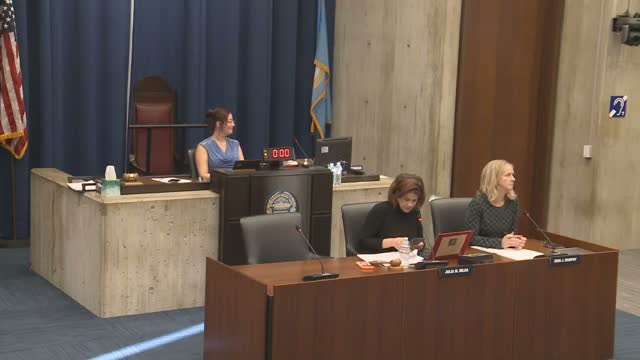
Mary Tamer, a former Boston School Committee member and founder/director of Mass Potential, used the committee hearing to link the fiscal crisis to longstanding academic outcomes she described as unacceptable and to press the council and BPS to align the budget with proven instructional priorities.
"We are spending more money than ever before," Tamer said in a prepared presentation, arguing that despite larger staff counts and higher spending the district’s reading and math proficiency have fallen. She cited declines since pre‑pandemic levels, low reading proficiency for students with disabilities and English learners, and the district’s enrollment collapse from roughly 57,000 to about 47,000 students over a decade.
Tamer urged a switch to research‑backed, high‑quality instructional materials (HQIM) for early literacy and statewide coordination on teacher training. She criticized the district’s current early literacy program by name and said it is not HQIM, and she urged the council to condition future budget approvals on demonstrable commitments to evidence‑based curricula and training.
Ross Wilson of the Shaw Family Foundation echoed the call for clearer priorities and accountability, saying the district must invest in inclusionary practices for students with disabilities and bilingual education for multilingual learners while reducing non‑instructional cost drivers such as inefficient transportation use.
Both speakers urged the council to demand that future BPS budget decisions prioritize instructional materials, training and measurable outcomes over incremental or opaque operational spending.
"We are spending more money than ever before," Tamer said in a prepared presentation, arguing that despite larger staff counts and higher spending the district’s reading and math proficiency have fallen. She cited declines since pre‑pandemic levels, low reading proficiency for students with disabilities and English learners, and the district’s enrollment collapse from roughly 57,000 to about 47,000 students over a decade.
Tamer urged a switch to research‑backed, high‑quality instructional materials (HQIM) for early literacy and statewide coordination on teacher training. She criticized the district’s current early literacy program by name and said it is not HQIM, and she urged the council to condition future budget approvals on demonstrable commitments to evidence‑based curricula and training.
Ross Wilson of the Shaw Family Foundation echoed the call for clearer priorities and accountability, saying the district must invest in inclusionary practices for students with disabilities and bilingual education for multilingual learners while reducing non‑instructional cost drivers such as inefficient transportation use.
Both speakers urged the council to demand that future BPS budget decisions prioritize instructional materials, training and measurable outcomes over incremental or opaque operational spending.
Don't Miss a Word: See the Full Meeting!
Go beyond summaries. Unlock every video, transcript, and key insight with a Founder Membership.
✓
Get instant access to full meeting videos
✓
Search and clip any phrase from complete transcripts
✓
Receive AI-powered summaries & custom alerts
✓
Enjoy lifetime, unrestricted access to government data
30-day money-back guarantee
