Bemidji State says derecho razed campus canopy, seeks aid for replanting
March 03, 2026 | 2026 Legislature MN, Minnesota
This article was created by AI summarizing key points discussed. AI makes mistakes, so for full details and context, please refer to the video of the full meeting. Please report any errors so we can fix them. Report an error »
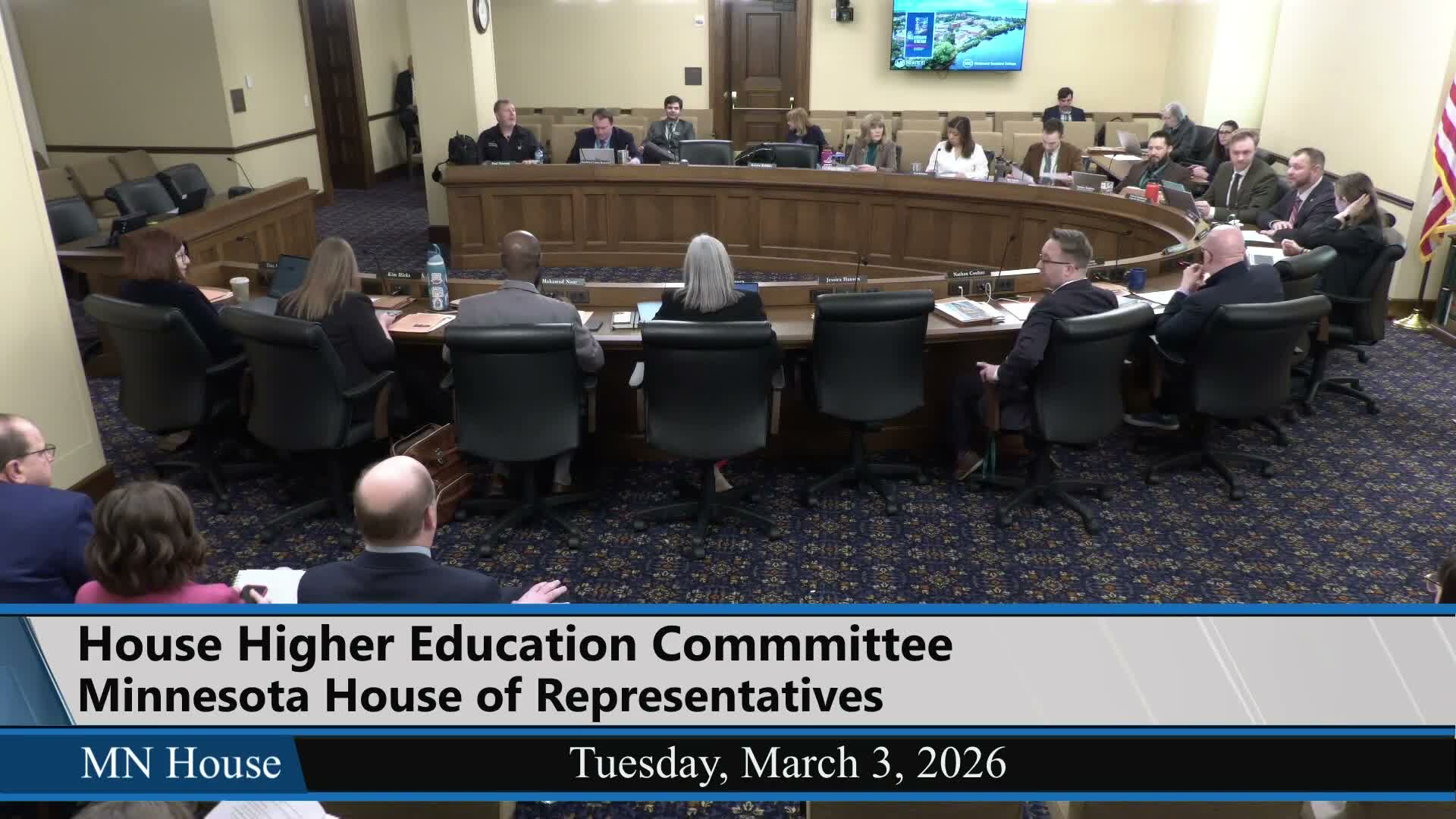
President John Hoffman told the House higher education committee that Bemidji State University and Bemidji NTC serve a broad swath of northern Minnesota and that the June 21 derecho caused widespread damage to both campuses.
"We lost more than a third of our enrollment through the pandemic," Hoffman said, noting the institutions rebuilt enrollment and retention before the storm and that the campuses remain a key workforce pipeline for the region. He described a storm roughly 10 miles wide with straight-line winds the hearing transcript summarized as between 90 and 120 miles per hour, large-scale tree loss, roof and window damage, and overturned mobile labs.
Brent Steinmetz, an interim grounds and roads coordinator who testified about the immediate recovery, said crews worked around the clock to clear debris and grind stumps and that most mature canopy trees were lost. "I had a 40 foot Norway in my living room," Steinmetz said, illustrating the destructive reach of the wind.
Hoffman said buildings were insured and will be restored but stressed that trees are not a bondable expense. He told the committee the shared deductible across the two campuses was $50,000, and cited roughly $25,000 in nonreimbursable overtime and another $25,000 paid for a landscape architect. On tree costs he stated: "How do you put a value on a tree? Well, it's $3,500 for a spaded tree. 2,200 trees, that's where we come to some of the dollar figures." A grassroots alumni campaign has raised about $80,000 toward replanting, he added.
Committee members pressed whether the campuses had reprioritized projects given storm needs. Hoffman said most building damage was covered by insurance and that the urgent need was the trees; Minnesota State staff confirmed in questioning that tree replacement generally is not eligible for bonding and suggested operating funds or philanthropic efforts as alternatives.
The committee chair said he will introduce a bill addressing the damages on March 10; witnesses and members discussed possible funding paths, including emergency operating support and competitive grants. The hearing closed with members thanking the Bemidji representatives for their presentation and noting the human toll on staff who worked overtime to recover campus operations.
The committee took no formal funding action at the hearing; members plan to meet again on 03/05/2026.
"We lost more than a third of our enrollment through the pandemic," Hoffman said, noting the institutions rebuilt enrollment and retention before the storm and that the campuses remain a key workforce pipeline for the region. He described a storm roughly 10 miles wide with straight-line winds the hearing transcript summarized as between 90 and 120 miles per hour, large-scale tree loss, roof and window damage, and overturned mobile labs.
Brent Steinmetz, an interim grounds and roads coordinator who testified about the immediate recovery, said crews worked around the clock to clear debris and grind stumps and that most mature canopy trees were lost. "I had a 40 foot Norway in my living room," Steinmetz said, illustrating the destructive reach of the wind.
Hoffman said buildings were insured and will be restored but stressed that trees are not a bondable expense. He told the committee the shared deductible across the two campuses was $50,000, and cited roughly $25,000 in nonreimbursable overtime and another $25,000 paid for a landscape architect. On tree costs he stated: "How do you put a value on a tree? Well, it's $3,500 for a spaded tree. 2,200 trees, that's where we come to some of the dollar figures." A grassroots alumni campaign has raised about $80,000 toward replanting, he added.
Committee members pressed whether the campuses had reprioritized projects given storm needs. Hoffman said most building damage was covered by insurance and that the urgent need was the trees; Minnesota State staff confirmed in questioning that tree replacement generally is not eligible for bonding and suggested operating funds or philanthropic efforts as alternatives.
The committee chair said he will introduce a bill addressing the damages on March 10; witnesses and members discussed possible funding paths, including emergency operating support and competitive grants. The hearing closed with members thanking the Bemidji representatives for their presentation and noting the human toll on staff who worked overtime to recover campus operations.
The committee took no formal funding action at the hearing; members plan to meet again on 03/05/2026.
View the Full Meeting & All Its Details
This article offers just a summary. Unlock complete video, transcripts, and insights as a Founder Member.
✓
Watch full, unedited meeting videos
✓
Search every word spoken in unlimited transcripts
✓
AI summaries & real-time alerts (all government levels)
✓
Permanent access to expanding government content
30-day money-back guarantee
