NC State economist: Alexander County’s new homes generally ‘pay their way,’ commercial base lags
March 03, 2026 | Alexander County, North Carolina
This article was created by AI summarizing key points discussed. AI makes mistakes, so for full details and context, please refer to the video of the full meeting. Please report any errors so we can fix them. Report an error »
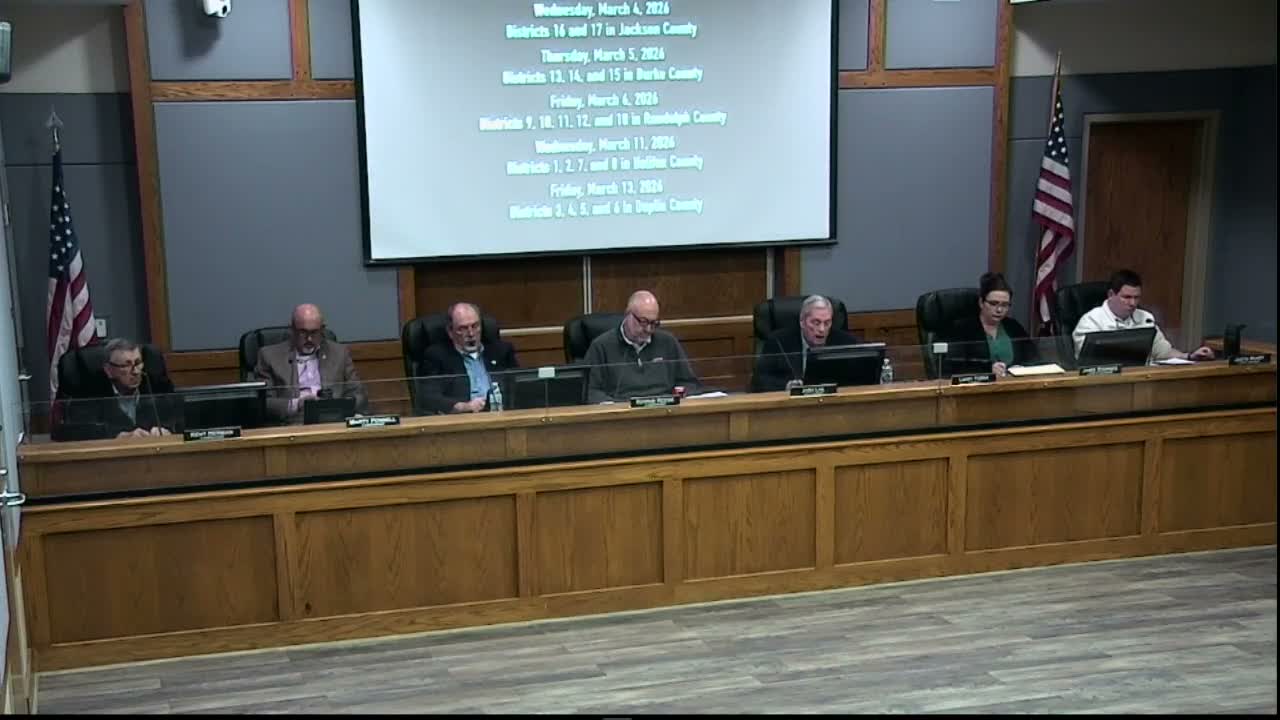
Dr. Jeffrey Dorfman, an economics professor at North Carolina State University, told the Alexander County Board of Commissioners that a county cost‑of‑service study shows residential development in Alexander returns about $0.88 for every $1 spent on services while commercial development returns roughly $1.03 and farm/forest land produces a fiscal surplus. He said the study’s breakeven home value for covering local service costs is about $170,000 and that current new housing in the county tends to exceed that level.
The study, conducted with input from county department heads, redistributes county revenue and expenditures across three payer categories—residential, commercial and farm/forest—to show which land uses generate net fiscal gains or losses. Dorfman said the results help planners weigh long‑range decisions. “On a national average basis, residential development pays in about 85¢ for every $1 it gets back,” he said, then noted Alexander’s slightly higher residential return: “You are getting 88¢ for every dollar.”
Dorfman highlighted how household composition affects costs: school enrollment is the largest service expense. He said a household with fewer children reduces per‑house costs and that development patterns—smaller lots, clustered housing, and infill—can lower infrastructure and service expenses by shortening bus routes and consolidating utilities. “If you take a house that’s on a 1‑acre lot and you build an identical house on a half‑acre, the county will spend about 25% less providing that house services,” he said.
Commissioners pressed on policy levers and on a specific equity issue: a county commissioner and the presenter said the county’s industrial park was mistakenly placed outside the boundary of a federal opportunity/new markets tax credit zone by a line‑drawing error. One commissioner said the mistake cost the county the chance to attract a large industry and that officials are working to have the boundary corrected. Dorfman said such corrections and pursuit of tax‑credit tools could materially improve the county’s commercial tax base.
Chair and commissioners thanked the presenter. The study’s author said the results are meant to inform planning and economic development efforts rather than to mandate immediate tax changes. Commissioners did not take formal action on the study itself during the meeting but discussed next steps for correcting tax‑credit boundaries and using the report in planning discussions.
What’s next: Commissioners indicated they will pursue correcting the mapped boundary for federal incentive programs and will use the study in long‑range planning conversations.
The study, conducted with input from county department heads, redistributes county revenue and expenditures across three payer categories—residential, commercial and farm/forest—to show which land uses generate net fiscal gains or losses. Dorfman said the results help planners weigh long‑range decisions. “On a national average basis, residential development pays in about 85¢ for every $1 it gets back,” he said, then noted Alexander’s slightly higher residential return: “You are getting 88¢ for every dollar.”
Dorfman highlighted how household composition affects costs: school enrollment is the largest service expense. He said a household with fewer children reduces per‑house costs and that development patterns—smaller lots, clustered housing, and infill—can lower infrastructure and service expenses by shortening bus routes and consolidating utilities. “If you take a house that’s on a 1‑acre lot and you build an identical house on a half‑acre, the county will spend about 25% less providing that house services,” he said.
Commissioners pressed on policy levers and on a specific equity issue: a county commissioner and the presenter said the county’s industrial park was mistakenly placed outside the boundary of a federal opportunity/new markets tax credit zone by a line‑drawing error. One commissioner said the mistake cost the county the chance to attract a large industry and that officials are working to have the boundary corrected. Dorfman said such corrections and pursuit of tax‑credit tools could materially improve the county’s commercial tax base.
Chair and commissioners thanked the presenter. The study’s author said the results are meant to inform planning and economic development efforts rather than to mandate immediate tax changes. Commissioners did not take formal action on the study itself during the meeting but discussed next steps for correcting tax‑credit boundaries and using the report in planning discussions.
What’s next: Commissioners indicated they will pursue correcting the mapped boundary for federal incentive programs and will use the study in long‑range planning conversations.
View the Full Meeting & All Its Details
This article offers just a summary. Unlock complete video, transcripts, and insights as a Founder Member.
✓
Watch full, unedited meeting videos
✓
Search every word spoken in unlimited transcripts
✓
AI summaries & real-time alerts (all government levels)
✓
Permanent access to expanding government content
30-day money-back guarantee
