Committee splits on automatic‑sealing bills after debate on deferred dispositions and disclosure
March 02, 2026 | 2026 Legislature ME, Maine
This article was created by AI summarizing key points discussed. AI makes mistakes, so for full details and context, please refer to the video of the full meeting. Please report any errors so we can fix them. Report an error »
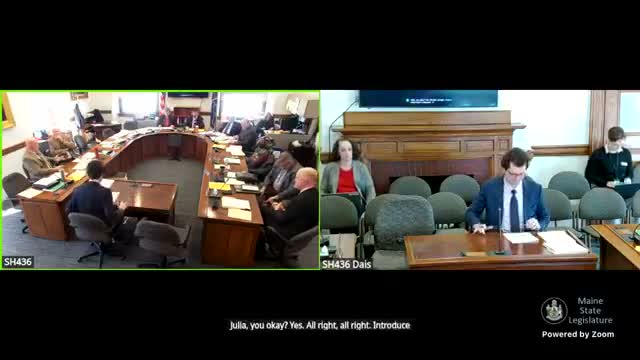
The Criminal Justice and Public Safety Committee spent a large portion of its work session addressing a package of bills that would expand or clarify automatic sealing of criminal records and define eligible non‑convictions.
Legislative staff explained that Judiciary had already passed a related measure (LD1911) and that LD1916–1919 would need to be reconciled to avoid conflicts. Representative Will (committee staff) summarized amendments and timing issues.
Key points of debate centered on whether deferred dispositions that are later pled down to civil infractions—commonly motor‑vehicle or OUI‑related cases—should be treated the same as outright dismissals. Julie Finn of the Judicial Branch said the bills turn on the box checked on disposition forms; if a disposition is recorded as 'other' or as a civil result, the entry can end up in public criminal‑history records unless forms and systems are adjusted.
Representative Luckner and others proposed amendments to clarify the process and to limit unintended consequences. Concerns were raised that immediate sealing without a waiting period could place individuals in a worse position if they later fail to disclose sealed records on federal background forms or SF‑86 applications.
The committee held multiple roll calls on motions. On LD1919, the clerk announced that the 'ought not to pass' motion carried with 12 in favor and 1 absent. Votes on other bills in the package produced divided results or tied tallies in some instances; the record shows substantive amendments were accepted for LD1917 but the final disposition required additional procedural steps.
Committee members asked for additional data from the State Bureau of Identification about how many deferred dispositions are converted to civil motor‑vehicle charges and the technical implementation timeline the Judicial Branch would need to make system and form changes.
Next steps: The package will be reconciled with Judiciary's LD1911 and further amendments; several of the bills were placed into work sessions with roll calls recorded for motions to 'ought not to pass' or to pass as amended.
Legislative staff explained that Judiciary had already passed a related measure (LD1911) and that LD1916–1919 would need to be reconciled to avoid conflicts. Representative Will (committee staff) summarized amendments and timing issues.
Key points of debate centered on whether deferred dispositions that are later pled down to civil infractions—commonly motor‑vehicle or OUI‑related cases—should be treated the same as outright dismissals. Julie Finn of the Judicial Branch said the bills turn on the box checked on disposition forms; if a disposition is recorded as 'other' or as a civil result, the entry can end up in public criminal‑history records unless forms and systems are adjusted.
Representative Luckner and others proposed amendments to clarify the process and to limit unintended consequences. Concerns were raised that immediate sealing without a waiting period could place individuals in a worse position if they later fail to disclose sealed records on federal background forms or SF‑86 applications.
The committee held multiple roll calls on motions. On LD1919, the clerk announced that the 'ought not to pass' motion carried with 12 in favor and 1 absent. Votes on other bills in the package produced divided results or tied tallies in some instances; the record shows substantive amendments were accepted for LD1917 but the final disposition required additional procedural steps.
Committee members asked for additional data from the State Bureau of Identification about how many deferred dispositions are converted to civil motor‑vehicle charges and the technical implementation timeline the Judicial Branch would need to make system and form changes.
Next steps: The package will be reconciled with Judiciary's LD1911 and further amendments; several of the bills were placed into work sessions with roll calls recorded for motions to 'ought not to pass' or to pass as amended.
View the Full Meeting & All Its Details
This article offers just a summary. Unlock complete video, transcripts, and insights as a Founder Member.
✓
Watch full, unedited meeting videos
✓
Search every word spoken in unlimited transcripts
✓
AI summaries & real-time alerts (all government levels)
✓
Permanent access to expanding government content
30-day money-back guarantee
