Defense urges vacation of Combs conviction, citing limited mobility and weak evidence
March 02, 2026 | Judicial - Appeals Court Oral Arguments, Judicial, Massachusetts
This article was created by AI summarizing key points discussed. AI makes mistakes, so for full details and context, please refer to the video of the full meeting. Please report any errors so we can fix them. Report an error »
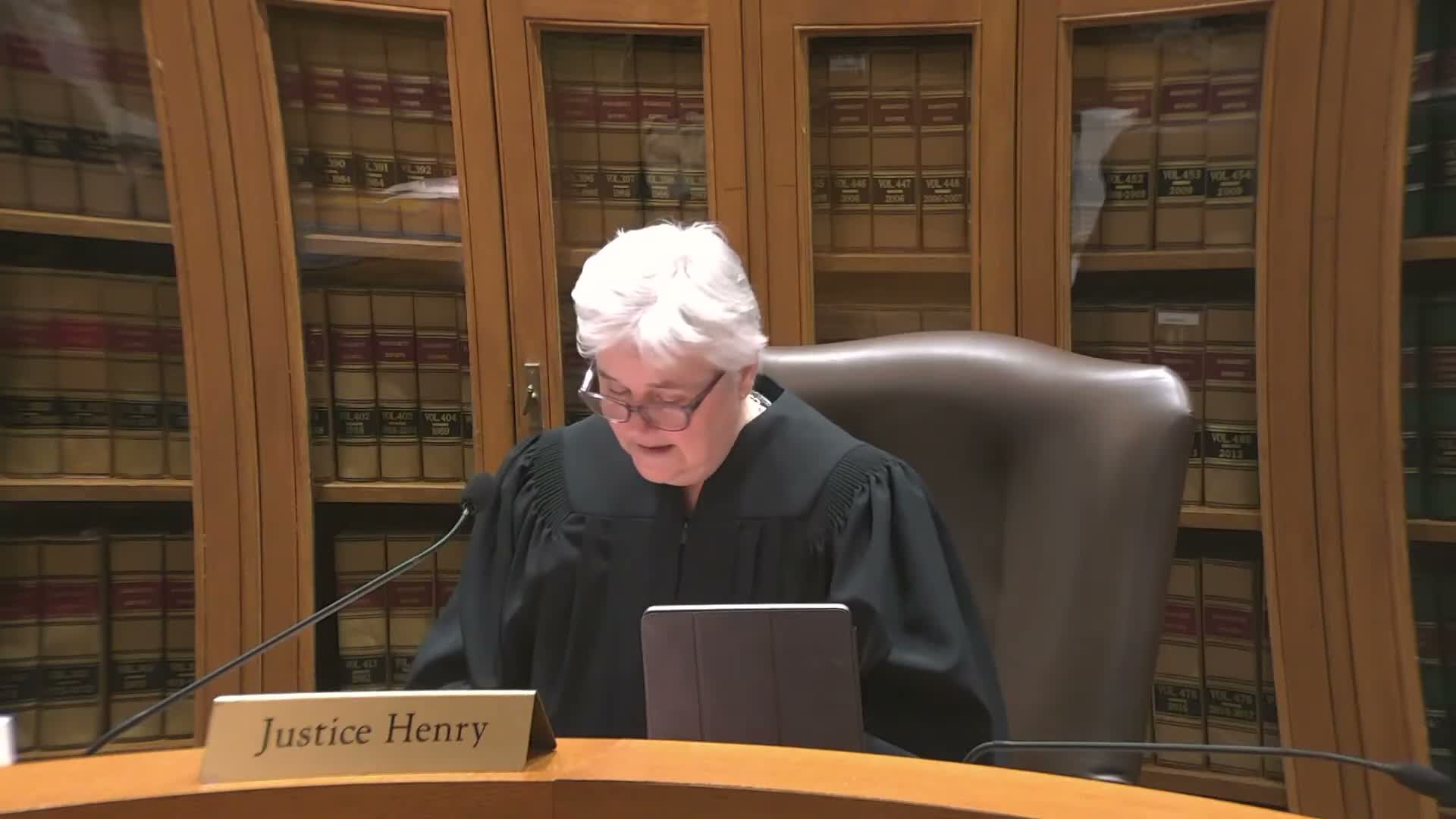
Panel Chief Justice Vicky Henry heard argument in Commonwealth v. Matthew Combs on March 2, 2026, where defense counsel Adriana Contrathesi asked the court to vacate Combs’s conviction for assault-related charges on insufficiency grounds.
Contrathesi told the court the defendant had been offered pretrial probation but chose not to accept it and emphasized several trial facts she said undercut the conviction: Combs had a plastic cast on his leg at the time of the incident, witnesses testified he never swung the baseball bat, the victim did not appear at trial, and the victim had spat in Combs’s face. Defense counsel acknowledged withdrawing a narrow argument tied to a trial judge’s factual remark but pressed the court to consider the alternative insufficiency claim.
Assistant District Attorney Matthew Panelano responded that the video and record, read in the light most favorable to the Commonwealth under Lattimore standards, showed the defendant raised the bat above his head, charged (closed distance) toward the victim while shouting, and was stopped by bystanders. “You do not need to swing a baseball bat in order to get an attempted…battery,” Panelano argued, citing precedent and pointing to bystanders’ intervention as an overt act preventing completion of an attempted battery.
The panel questioned the record’s factual support for the cast and the inferences that can be drawn from the video; Chief Justice Henry noted uncertainty about whether the cast appears in the record. The court also explored the effect of a general verdict: if there was sufficient evidence to support at least one theory (attempted or threatened battery), Andrade and related precedent may permit affirming a general verdict even if another theory is weak.
After extended questioning on the video, the judge’s trial rulings, and the interplay of relevant appellate authorities, the panel submitted the case for decision.
Contrathesi told the court the defendant had been offered pretrial probation but chose not to accept it and emphasized several trial facts she said undercut the conviction: Combs had a plastic cast on his leg at the time of the incident, witnesses testified he never swung the baseball bat, the victim did not appear at trial, and the victim had spat in Combs’s face. Defense counsel acknowledged withdrawing a narrow argument tied to a trial judge’s factual remark but pressed the court to consider the alternative insufficiency claim.
Assistant District Attorney Matthew Panelano responded that the video and record, read in the light most favorable to the Commonwealth under Lattimore standards, showed the defendant raised the bat above his head, charged (closed distance) toward the victim while shouting, and was stopped by bystanders. “You do not need to swing a baseball bat in order to get an attempted…battery,” Panelano argued, citing precedent and pointing to bystanders’ intervention as an overt act preventing completion of an attempted battery.
The panel questioned the record’s factual support for the cast and the inferences that can be drawn from the video; Chief Justice Henry noted uncertainty about whether the cast appears in the record. The court also explored the effect of a general verdict: if there was sufficient evidence to support at least one theory (attempted or threatened battery), Andrade and related precedent may permit affirming a general verdict even if another theory is weak.
After extended questioning on the video, the judge’s trial rulings, and the interplay of relevant appellate authorities, the panel submitted the case for decision.
View the Full Meeting & All Its Details
This article offers just a summary. Unlock complete video, transcripts, and insights as a Founder Member.
✓
Watch full, unedited meeting videos
✓
Search every word spoken in unlimited transcripts
✓
AI summaries & real-time alerts (all government levels)
✓
Permanent access to expanding government content
30-day money-back guarantee
