Appellant urges requirement for unanimity instruction when mental-state theories diverge
March 02, 2026 | Judicial - Appeals Court Oral Arguments, Judicial, Massachusetts
This article was created by AI summarizing key points discussed. AI makes mistakes, so for full details and context, please refer to the video of the full meeting. Please report any errors so we can fix them. Report an error »
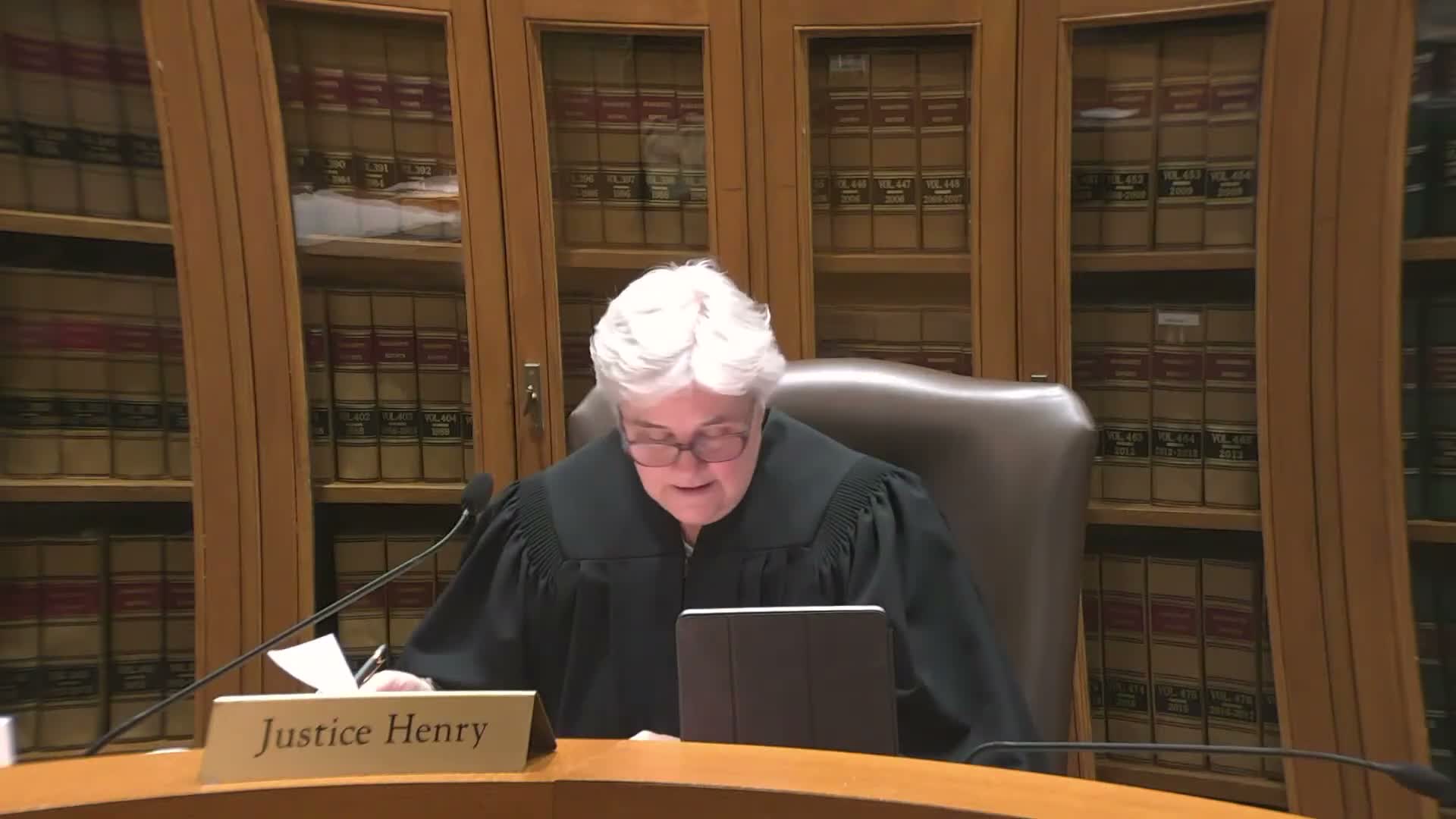
The second argument of the March 2 oral session, Commonwealth v. Rennie, centered on whether jury unanimity requires special instructions when the prosecution advances different mental-state theories to prove the same statutory offense.
Chris Norris, counsel for the appellant, urged the panel to require specific-unanimity instructions and a special-verdict slip when a single statutory charge can be proved by distinct culpable mental states. He relied on Santos and invoked United States v. Tavares to argue the mental-state difference can be outcome-determinative and create juror-confusion absent a special-verdict mechanism.
The panel asked detailed questions about the doctrinal line between theories that can coexist (attempted vs. threatened battery; overlapping mental states) and those that are mutually exclusive (intentional versus reckless theories leading to different culpability and sentencing outcomes). Norris argued that the record here presented a classic vehicle to clarify the rule and avoid downstream sentencing anomalies.
Jesse Crane, arguing for the Commonwealth, responded that assault and battery by means of a dangerous weapon causing serious bodily injury is a general-intent crime and that the SBI element removes the substantive difference that Tavares relied on; Crane referenced Applebee and Welch, and said post‑Tavares precedent and model jury instructions (Mistretta line) counsel reading the record to uphold a general verdict if at least one theory is supported. The panel pressed both sides on whether model jury instructions and reliance interests weigh against recasting settled practice.
After extended colloquy about model instructions, Mistretta/Tavares tension, and the best vehicle to resolve any circuit split, the court submitted the case.
Chris Norris, counsel for the appellant, urged the panel to require specific-unanimity instructions and a special-verdict slip when a single statutory charge can be proved by distinct culpable mental states. He relied on Santos and invoked United States v. Tavares to argue the mental-state difference can be outcome-determinative and create juror-confusion absent a special-verdict mechanism.
The panel asked detailed questions about the doctrinal line between theories that can coexist (attempted vs. threatened battery; overlapping mental states) and those that are mutually exclusive (intentional versus reckless theories leading to different culpability and sentencing outcomes). Norris argued that the record here presented a classic vehicle to clarify the rule and avoid downstream sentencing anomalies.
Jesse Crane, arguing for the Commonwealth, responded that assault and battery by means of a dangerous weapon causing serious bodily injury is a general-intent crime and that the SBI element removes the substantive difference that Tavares relied on; Crane referenced Applebee and Welch, and said post‑Tavares precedent and model jury instructions (Mistretta line) counsel reading the record to uphold a general verdict if at least one theory is supported. The panel pressed both sides on whether model jury instructions and reliance interests weigh against recasting settled practice.
After extended colloquy about model instructions, Mistretta/Tavares tension, and the best vehicle to resolve any circuit split, the court submitted the case.
View the Full Meeting & All Its Details
This article offers just a summary. Unlock complete video, transcripts, and insights as a Founder Member.
✓
Watch full, unedited meeting videos
✓
Search every word spoken in unlimited transcripts
✓
AI summaries & real-time alerts (all government levels)
✓
Permanent access to expanding government content
30-day money-back guarantee
