Defense says consent ambiguity undermines Benavides conviction; Commonwealth disagrees
March 02, 2026 | Judicial - Appeals Court Oral Arguments, Judicial, Massachusetts
This article was created by AI summarizing key points discussed. AI makes mistakes, so for full details and context, please refer to the video of the full meeting. Please report any errors so we can fix them. Report an error »
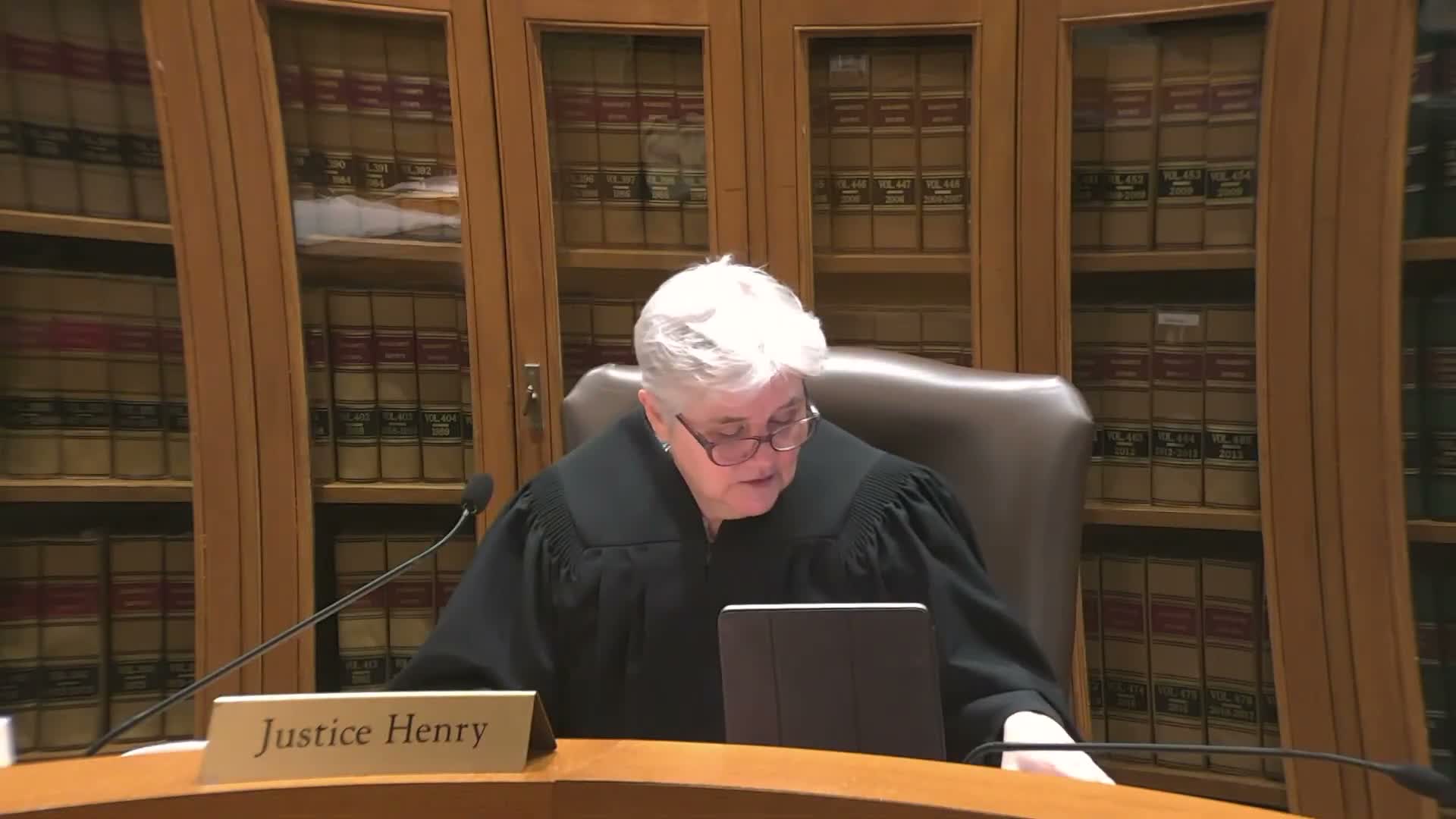
The panel heard argument in Commonwealth v. Benavides, a sufficiency appeal that turned on alleged nonconsensual touchings during a tattoo appointment.
Eric Rubin, representing Mr. Benavides, said the pelvic-area touching was not part of the charged offense and emphasized the victim’s initial account that the contact was accidental; Rubin asked the court to view the record (openings, closings and testimony) as a whole and to reverse for insufficiency if the evidence did not establish lack of consent beyond a reasonable inference.
The argument focused on two discrete touchings the jury could have found indecent: an early contact of the pubic area and a later rubbing of the inner thigh to remove stray ink. Rubin argued the record shows ambiguity about tattoo size and placement, that ink can splash and that the victim initially said it felt accidental. “At first, she’s like, oh, I’m getting a great tattoo…and she stays on the table,” Rubin said to illustrate the contested timing and context.
Jennifer Rose, for the Commonwealth, urged the court to affirm. Rose told the panel the jury could see the tattoo placement and the testimony the victim gave on the record and that the later touching after an explicit “no” was outside the scope of consent. Rose argued the jury permissibly inferred lack of consent and that the totality of the record supported the conviction.
After probing by the panel on whether the jury could infer nonconsent from a limited-scope service appointment and the timing of the alleged conduct, the court submitted the matter.
Eric Rubin, representing Mr. Benavides, said the pelvic-area touching was not part of the charged offense and emphasized the victim’s initial account that the contact was accidental; Rubin asked the court to view the record (openings, closings and testimony) as a whole and to reverse for insufficiency if the evidence did not establish lack of consent beyond a reasonable inference.
The argument focused on two discrete touchings the jury could have found indecent: an early contact of the pubic area and a later rubbing of the inner thigh to remove stray ink. Rubin argued the record shows ambiguity about tattoo size and placement, that ink can splash and that the victim initially said it felt accidental. “At first, she’s like, oh, I’m getting a great tattoo…and she stays on the table,” Rubin said to illustrate the contested timing and context.
Jennifer Rose, for the Commonwealth, urged the court to affirm. Rose told the panel the jury could see the tattoo placement and the testimony the victim gave on the record and that the later touching after an explicit “no” was outside the scope of consent. Rose argued the jury permissibly inferred lack of consent and that the totality of the record supported the conviction.
After probing by the panel on whether the jury could infer nonconsent from a limited-scope service appointment and the timing of the alleged conduct, the court submitted the matter.
View the Full Meeting & All Its Details
This article offers just a summary. Unlock complete video, transcripts, and insights as a Founder Member.
✓
Watch full, unedited meeting videos
✓
Search every word spoken in unlimited transcripts
✓
AI summaries & real-time alerts (all government levels)
✓
Permanent access to expanding government content
30-day money-back guarantee
